
Cotton seed bug
Oxycarenus lectularius
Description
How to identify
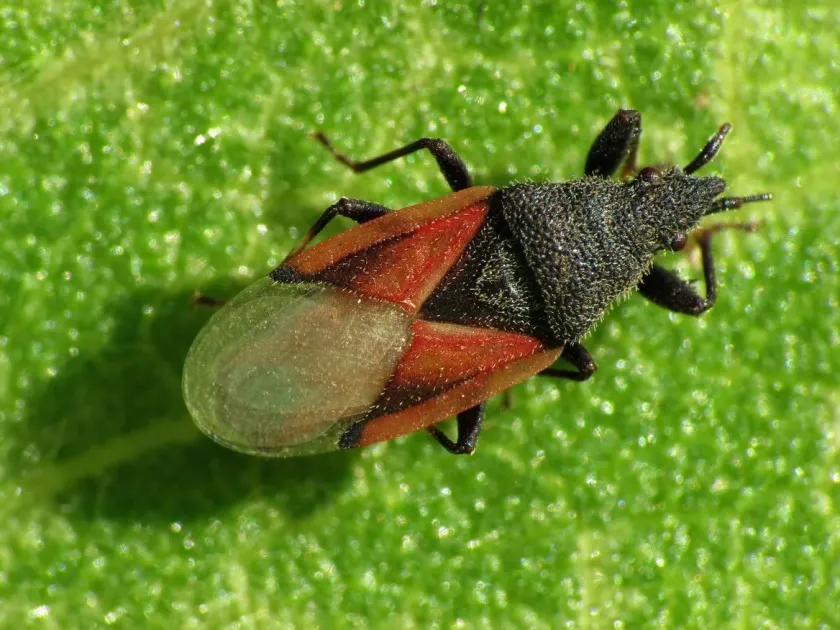
The cotton seed bug (Oxycarenus lectularius) belongs to the Lygaeidae family of the order Hemiptera. Adults are characterized by an elongated body, typically ranging from 3 to 5 mm in length, with a dark brown to black coloration.
Their legs and antennae are usually lighter, often yellowish-brown, which aids in field identification. The wings are well-developed and transparent with distinctive venation, allowing the bugs to move easily between plants.
Nymphs, especially in early instars, are notable for their bright red abdomens, which serves as a key morphological diagnostic feature. The life cycle consists of five nymphal stages, during which the insects gradually develop wings and adult-like features.
The mouthparts are of the piercing-sucking type, perfectly adapted for extracting nutrients from the seeds and reproductive structures of their host plants. This species is highly adapted to the cotton-growing environment.
High temperatures and humidity provide optimal conditions for rapid population growth. Adults and nymphs tend to aggregate, making them easier to spot when inspecting the interior of cotton bolls.
What it damages
The cotton plant is the primary host for Oxycarenus lectularius. These bugs feed specifically on the developing seeds within the bolls, which significantly impairs the plant's reproductive success and yield quality.
Besides cotton, the species is found on wild Malvaceae weeds, which act as reservoirs that maintain pest populations during periods when the main crop is not available. This complicates management as the weeds offer year-round shelter.
Damage to the seeds results in reduced oil content and viability, making them unsuitable for planting or commercial processing. Furthermore, the feeding process facilitates the transmission of fungal diseases that cause boll rot.
Severe infestations lead to the premature shedding of buds and bolls, causing substantial economic losses. The presence of the bugs also contaminates the cotton fiber with frass and body parts, lowering its market value.
The loss of plant vigor due to sap extraction by large colonies can stunt growth and reduce overall fiber length and strength. Preventing these losses is critical for high-quality cotton production.
When it appears
The activity of the cotton seed bug starts during the budding phase of the cotton plants when adults migrate from alternate hosts to the fields. The optimal temperature for their development is between 25 and 30 degrees Celsius.
Peak population numbers occur during the boll maturation stage, as the insects concentrate on these nutrient-rich structures. Several generations can occur within a single growing season under favorable conditions.
Hibernation usually takes place in the adult stage, often under plant debris, in soil cracks, or inside old, dried cotton bolls left in the field. They emerge in the spring as temperatures rise consistently.
In autumn, mass migration to overwintering sites occurs after harvest. Extreme weather, such as prolonged drought, can sometimes lead to population outbreaks by weakening the natural defenses of the host plants.
Consistent monitoring throughout the season is essential for predicting potential threats. Early detection allows growers to apply control measures before the population reaches an uncontrollable level.
Signs of infestation
Presence of the pest can be identified by the appearance of excrement on the cotton lint inside the bolls. Often, bolls become dull in color and fail to open properly due to internal damage to the seeds.
Bright red nymph colonies found on the stems, bracts, or inside the bolls are clear indicators of active reproduction. In many cases, the tissues inside the boll may develop fungal growth resulting from the bug's presence.
A distinctive unpleasant odor is often detectable near heavily infested plants due to secretions from the bugs' scent glands. This is a reliable field diagnostic sign of high infestation density.
On inspection, the seeds appear deformed, shriveled, and discolored compared to healthy ones. Progressive drying of bolls that have not yet reached maturity is another strong sign of pest damage.
A reduction in the weight of the harvested boll is a long-term indicator of persistent feeding by these insects. Checking the undersides of leaves and flowers can often reveal the presence of egg batches.
Control measures
The primary control strategy involves rigorous field sanitation, specifically the removal and destruction of crop residues after harvest to eliminate overwintering sites. Deep plowing is effective in reducing the overwintering population.
Controlling Malvaceae weeds on field edges and irrigation channels significantly lowers the initial population pressure on the cotton crop. Agronomic practices that promote uniform crop maturity can also help mitigate damage.
- Targeted application of systemic insecticides upon the appearance of initial colonies.
- Utilizing beneficial insects and entomopathogens for biological control.
- Maintaining spatial separation from previous year's cotton fields.
Chemical applications should be carried out based on economic injury levels to ensure cost-effectiveness and reduce environmental impact. Rotating insecticides is necessary to prevent the development of resistance.
Developing and planting resistant cotton varieties with tightly sealed bolls can physically impede bug access to the seeds. Integrated Pest Management (IPM) provides a sustainable approach to balancing yield protection and ecological health.
Taxonomy
- Latin name
- Oxycarenus lectularius
- Order
- Hemiptera (bugs, aphids, leafhoppers)
- Family
- Oxycarenidae
- EPPO code
- OXYALE
Discussion
No discussions yet — be the first.