
Mallow bug
Oxycarenus lavaterae
Description
How to identify
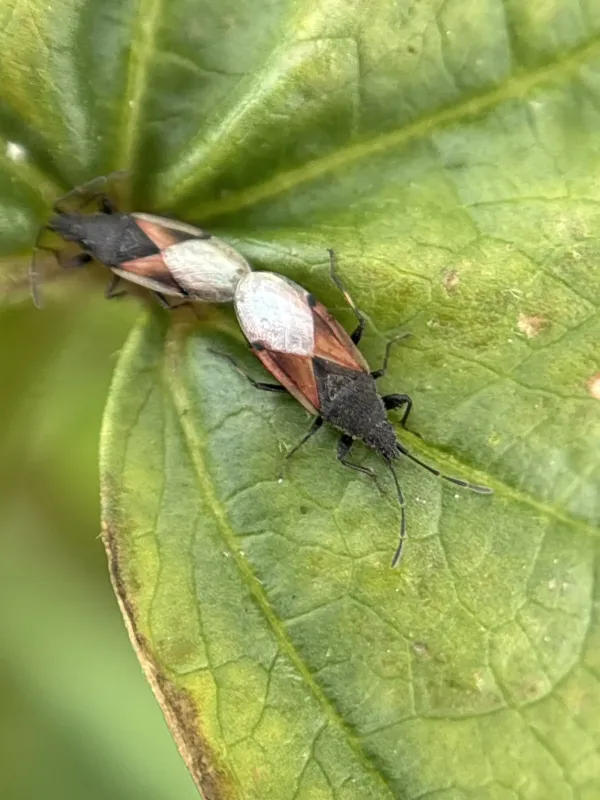
The mallow bug (Oxycarenus lavaterae) is a small insect belonging to the family Lygaeidae, order Hemiptera. Adult bugs measure approximately 4–5 mm in length and are easily identified by their contrasting red and black markings.
The body of the insect is elongated and somewhat flattened, covered with fine hairs. Adults possess fully developed wings, allowing them to disperse effectively across landscapes in search of host plants.
Nymphs go through five developmental stages, progressively increasing in size and color intensity. While they lack functional wings in early stages, they share the distinctive silhouette of the adults.
A notable behavioral trait of this species is its tendency to congregate in large, visible clusters on the sunny sides of tree trunks, particularly during the late summer and autumn months.
The life cycle encompasses eggs, five nymphal instars, and adults. In warmer climates, the bug can produce multiple generations per season, typically overwintering in the adult stage.
What it damages
Mallow bugs primarily feed on plants in the Malvaceae family, including hollyhocks, hibiscus, and various species of linden (Tilia), which are among their preferred hosts for gathering.
The insects use their piercing-sucking mouthparts to feed on seeds, extracting vital nutrients. This activity often leads to the death of the embryo, thereby reducing the viability and germination rate of the seeds.
While they primarily target seeds, heavy infestations can cause the wilting and distortion of young shoots and buds, as the bugs extract fluids from the plant's vascular tissues during high population density.
The feeding sites create entry points for secondary pathogens, potentially leading to bacterial or fungal infections that further weaken the host plant, especially in stressed specimens.
In nursery settings, the mallow bug poses a significant risk to the production of high-quality seeds, potentially resulting in economic losses for growers who rely on seed propagation for tree species.
When it appears
Activity typically commences in early spring as temperatures consistently rise above 10-12 degrees Celsius, prompting overwintering adults to migrate towards early-season host plants.
Population peaks are generally observed in late summer, coinciding with the maturation of seed heads on mallow and linden trees, providing the abundant resources required for nymphal development.
During the autumn, as temperatures decline, the bugs exhibit a strong social clustering behavior on bark, preparing to move into crevices or protected areas to survive the winter dormant phase.
Overwintering occurs in sheltered locations such as bark crevices, leaf litter, and under debris, where the bugs remain relatively inactive until the cycle restarts in the following spring.
Weather patterns significantly influence seasonal outbreaks: hot and dry conditions accelerate the life cycle, leading to faster reproduction and increased pressure on host plants throughout the summer.
Signs of infestation
The most prominent sign is the presence of large, dense masses of red and black bugs clustered on the trunks of linden or hibiscus trees, often in direct sunlight.
Visible yellowing, curling, or necrosis of developing terminal shoots, indicating that the bugs have been actively feeding on the plant's sap during their nymphal stages.
Deformed or empty seed pods that fail to develop properly, which can be observed upon inspection during the harvesting period or during a routine health check of ornamental plantings.
Dark, granular deposits of excrement left behind on the bark of trees where colonies have remained stationary for extended periods, creating a localized accumulation of waste.
Gradual thinning of the canopy or overall lack of vigor in heavily infested trees, particularly when high bug densities are sustained over multiple years without intervention.
Control measures
Mechanical removal, such as using a strong stream of water to wash bug clusters off tree trunks, is an effective and non-toxic way to manage populations during peak activity.
Application of contact insecticides may be necessary in extreme cases, though it is recommended to target the pests directly while avoiding broader harm to beneficial insect populations in the garden.
Sanitation practices, including the removal and destruction of leaf litter and fallen debris around base of host trees in the fall, significantly reduce available overwintering sites.
Maintaining strong host plant health through appropriate irrigation, fertilization, and pruning helps the plants recover more effectively from the stress caused by mallow bug feeding.
Biological control strategies, involving the preservation of natural predators like spiders or other predatory insects, can help maintain the mallow bug population below damaging levels naturally.
Taxonomy
- Latin name
- Oxycarenus lavaterae
- Order
- Hemiptera (bugs, aphids, leafhoppers)
- Family
- Oxycarenidae
- EPPO code
- OXYALV
Discussion
No discussions yet — be the first.