
Cotton seed bug
Oxycarenus laetus
Description
How to identify
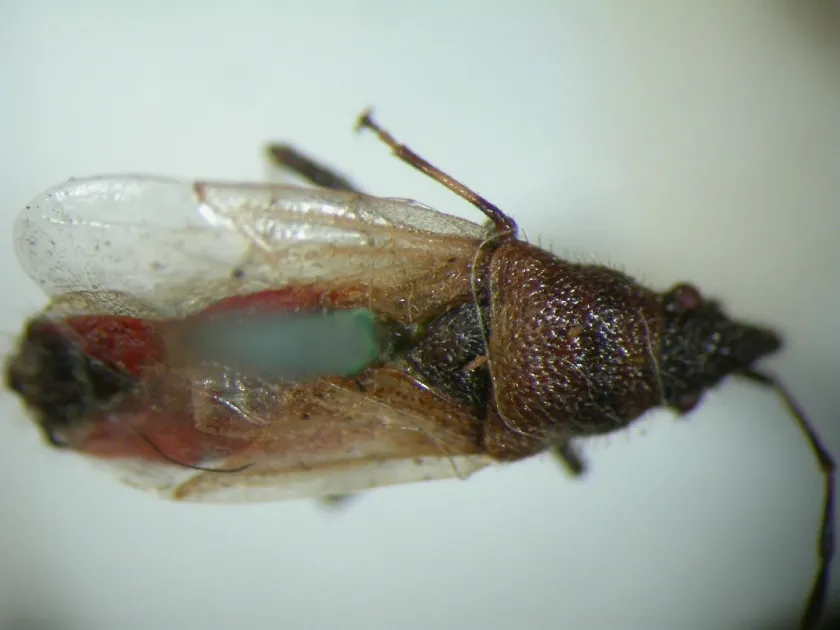
Oxycarenus laetus, commonly known as the cotton seed bug, belongs to the family Lygaeidae within the order Hemiptera. These are small insects, typically measuring between 3 and 4 millimeters in length.
The adult bugs are oval-shaped with a dark brown or blackish appearance, often exhibiting a shiny texture on the pronotum and scutellum.
The nymphal stages undergo several molts, characterized by gradual development and the appearance of reddish-brown patterns on the abdomen of the young nymphs.
They are cryptic insects that typically reside deep within cotton bolls, making them difficult to detect during standard field scouting sessions.
The population density is highly dependent on ambient temperature, thriving in hot climates where the cotton plant provides both food and shelter.
What it damages
The primary host for Oxycarenus laetus is the cotton plant, specifically targeting the generative organs and developing seeds inside the bolls.
By piercing the seed coat with their stylets, the bugs extract essential nutrients, which inhibits seed development and reduces the overall yield.
Beyond cotton, these insects are known to infest wild Malvaceae plants, which serve as alternate hosts and reservoirs for the pest throughout the year.
The direct damage involves both weight loss in seeds and the staining of cotton lint with insect excrement, rendering the harvest less valuable.
Heavy infestations can lead to significant economic losses, as the damaged seeds show poor germination rates and the lint quality becomes substandard.
Signs of infestation
The presence of fine, dark-colored excreta inside the cotton bolls is a primary indicator that a colony of bugs has established itself.
Inspection of the boll contents often reveals clusters of bugs at different life stages huddled together around the developing seeds.
Affected seeds appear shriveled, discolored, and often possess distinct dark puncture marks where the bug’s proboscis has penetrated the surface.
The lint inside the bolls becomes discolored, often taking on a yellowish or dingy appearance that is difficult to process in textile machinery.
In severe cases, the boll segments may dry out prematurely, interfering with the natural opening process and facilitating the spread of secondary pathogens.
Control measures
Effective management begins with strict sanitation, focusing on the removal of wild Malvaceae weeds in and around cotton fields to eliminate breeding sites.
Deep plowing after the harvest is crucial to bury overwintering adults, thereby reducing the pest population for the following planting season.
Chemical control involving systemic or contact insecticides may be necessary if the population levels exceed established economic thresholds for the crop.
Field monitoring using sticky traps or pheromone attractants is recommended to identify the onset of infestation and time the application of treatments.
Coordinating planting dates and maintaining optimal crop health can help the plants reach maturity faster, potentially reducing the window of susceptibility to the bug.
Taxonomy
- Latin name
- Oxycarenus laetus
- Order
- Hemiptera (bugs, aphids, leafhoppers)
- Family
- Oxycarenidae
- EPPO code
- OXYALA
Discussion
No discussions yet — be the first.