
Cotton seed bug
Oxycarenus gossypinus
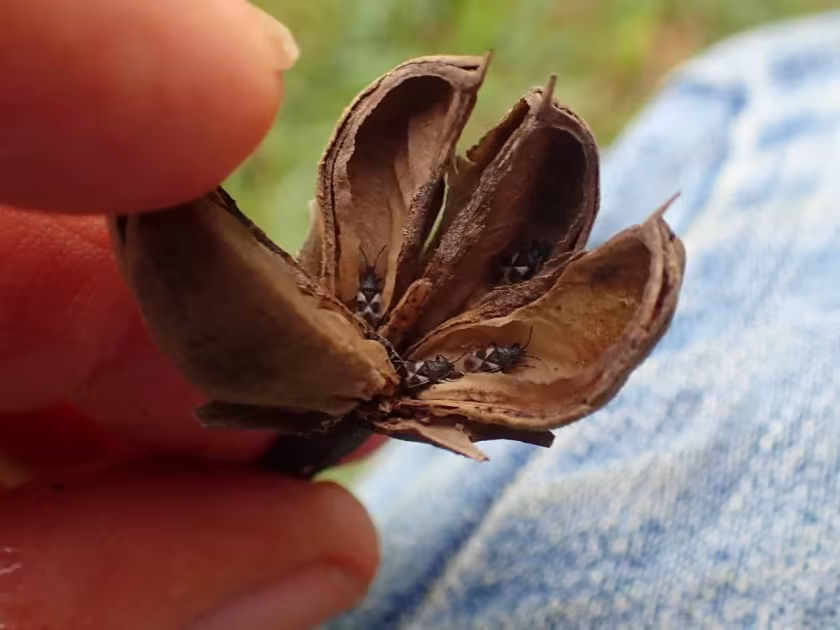
Description
How to identify
The cotton seed bug, scientifically known as Oxycarenus gossypinus, is a small hemipteran insect belonging to the family Oxycarenidae.
Adults typically measure between 3 and 4 mm in length, possessing a dark, sometimes blackish body that helps them blend into their environment.
The nymphs go through several developmental stages, resembling smaller, wingless versions of the adults, sharing similar habitats and feeding behaviors.
They are primarily associated with plants of the Malvaceae family, finding shelter within the structures of their host plants.
Identification is most successful when inspecting the interior of drying or open cotton bolls, where the insects tend to congregate in large numbers.
What it damages
This species is a notorious pest that feeds primarily on the seeds of the cotton plant, using its piercing-sucking mouthparts to extract vital nutrients.
Feeding activities lead to significant reduction in seed weight and viability, which is detrimental to the quality of planting stock.
Furthermore, the insects cause staining of the cotton lint due to their excrement, which reduces the market value and grade of the harvested fiber.
Severe infestations can result in the premature drop of bolls or failure of bolls to open properly, leading to direct yield loss.
By damaging the developing seeds, they also weaken the plant's overall reproductive success and can facilitate the spread of secondary pathogens.
When it appears
The activity and population density of the cotton seed bug are highly dependent on the phenology of the cotton plant, especially the boll development stage.
These bugs are most active during the summer months when temperature conditions are optimal for rapid reproduction and multiple generations.
During the off-season or winter, the adults seek shelter in plant debris, tree bark, or other protected areas to survive unfavorable weather.
As temperatures rise in the spring, the population emerges and begins feeding on available wild hosts before migrating to commercial crops.
The synchronization of the pest's peak life cycle with the crop's boll-filling stage is a critical factor in determining the severity of the outbreak.
Signs of infestation
The primary visual sign of infestation is the presence of numerous small black bugs tucked between the fibers inside a cotton boll.
Look for patches of discoloration on the cotton lint, caused by the pest's fecal deposits, which appear as small dark spots.
Damaged seeds appear shriveled or discolored, often lacking the necessary mass for proper germination, which is a major indicator of larval feeding.
In cases of heavy infestation, you might notice an unusual drop of immature bolls from the plant or bolls that remain partially closed.
- Presence of adults and nymphs in cotton bolls
- Stained lint caused by insect waste
- Shriveled and non-viable cotton seeds
- Premature boll shed and poor boll opening
Control measures
Integrated pest management (IPM) is the most effective approach, starting with the destruction of crop residues that provide overwintering sites.
Sanitation of the field borders is crucial, focusing on the removal of wild Malvaceae weeds that serve as early-season host plants for the bugs.
Chemical control with systemic insecticides may be necessary during the critical phases of boll development if economic thresholds are exceeded.
Due to the pest's habit of hiding deep inside the bolls, application timing and product penetration are essential for successful control.
Encouraging natural predators or using biological control agents can help maintain population levels below the threshold in organic or low-input systems.
Taxonomy
- Latin name
- Oxycarenus gossypinus
- Order
- Hemiptera (bugs, aphids, leafhoppers)
- Family
- Oxycarenidae
- EPPO code
- OXYAGS
Discussion
No discussions yet — be the first.