
Oxycarenus exitiosus
Oxycarenus exitiosus
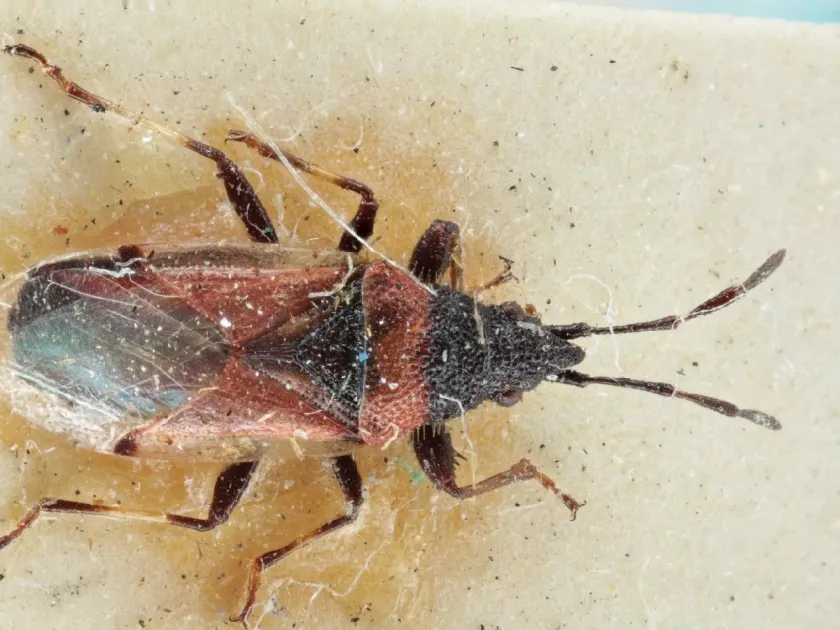
Description
How to identify
Oxycarenus exitiosus, commonly known as a type of seed bug, belongs to the order Hemiptera and the family Lygaeidae. It is a small, specialized insect that primarily feeds on the seeds of plants within the Malvaceae family.
Adult bugs are typically 3–4 mm in length, characterized by a dark, almost black coloration. Their membrane wings are often whitish or translucent, providing a contrast to the solid-colored body and thorax.
The life cycle includes an egg stage, several nymphal instars, and the adult phase. Nymphs resemble miniature adults but lack fully developed wings and reproductive organs, yet they are highly active in feeding.
These pests are prolific breeders, capable of producing multiple generations throughout the growing season if temperatures remain within an optimal range and food sources are available.
Overwintering usually occurs as adults in protected environments, such as leaf litter, tree bark, or soil crevices, allowing them to survive cold spells and emerge as temperatures rise in the spring.
What it damages
The primary host crops for this pest include cotton and various other Malvaceous plants. The bugs pierce the seed coat to extract nutrients from the developing kernels, causing them to shrivel.
Feeding damage significantly reduces seed weight and oil content, which is detrimental to commercial cotton production. Furthermore, the seed viability is severely compromised, making it unsuitable for planting.
In addition to direct seed damage, these insects produce dark excrement that contaminates cotton lint. This staining reduces the commercial grade of the fiber and makes the processing of raw cotton difficult.
Severe infestations can lead to premature shedding of squares and bolls, especially when plants are already under water stress. This leads to substantial yield losses in affected fields.
The presence of large populations can also increase the susceptibility of plants to secondary infections, such as boll rot, as the damaged tissues provide entry points for various pathogens.
Control measures
Integrated Pest Management (IPM) is crucial for controlling Oxycarenus exitiosus. Cultural practices, such as deep plowing after harvest, are essential to destroy overwintering sites and reduce the starting population.
Eliminating alternative host plants, particularly weeds in the Malvaceae family, is a vital step in preventing the buildup of bug populations near commercial crop fields.
Chemical control should be implemented based on scouting results. Targeting the younger nymphal stages with approved systemic or contact insecticides is often the most effective way to curb infestations.
Crop rotation and maintaining spatial isolation between different planting cycles help disrupt the life cycle of the pest, making it harder for them to colonize new fields effectively.
Regular monitoring using field inspections or pheromone traps allows for early detection, enabling timely intervention before the pest reaches economic injury levels in the crop.
Taxonomy
- Latin name
- Oxycarenus exitiosus
- Order
- Hemiptera (bugs, aphids, leafhoppers)
- Family
- Oxycarenidae
- EPPO code
- OXYAEX
Discussion
No discussions yet — be the first.