
Orthocis beetles
Orthocis
Description
How to identify
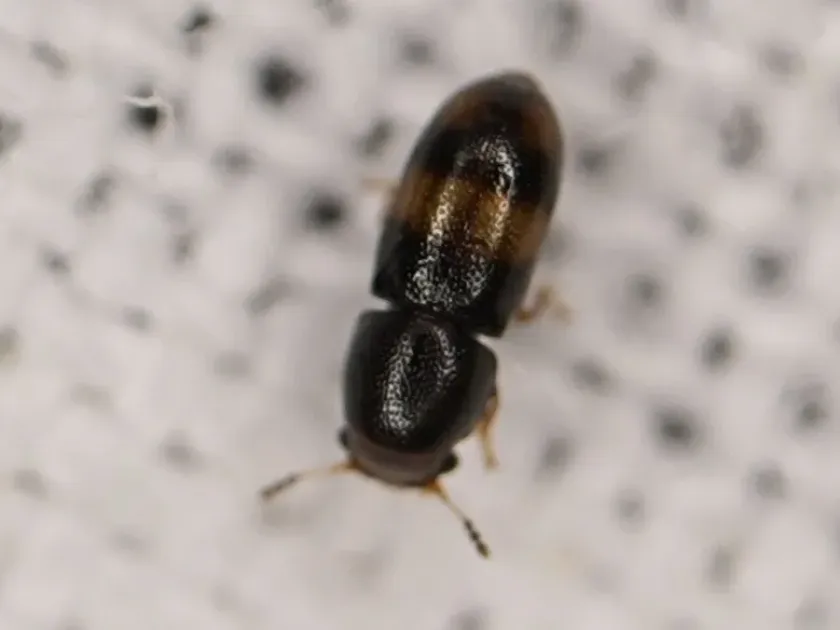
The genus Orthocis belongs to the family Ciidae, also known as minute tree-fungus beetles, within the order Coleoptera. These small insects typically measure between 2 and 3 millimeters and feature a cylindrical, slightly convex body of dark brown or black coloration.
Their morphological structure is highly specialized for a concealed lifestyle inside fungal fruiting bodies. The head is frequently shielded by the pronotum, a hallmark feature of the Ciidae family.
The antennae are short and terminate in a distinct three-segmented club, which is crucial for navigation within the narrow, wood-like substrates of fungi.
The larvae are typically whitish or yellowish and lead a cryptic existence, developing inside the fungal tissue while feeding on the substrate's organic matter.
Precise identification of Orthocis species requires professional entomological expertise, often involving the examination of internal genitalic structures to confirm the specific taxon.
What it damages
Orthocis beetles are not considered primary agricultural pests, as their dietary requirements are strictly linked to the fruiting bodies of wood-decaying fungi.
However, in industrial mushroom farming or medicinal fungi cultivation, these beetles can cause significant damage to the mushroom mycelium and harvested crop.
Their feeding activity results in the total destruction of the internal structure of the fungus, rendering it unsuitable for market or scientific purposes.
Mass infestations can reduce the internal tissues of a fungus to fine dust, leaving only a thin, brittle outer shell that collapses under pressure.
Additionally, they may act as vectors for various microorganisms, potentially accelerating the spread of fungal pathogens or rot within the forest ecosystem.
When it appears
Adult Orthocis beetle activity typically begins with the arrival of spring warmth, coinciding with the emergence of the first fungal fruiting bodies of the season.
The peak of their life cycle occurs during the summer months, when ambient temperature and humidity create ideal conditions for larval development inside the fungi.
As autumn approaches, the beetles prepare for winter, seeking shelter deep within the wood or under the bark near their larval feeding sites.
The developmental cycle can be continuous in controlled environments, allowing for multiple generations per year under stable moisture and temperature conditions.
Wintering adults enter a state of diapause, a biological mechanism that allows them to survive extreme cold until the next favorable growing season.
Signs of infestation
The most prominent sign of an Orthocis infestation is the presence of tiny, perfectly round exit holes on the cap or stalk of the host fungus.
Dissecting an infested fungus reveals intricate internal galleries packed with frass, which appears as fine, brown, powdery residue created by the larvae.
The fungal tissue becomes soft, spongy, and darkened in the areas where larvae have been feeding, indicating a loss of structural integrity.
In cases of severe infestation, the fruiting body loses its shape and structural strength, often crumbling when touched or harvested.
- Small, round holes on the surface of the mushroom.
- Brown, sawdust-like frass deposits.
- Reduced structural firmness of the fungus.
Control measures
The primary management strategy involves maintaining high sanitary standards in mushroom-growing areas, specifically by removing overmature fungi that attract these pests.
Prompt disposal and destruction of infested substrates are essential to break the insect's life cycle and prevent the emergence of new adult generations.
In closed-cultivation systems, light traps can be highly effective, as many Orthocis species are attracted to artificial light sources during their flight periods.
Biological control focuses on the presence of natural predators, such as parasitoid wasps, which can help maintain balanced populations in natural forest settings.
Chemical control is rarely utilized in forestry due to the significant risk to non-target beneficial insects and strict environmental regulations regarding pesticide use.
Taxonomy
- Latin name
- Orthocis
- Order
- Coleoptera (beetles)
- Family
- Ciidae
- EPPO code
- ORCSSP
Discussion
No discussions yet — be the first.