
Cis hispidus
Cis hispidus
Description
How to identify
The beetle Cis hispidus belongs to the Ciidae family within the order Coleoptera, known as minute tree-fungus beetles.
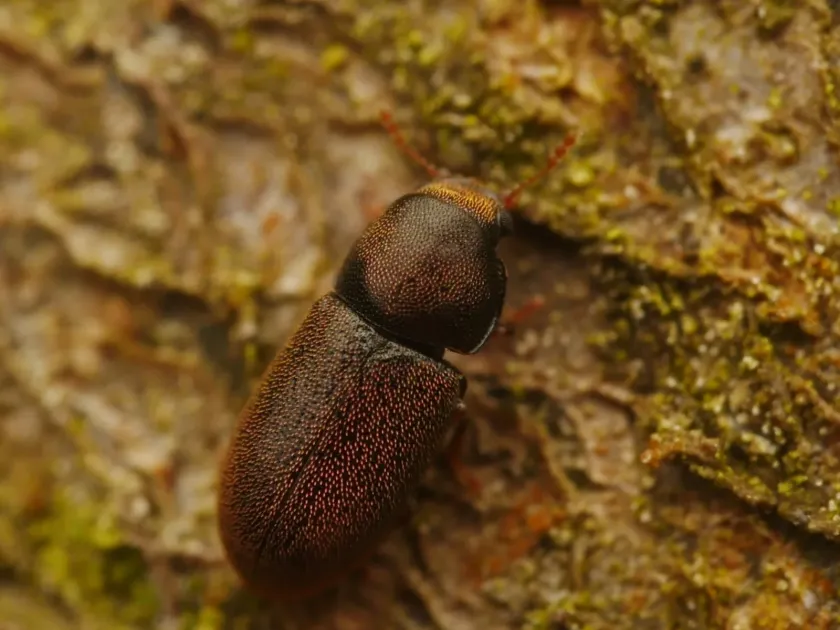
These insects are exceptionally small, typically ranging from 2 to 3 millimeters in length, and possess a robust, cylindrical body shape.
Their coloration usually transitions from reddish-brown to dark brown, allowing them to blend effectively into the bark and fungus surfaces.
A defining characteristic of Cis hispidus is the dense cover of short, bristly hairs on the elytra, which provides a distinct texture.
The larvae are small, creamy-white in color, and spend their entire developmental stage burrowing within the tissues of host fungi.
What it damages
The primary food source for this species consists of the fruiting bodies of various polypore fungi found on decaying timber.
In forest ecosystems, they play a role in decomposition, but they become pests when they infest cultivated mushrooms or valuable fungal resources.
The larvae bore intricate tunnels throughout the fungus, destroying its internal structure and rendering it useless for collection or commercial sale.
Excessive feeding by these beetles leads to the rapid collapse of the fruiting body, often leaving only a hollowed-out shell behind.
By consuming the spore-producing layers, these beetles can locally suppress the reproduction of specific forest fungi.
When it appears
The life cycle of Cis hispidus is synchronized with the seasonal availability and growth cycles of its host fungi.
Adult beetles typically emerge from overwintering sites in early spring, coinciding with the first appearance of fresh fungal growth.
Throughout the warmer summer months, multiple generations can emerge if environmental conditions remain favorable for fungal development.
Overwintering occurs primarily in the adult stage, sheltered deep within the woody substrates or the durable fruiting bodies of perennial polypores.
In stable conditions, such as laboratories or temperature-controlled facilities, these beetles can reproduce continuously throughout the year.
Signs of infestation
The most reliable sign of an infestation is the presence of tiny, circular exit holes on the surface of the fungal cap.
Fine dust, resembling wood or fungus flour, accumulating beneath the mushroom is a clear indication of active larval boring inside.
If the fungus is broken open, one will observe a network of tunnels filled with frass, which disrupts the natural texture of the mushroom.
Infested specimens often exhibit premature browning, loss of firmness, and a tendency to crumble or disintegrate upon slight physical contact.
The smell of degradation and the presence of scattered spores indicate that the fungal tissue has been heavily compromised by the infestation.
Control measures
Sanitation is the most effective control strategy, involving the removal and destruction of dead or infested wood containing polypore fungi.
In mushroom farming, it is critical to use sterilized substrates and prevent contact between wild-grown fungi and cultivated areas.
Light traps are highly effective for monitoring and controlling adult populations, as these beetles are frequently attracted to artificial light sources.
Biological control using entomopathogenic agents can be applied as a sustainable alternative to chemical pesticides in sensitive forest or greenhouse areas.
Routine inspection of storage areas and applying non-toxic physical barriers can significantly reduce the risk of re-infestation by this species.
Taxonomy
- Latin name
- Cis hispidus
- Order
- Coleoptera (beetles)
- Family
- Ciidae
- EPPO code
- CISXHI
Discussion
No discussions yet — be the first.