
Cis beetle
Cis
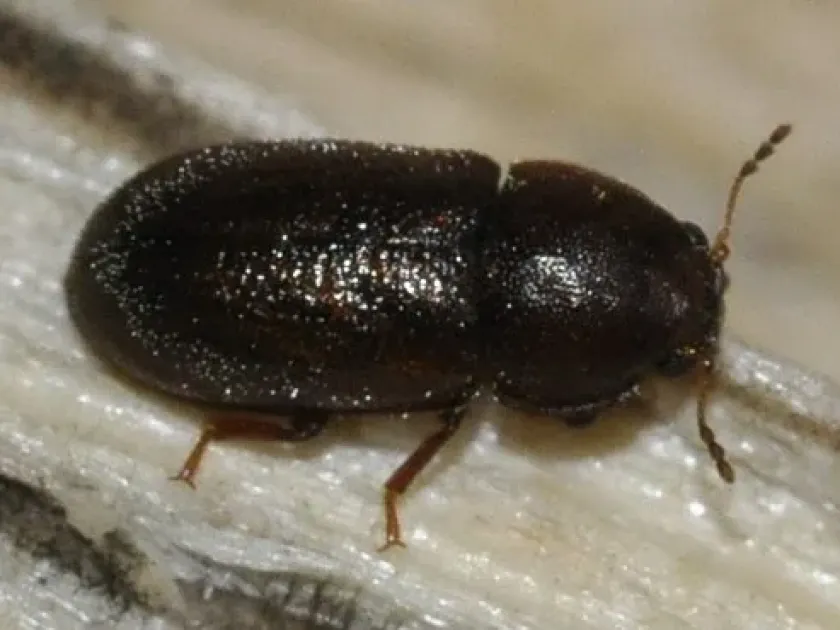
Description
How to identify
The Cis beetle belongs to the family Ciidae, a group of minute, cylindrical beetles that inhabit woody fungi. These insects are typically 1 to 3 millimeters long and possess a dark brown to black coloration.
Adult beetles have a hard exoskeleton, often covered with microscopic hairs. Their bodies are perfectly adapted for navigating the dense, pore-like structure of bracket fungi (polypores).
The larvae are small, white, and curved, with well-developed mouthparts designed for burrowing through tough fungal tissue. They spend their entire developmental cycle within the host fungus.
Because the genus Cis includes numerous species, specific identification usually requires expert analysis. However, their presence is almost always tied to the existence of fungal fruiting bodies on trees.
These beetles are primarily mycophagous, meaning they feed exclusively on fungi. They thrive in environments where decaying wood and fungal activity are prevalent, such as mature or neglected orchards.
What it damages
The direct damage caused by the Cis beetle involves the consumption and destruction of the host fungus. While they do not typically attack healthy tree bark, they play a significant role in the spread of fungal spores.
By tunneling through bracket fungi, these beetles break up the fruiting bodies, releasing large quantities of spores into the air. This accelerates the infection process for surrounding trees in the orchard.
In cases of heavy infestation, the internal structure of the fungus becomes honeycombed with tunnels and filled with frass. This causes the fungus to disintegrate prematurely, leaving behind visible exit holes.
The tunnels created by the beetles can also serve as entry points for secondary pests and opportunistic pathogens. This compromises the structural integrity of already weakened tree branches.
Ultimately, the presence of the Cis beetle is an indicator of underlying tree health issues. They exacerbate the damage initiated by wood-decay fungi, leading to a faster decline of the host tree.
Signs of infestation
The most prominent sign of infestation is the presence of numerous small, circular exit holes on the surface of the bracket fungus. These holes are typically less than 1 millimeter in diameter.
When an infected fungus is sliced open, one will find a complex network of internal galleries. The interior texture will be powdery and brittle, indicating that the larvae have consumed the fungal tissue.
During spring and summer, adult beetles may be observed crawling on the exterior of the fungi. This is the period when they emerge to mate and seek new fungal hosts.
Staining or discoloration of the fungus can also occur due to the accumulation of larval waste and the associated microbial decay within the tunnels.
If a bracket fungus begins to crumble or detach from the trunk prematurely, it is a strong indicator that a colony of Cis beetles has been active inside the fruiting body.
Control measures
The primary control method is the physical removal and destruction of all bracket fungi found on trees. These should be cut off, along with a small portion of healthy wood, and burned to kill the larvae.
Proper orchard sanitation is essential, including the regular removal of dead or dying branches. Maintaining tree vigor makes it less likely for wood-decay fungi to establish themselves in the first place.
Pruning wounds and cracks in the bark should be cleaned and sealed with appropriate wound paint or fungicides. This prevents the entry of fungal spores that eventually attract the Cis beetle.
Applying preventative fungicidal sprays to trees can inhibit the growth of the polypores that the beetles rely on. A fungus-free environment is an effective deterrent for this species.
Regular orchard inspections are crucial. By identifying and removing fungi in the early stages, growers can prevent the population buildup of these beetles and protect the overall health of the orchard.
Taxonomy
- Latin name
- Cis
- Order
- Coleoptera (beetles)
- Family
- Ciidae
- EPPO code
- CISXSP
Discussion
No discussions yet — be the first.