
Coconut leaf eating caterpillar
Opisina arenosella
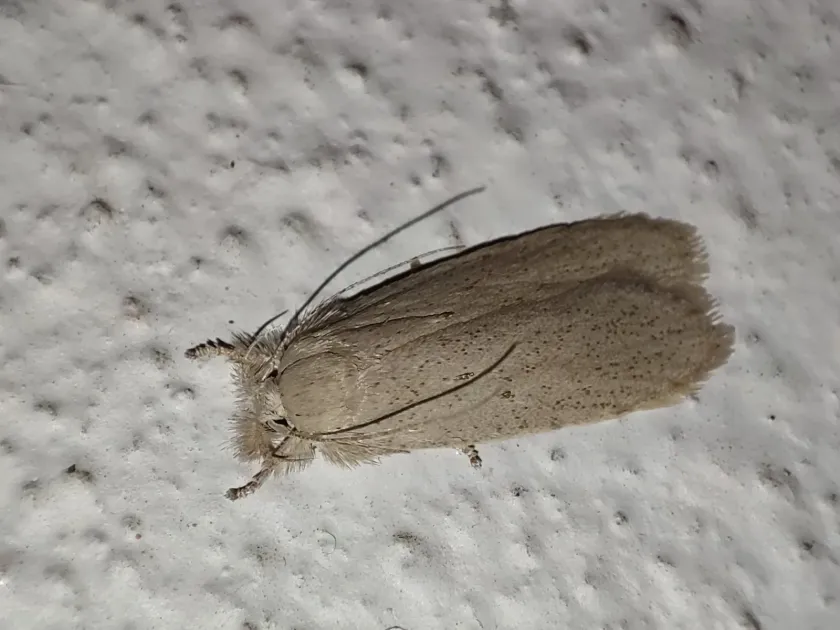
Description
How to identify
The coconut leaf eating caterpillar (Opisina arenosella) is a moth belonging to the order Lepidoptera and the family Oecophoridae.
The adult moth is small and greyish-brown, with wings that fold flat against its body when at rest.
Larvae are characterized by a dark brown or black head and a pale yellowish-green body, typically reaching up to 25 mm in length.
The life cycle involves egg, larval, pupal, and adult stages, lasting approximately 40 to 60 days depending on climate conditions.
Females lay eggs in clusters on the lower surface of leaflets, often covered with scales from their own bodies.
What it damages
The pest primarily targets coconut palms (Cocos nucifera) but has been known to infest other palm species in tropical regions.
The caterpillars feed on the green tissues of the leaflets, causing a characteristic skeletonization effect on the foliage.
Heavy infestations lead to significant yield reduction, as damaged leaves cannot provide the necessary nutrition for nut development.
In severe cases, the entire crown of the palm appears burnt or scorched, which severely stresses the tree and can lead to death.
The economic impact is substantial, affecting large-scale coconut plantations and rural farmers reliant on coconut production.
Signs of infestation
The most distinctive sign of an Opisina arenosella infestation is the presence of silk galleries or tubes constructed on the leaflets.
Caterpillars remain inside these silk galleries, feeding on the leaf epidermis and protecting themselves from predators.
Leaves start to turn brown and dry out, giving the tree a wilted and scorched appearance from a distance.
Accumulation of larval excreta (frass) inside the silk tubes is a clear indicator of active feeding by the caterpillar population.
- Dried, brown, and scorched-looking leaflets
- Presence of silk tunnels on leaf surfaces
- Frass accumulation on foliage and crown
Control measures
Biological control using parasitoids such as Goniozus nephantidis and Apanteles taragamae is highly effective for long-term management.
Trunk injection with systemic insecticides provides a targeted approach, reducing the impact on non-target species in the environment.
Removal and burning of heavily infested leaves during the initial stages of an outbreak can prevent the spread of the pest.
Pheromone traps are used for monitoring the flight activity of adult moths and determining the optimal timing for intervention.
Implementing integrated pest management (IPM) practices, including chemical and biological methods, ensures sustainable protection of palm plantations.
Taxonomy
- Latin name
- Opisina arenosella
- Order
- Lepidoptera (butterflies)
- Family
- Xyloryctidae
- EPPO code
- NEPASE
Discussion
No discussions yet — be the first.