
Opisina
Opisina
Description
How to identify
Opisina (Opisina arenosella) is a small nocturnal moth belonging to the family Oecophoridae. The adult moth typically has a wingspan of 20–25 mm, with yellowish-gray or light brown forewings marked with subtle dark spots, which provide excellent camouflage.
The larvae, or caterpillars, of this species go through five distinct instars. They are characterized by a greenish-brown body and a notably dark head. These larvae are highly mobile and are the primary stage responsible for the damage inflicted on host plants.
The life cycle of the moth typically spans 45 to 60 days, depending on environmental conditions like temperature and humidity. This relatively short life cycle allows the species to produce multiple generations throughout the year, especially in tropical climates.
Pupation occurs within the silk-lined galleries that the larvae construct on the underside of palm leaflets. These protective structures shield the pupae from environmental stressors and predators, complicating control efforts.
Accurate identification is essential for effective pest management. Pheromone traps are commonly used in agricultural settings to detect the presence of male moths, allowing growers to monitor population trends and schedule timely interventions.
What it damages
The coconut palm (Cocos nucifera) is the primary host for Opisina arenosella. The larvae feed on the parenchyma of the leaflets, causing significant injury to the palm's photosynthetic machinery and overall vigor.
Beyond coconut palms, the pest is also known to attack other palm species, as well as some banana varieties. In severe outbreaks, the entire canopy of a plantation can be affected, leading to widespread defoliation.
The larvae feed within silk-lined galleries on the underside of the leaves, consuming the leaf tissue while leaving the vascular bundles intact. As the feeding progresses, the leaf appears brown, scorched, and dry, losing its ability to support the tree's metabolic needs.
Yield loss is a major economic consequence of Opisina infestations. Research indicates that significant defoliation can reduce coconut production by up to 50% for several subsequent seasons as the tree struggles to recover.
Weakened trees become susceptible to secondary pathogens and further pest attacks. If left unmanaged, a localized infestation can quickly spread, threatening the viability of the entire plantation and local agricultural economy.
Signs of infestation
The most distinctive sign of Opisina infestation is the presence of silk galleries or "tunnels" on the underside of leaflets. These structures serve as both feeding sites and shelter for the larvae during the day.
Accumulated dark-colored larval excrement (frass) within these galleries is a strong indicator of an active infestation. The leaf tissue surrounding these feeding sites often turns necrotic and dark brown, which is easily visible from a distance.
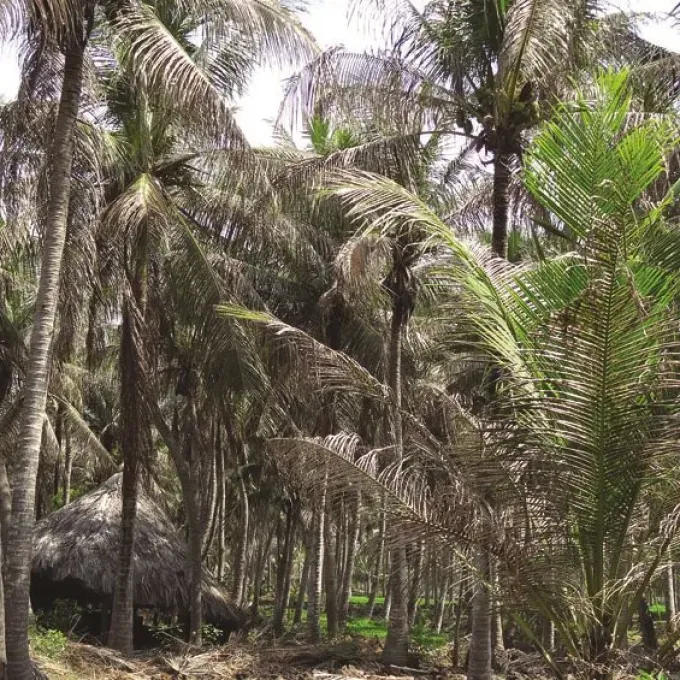
When an infestation becomes severe, the palm canopy changes from green to a grayish-brown, "burnt" appearance. In windy conditions, heavily damaged leaves become brittle and break off, leaving the palm with very little protective foliage.
Observation of adult moths during the early morning or evening hours is another key sign. If adults are spotted in significant numbers, it is a clear indication that a new generation of larvae is about to emerge or is already active on the trees.
- Silk-lined galleries on the underside of leaves.
- "Windowing" or scorched patterns on leaf surfaces.
- Brittle, brown, and dying leaflets.
- Frass deposits within larval shelters.
- Active caterpillar presence upon inspecting the leaf canopy.
Control measures
Biological control is considered the most sustainable strategy for managing Opisina populations. Introducing and conserving parasitoid wasps, such as Goniozus nephantidis, effectively suppresses caterpillar numbers without disrupting the surrounding ecosystem.
Mechanical control measures include the careful removal and disposal of heavily infested leaves. This practice is crucial in the early stages of an outbreak to reduce the population density before the next life cycle begins.
Chemical control should be utilized only as a last resort, particularly when the pest density reaches economic injury levels. Systemic insecticides are generally the most effective, as they can reach the larvae hiding within their protective silk galleries.
Good agricultural practices, such as proper fertilization and irrigation, help maintain palm health. Healthy trees demonstrate better resilience against larval feeding and show a faster recovery rate once the infestation is brought under control.
Integrated Pest Management (IPM) programs emphasize continuous monitoring throughout the year. By combining biological, cultural, and chemical methods, plantation owners can effectively mitigate the risks associated with this destructive coconut moth.
Taxonomy
- Latin name
- Opisina
- Order
- Lepidoptera (butterflies)
- Family
- Xyloryctidae
- EPPO code
- OPISSP
Discussion
No discussions yet — be the first.