
Ophonus stictus
Ophonus stictus
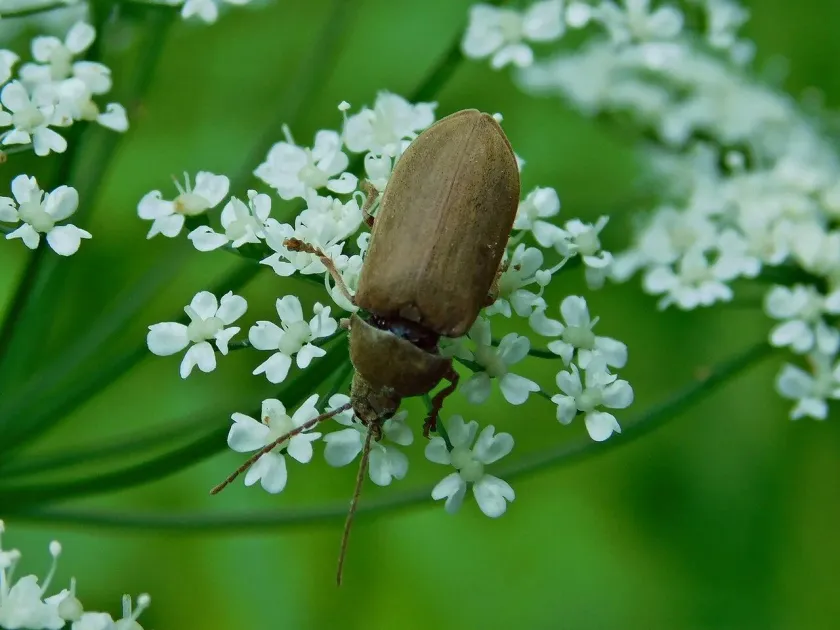
Description
How to identify
Ophonus stictus is a species of ground beetle belonging to the Carabidae family. Measuring approximately 8–10 mm in length, these beetles are typically characterized by a metallic or dark brown coloration on their elytra.
Unlike many predatory carabids, this species has adapted to consume plant material, making it a recognized pest in cereal cultivation. The adults have well-developed wings, allowing for migration between fields in search of host plants.
The life cycle of the beetle involves complete metamorphosis, including egg, larval, pupal, and adult stages. They typically overwinter in the soil or under surface debris, becoming active once spring temperatures rise.
During the summer months, females lay eggs directly in the soil. The larvae, which are specialized for subterranean life, possess sharp mandibles designed for feeding on plant roots and stems during their development.
Their reproductive strategy is closely linked to the presence of host crops, with the beetles preferring fields where tillage practices are minimal or absent, providing ample shelter throughout the year.
What it damages
The primary damage caused by Ophonus stictus is centered on cereal crops like wheat and barley. Adult beetles feed on developing grains in the milk and dough stages, hollowing out the grains within the spike.
The larvae are particularly destructive as they burrow through the soil to reach the underground parts of young cereal plants. They gnaw on roots and stems, which often causes the seedlings to wither or become stunted.
High infestations can lead to significant yield losses, especially in regions with prolonged drought. The plants, already under environmental stress, are unable to recover from the root damage inflicted by the larvae.
Aside from cultivated cereals, the beetle can maintain its population on wild grasses and weed species surrounding the fields. This creates a permanent reservoir of pests that can easily recolonize crops each season.
Fields under conservation tillage or those with significant stubble accumulation are at higher risk of experiencing damage, as these conditions offer protection to both larvae and adults during sensitive stages.
Signs of infestation
A key indicator of an infestation is the presence of hollowed-out grain kernels in the ear, often discovered during harvest preparation. These empty husks look normal from the outside but lack endosperm.
In the early stages of crop development, irregular thinning of the stand may indicate larval activity. Farmers may notice small, withered patches where young plants are failing to establish properly due to severed roots.
As the beetles are nocturnal, they are rarely seen during the day. Monitoring for their activity involves night inspections with flashlights or the use of light traps placed in fields during the active feeding season.
The presence of larvae can be confirmed by excavating the top 5–10 cm of soil around affected seedlings. The larvae are usually yellowish-white, slender, and possess characteristic curved jaws.
Stubble fields or areas with heavy weed coverage often show higher numbers of beetles. If you observe adult beetles crawling on the soil surface at dusk, immediate scouting for crop damage is recommended.
Control measures
Deep plowing in autumn is one of the most effective mechanical methods for controlling Ophonus stictus. This process disrupts the overwintering sites of the larvae and brings them to the surface, where they are exposed to predators and desiccation.
Crop rotation serves as a critical strategy to interrupt the pest's life cycle. By planting non-host crops for a season, the population density of the beetle can be significantly reduced in a specific area.
Timely harvest of cereal crops is essential to reduce the period during which beetles have access to the grain. Minimizing harvesting losses, such as spilled grain, removes the incentive for the beetles to congregate in the fields.
Chemical control is applied when monitoring reveals the economic threshold has been exceeded. Insecticides, specifically those belonging to pyrethroid classes, are most effective when applied at dusk when the beetles are most active.
Integrated weed management, both in fields and along field margins, helps reduce the alternative food supply for the beetles. Removing weed patches limits their ability to survive and reproduce during the fallow season.
Taxonomy
- Latin name
- Ophonus stictus
- Order
- Coleoptera (beetles)
- Family
- Carabidae
- EPPO code
- HARPST
Discussion
No discussions yet — be the first.