
Oodes helopioides
Oodes helopioides
Description
How to identify
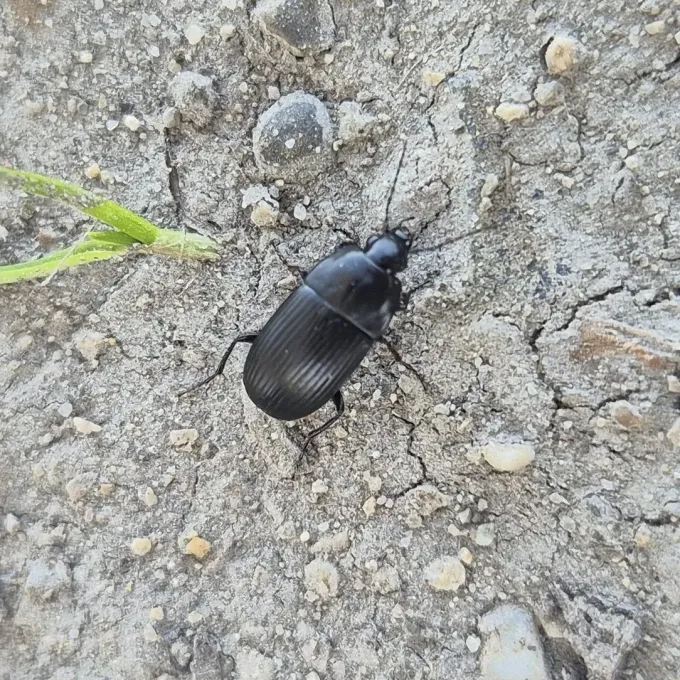
Oodes helopioides is a species of ground beetle belonging to the family Carabidae, within the order Coleoptera. This beetle is characterized by its oval, slightly convex body and a deep black, glossy appearance that distinguishes it from other related species.
The adult beetle possesses well-developed biting mouthparts. Its head and pronotum are notably smooth, and the elytra feature subtle, shallow striations. These morphological traits are adapted for life in damp, moist soil environments.
As a member of the ground beetle family, it undergoes complete metamorphosis, passing through egg, larval, pupal, and adult stages. The larvae are typically elongated and equipped with powerful mandibles suitable for a predatory lifestyle.
This beetle is strongly associated with riparian zones, wetlands, and water-saturated soils. Its distribution is heavily dictated by the availability of high-humidity habitats, where it can thrive without desiccation.
While often considered beneficial as a generalist predator in wild ecosystems, its presence in managed agricultural fields can become problematic when population densities increase near sensitive crops.
What it damages
The agricultural impact of Oodes helopioides is most significant in low-lying, poorly drained fields where moisture levels remain consistently high throughout the growing season. In such conditions, the beetle may turn its attention to young plant tissues.
The primary damage is inflicted upon the seedlings of root crops, including beets and various vegetables. Adults and larvae may feed on the stems, root collars, and young leaves, leading to stunted development or plant death.
Invasion of crop fields often happens via migration from nearby irrigation ditches or flood zones. Once established in a field, the beetles can cause uneven crop emergence and decreased plant density.
The damage is often mechanical, characterized by chewed areas on the hypocotyl, which makes the plant highly susceptible to soil-borne fungal diseases and root rots.
Economic loss is usually localized. However, in regions with heavy rainfall or inadequate drainage, the potential for significant stand thinning necessitates active monitoring and management strategies.
When it appears
The lifecycle of Oodes helopioides is closely linked to seasonal temperature shifts. Adults emerge from hibernation early in the spring, once the soil has sufficiently warmed, to begin feeding and mating.
Peak activity is typically observed in late spring and early summer. During these months, the combined warmth and soil moisture create optimal conditions for larval development and adult mobility within the soil profile.
The species typically completes one generation per year. Development from egg to adult is synchronized with the environmental humidity levels, ensuring that larvae can survive in their preferred moist soil niches.
As summer temperatures peak and potentially dry out the surface soil, adult activity may become more cryptic. They often retreat into deeper soil layers or dense vegetation to avoid dehydration.
In autumn, adults prepare for winter dormancy. They seek sheltered microhabitats such as cracks in the soil, piles of organic matter, or debris along field edges, where they remain until the following spring.
Control measures
Management of Oodes helopioides primarily focuses on habitat manipulation rather than chemical reliance. Improving field drainage is the most effective long-term strategy to reduce the beetle's suitability for survival.
Cultural practices that disrupt the soil surface, such as deep plowing during the off-season, can effectively destroy hibernating sites and reduce larval populations by exposing them to desiccation and predators.
Recommended control measures include:
- Enhancing drainage systems to prevent waterlogging.
- Maintaining field hygiene by removing weeds that provide shelter.
- Targeted application of insecticides on field margins if thresholds are exceeded.
Chemical intervention should be treated as a secondary measure and applied carefully to avoid collateral damage to beneficial insects, including other non-pest ground beetles.
Integrated Pest Management (IPM) is crucial. By monitoring moist field boundaries and applying corrective soil management, farmers can effectively limit the expansion of this pest without disrupting the local ecological balance.
Taxonomy
- Latin name
- Oodes helopioides
- Order
- Coleoptera (beetles)
- Family
- Carabidae
- EPPO code
- OODEHE
Discussion
No discussions yet — be the first.