
Onychiurus fimetarius
Onychiurus fimetarius
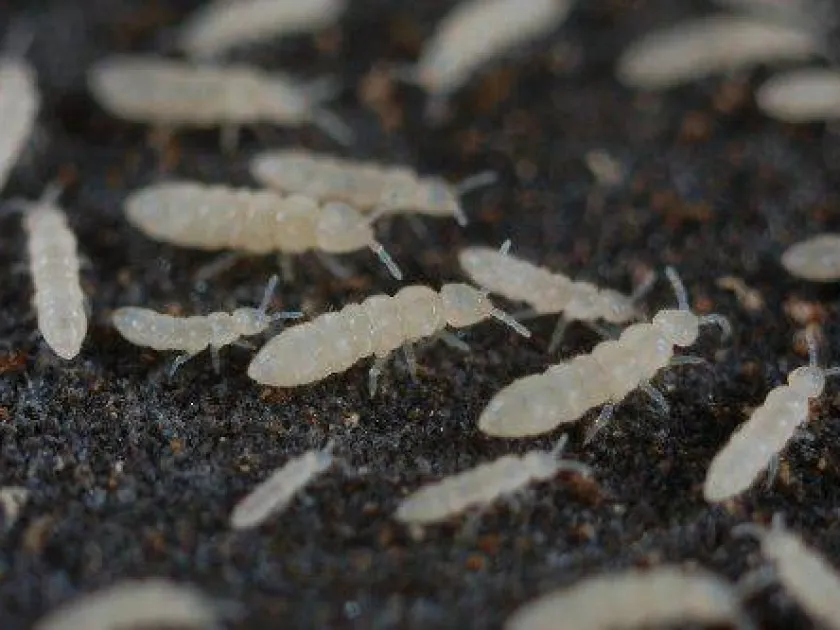
Description
How to identify
Onychiurus fimetarius belongs to the class of hidden-jawed insects, order Collembola (Poduromorpha), and family Onychiuridae. This tiny soil insect measures between 1 to 2 mm and has a white or yellowish body, lacking pigmentation.
This pest lacks organs of sight, which is attributed to its obligate underground lifestyle. The body of O. fimetarius is cylindrical, elongated, and equipped with dense cuticles adapted for movement within the capillary pores of the soil.
Unlike other collembolans, O. fimetarius lacks a furcula (springing organ), meaning it moves exclusively by slow crawling. Its development occurs within the soil profile, where it finds optimal conditions of moisture and food.
Reproduction takes place in the soil, with females laying eggs in small clusters within cracks or soil cavities. The development cycle includes several larval stages that differ little in appearance from adults, gradually increasing in size.
High population densities of this pest are observed in soils rich in organic matter, especially when sufficient moisture is present, making it particularly dangerous for germinating seeds.
What it damages
Onychiurus fimetarius is a polyphagous pest that damages a wide range of agricultural crops, including cereals, sugar beets, potatoes, vegetables, and ornamental plants.
The most significant damage occurs during the seed germination and seedling emergence stages. The pest penetrates the seeds, consuming the embryo and endosperm, which leads to total loss of the seed material.
When attacking the underground parts of young plants, these pests damage the roots and hypocotyls, disrupting nutrient uptake and overall seedling development.
On root crops and tubers, the pest leaves characteristic small pits and depressions, which can subsequently serve as entry points for fungal or bacterial plant pathogens.
In conditions of high pest populations, crop stands may become thin, necessitating the reseeding of affected areas due to significant losses in plant density.
Signs of infestation
The primary sign of infestation is the presence of sparse or patchy seedling stands in the field, accompanied by the visible absence of seeds in the soil during excavations around damaged areas.
Visual inspection of damaged seedlings reveals tiny holes or chewed tissues in the root collar zone, which leads to wilting and eventual death of the young plant.
The presence of large numbers of individuals is easily detected through soil excavations in the 0–10 cm layer, where, upon drying out the soil sample, the pests become visible as whitish, slow-moving specks.
On the soil surface in areas of heavy infestation, there are virtually no visible signs of pest activity, as it rarely leaves the soil layer except during periods of extreme moisture.
An indirect indicator is the presence of areas with poor emergence, particularly in fields where soil retains moisture for a long time or is enriched with recently incorporated organic fertilizer.
Control measures
The foundation of control is the agrotechnical method: deep autumn plowing helps reduce population density by disturbing the habitat and exposing the pests to desiccation.
It is essential to adhere to optimal sowing dates that ensure rapid seed germination, thereby shortening the time the seeds remain in a vulnerable state within the soil.
The application of seed treatments (incrustation) using effective fungicidal and insecticidal preparations is the most potent method for protecting young crops during the initial growth phase.
The application of mineral fertilizers that accelerate plant growth helps the crop pass through critical stages quickly, reducing the window of opportunity for pest damage.
Avoiding the excessive application of uncomposted manure under the crop reduces the soil's attractiveness for O. fimetarius reproduction, preventing the formation of high-density pest hotspots.
Taxonomy
- Latin name
- Onychiurus fimetarius
- Family
- Onychiuridae
- EPPO code
- ONYCFI
Discussion
No discussions yet — be the first.