
Onychiurus springtail
Onychiurus ambulans
Description
How to identify
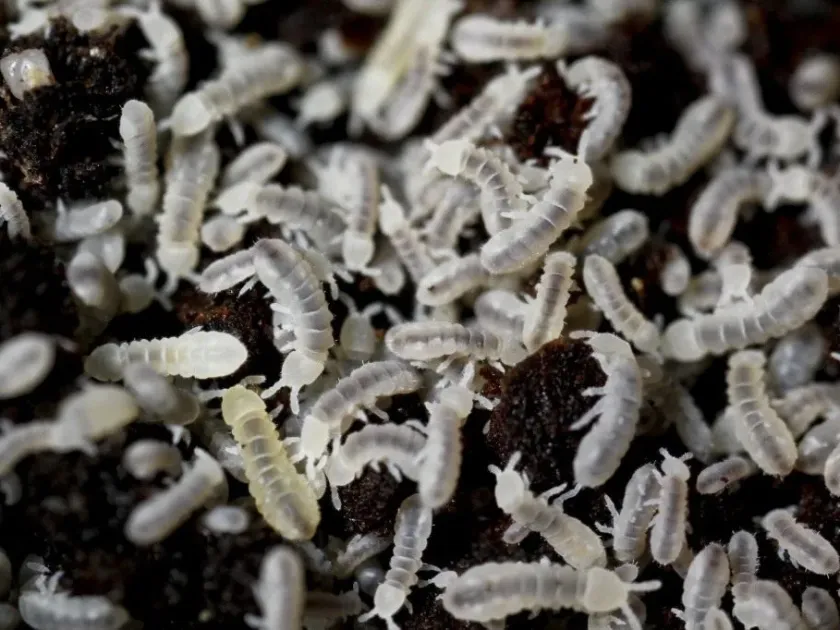
The Onychiurus springtail (Onychiurus ambulans) belongs to the order Collembola and the family Onychiuridae. These are tiny arthropods, typically 1–2 mm long, characterized by a white or pale yellow body without eyes or the jumping organ (furcula) found in many other springtails.
These pests lead an exclusively subterranean life, navigating through soil voids and crevices. They are highly adapted to moisture-rich environments and are extremely sensitive to desiccation and direct sunlight, rarely appearing on the soil surface.
The life cycle involves egg, nymphal stages, and adult, with development being heavily dependent on soil temperature and humidity. Under favorable greenhouse conditions, populations can multiply continuously throughout the year.
Due to their small size and subterranean lifestyle, they are often overlooked until significant crop damage is already present. They inhabit both organic-rich soils and sterile substrates if moisture levels are high.
Reproduction occurs through egg deposition within soil aggregates. With a generation time of about 3–4 weeks in optimal conditions, a small initial population can rapidly grow into an infestation that threatens seedling survival.
What it damages
Onychiurus springtails are significant pests of germinating seeds and young seedlings. They frequently target crops such as sugar beet, cucumber, cabbage, carrots, and various ornamental plants in nursery settings.
The most severe damage occurs at the germination stage, where the pests feed on the embryonic tissues of the seed, preventing emergence. When feeding on developed seedlings, they destroy the radicle and secondary roots.
Secondary damage is often more critical than direct feeding: the micro-wounds created by springtails provide entry points for soil-borne pathogens, including fungi and bacteria, leading to root rot and damping-off.
In greenhouse environments, high densities of these insects can lead to widespread stand failure, causing significant economic loss. Stunted growth, yellowing leaves, and wilting are common symptoms of root system destruction.
While they can feed on decomposing organic matter, they will switch to healthy plant tissue once food sources are scarce, making them particularly dangerous in greenhouse substrates containing partially decomposed material.
Signs of infestation
A primary indicator of an infestation is patchy emergence or missing seedlings within a row. Digging into the soil in these gaps usually reveals a large concentration of small, whitish, moving organisms.
Root systems of affected seedlings show localized necrotic spots, missing root hairs, and shredded tissues. The roots appear consumed or "nibbled," which severely limits the plant's ability to take up water and nutrients.
Seedlings suffering from Onychiurus attack appear weak, display chlorosis, and wilt during the day, even if the soil moisture level is adequate, due to the compromised root uptake capability.
Excessive watering often forces the springtails to migrate closer to the soil surface, where they can be observed as a shimmering whitish layer on the moist substrate before it dries out.
Potato slice traps are an effective diagnostic tool. Buried 2–3 cm deep in the soil, they will quickly attract the springtails, allowing for an accurate estimate of the population density in a particular area.
Control measures
Effective management begins with proper greenhouse hygiene and soil preparation. Steaming or heat-treating soil substrates before sowing is the most reliable way to eliminate all life stages of the springtail.
Water management is crucial; maintaining the top layer of the substrate as dry as possible between irrigation cycles creates a hostile environment for these moisture-dependent insects.
Chemical control involving soil-applied insecticides during planting can protect vulnerable seedlings. Granular applications of systemic or contact insecticides are often effective in preventing initial damage.
Regular weeding and the removal of plant debris from the greenhouse floor prevent the buildup of populations that could otherwise survive the interval between planting cycles.
Utilizing high-quality, fully decomposed composts is vital, as poorly composted organic matter is a frequent vector for introducing Onychiurus populations into sterile greenhouse environments.
Taxonomy
- Latin name
- Onychiurus ambulans
- Family
- Onychiuridae
- EPPO code
- ONYCAM
Discussion
No discussions yet — be the first.