
Onychiurus
Onychiurus
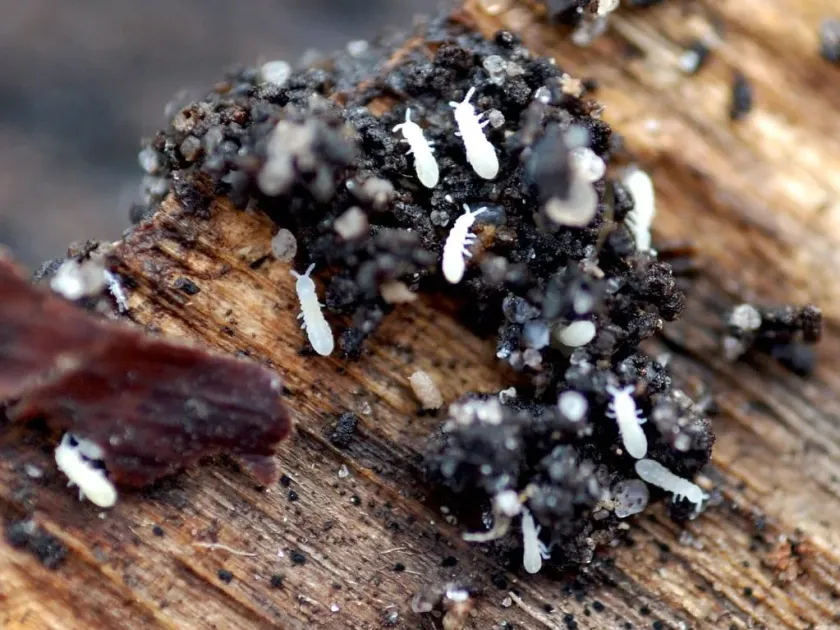
Description
How to identify
Onychiurus is a genus of soil-dwelling arthropods belonging to the order Collembola, commonly referred to as springtails. These tiny organisms are adapted to live within soil pores and organic matter.
Adult specimens measure between 1 and 3 millimeters in length. Their bodies are elongated, soft, and lack pigmentation, appearing white or pale. They are completely eyeless, relying on tactile sensors.
Their anatomy includes a specialized sensory organ on the head and sensitive bristles distributed across the body, which allow them to navigate effectively in the total darkness of the soil environment.
Reproduction occurs entirely within the soil. Females deposit eggs in clusters within crevices or moisture-rich organic debris, ensuring the next generation starts in a protected environment.
The life cycle is simple and gradual. Juveniles look like smaller versions of adults, reaching maturity through several molting stages while remaining in the same ecological niche throughout their life.
What it damages
Onychiurus species are notorious pests of agricultural crops, particularly affecting germinating seeds, young roots, and the hypocotyl of developing seedlings in their early growth stages.
A wide range of crops is susceptible, including sugar beets, cucumbers, carrots, and potatoes. In severe cases, the entire seed population can be decimated before emergence occurs.
These pests consume the tender tissues of roots, creating pits and galleries. This damage disrupts the plant's ability to absorb water and nutrients, leading to stunting or complete wilting.
Furthermore, the physical damage caused by feeding provides an entry point for soil-borne pathogens, such as fungi and bacteria, which cause root rot and systemic plant disease.
The severity of the damage is often highest in greenhouse settings or poorly drained soils, where constant moisture levels provide ideal conditions for population explosions of these organisms.
Signs of infestation
The primary indication of an Onychiurus infestation is poor field emergence, where seeds fail to sprout or young seedlings die off immediately after germinating due to root loss.
When examining damaged roots, one can observe small, irregular feeding pits or eroded areas that appear as lesions, often clustered where the root tissue is most succulent.
Stunted growth, yellowing foliage, and a general lack of vigor in young plants are common external signs, frequently misidentified as nutritional deficiencies or inadequate irrigation issues.
By excavating the soil near the root zone and shaking it over a dark container or into water, the presence of these white, rapidly moving springtails can be confirmed visually.
The soil itself may show signs of high moisture or organic saturation, creating a characteristic environment where these pests flourish in massive, dense colonies near the root hairs.
Control measures
Effective management relies heavily on cultural practices. Deep plowing and frequent soil aeration help disrupt the favorable habitat of the pests by promoting drying and oxygenation.
Managing soil moisture is critical; avoiding waterlogged conditions prevents the buildup of large populations, as these springtails require high humidity to survive and reproduce.
Improving soil structure through proper organic matter management is essential. Using well-decomposed compost rather than fresh, raw manure reduces the attractiveness of the soil for the pests.
Chemical control involving systemic or contact insecticides applied to the soil can be necessary in cases of heavy infestation where crops are at high risk during the germination phase.
- Crop rotation to break the life cycle.
- Seed treatment with appropriate fungicides and insecticides.
- Liming acidic soils to discourage colonization.
- Optimizing irrigation systems to prevent oversaturation.
Taxonomy
- Latin name
- Onychiurus
- Family
- Onychiuridae
- EPPO code
- ONYCSP
Discussion
No discussions yet — be the first.