
Onychiurus fimatus
Onychiurus fimatus
Description
How to identify
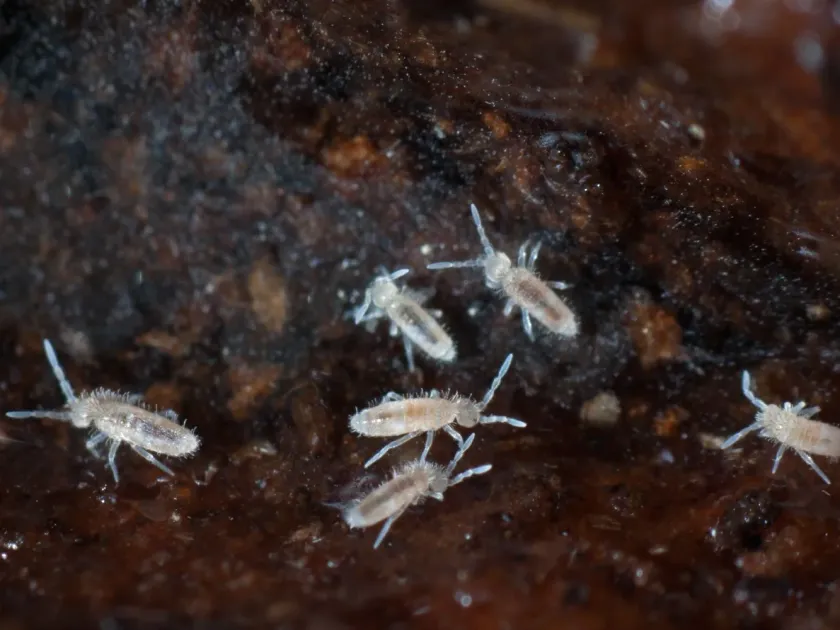
Onychiurus fimatus belongs to the order Collembola, family Onychiuridae. These are tiny, blind, non-pigmented hexapods, typically measuring no more than 1.5–2 mm in length. Their translucent white bodies make them difficult to spot within soil aggregates.
Unlike many other springtails, Onychiurus species lack a jumping organ (furcula). They move slowly through soil pores, preferring environments with high moisture and high organic matter content, which provide both food and protection from dehydration.
The life cycle of this pest is entirely subterranean. Females deposit eggs in soil cavities, and the emerging nymphs resemble miniature versions of the adults. They undergo several molts before reaching sexual maturity, maintaining their cryptic behavior throughout the entire cycle.
Population density can fluctuate based on environmental conditions. During cool, wet springs, populations often spike, leading to increased pressure on crops that are slow to emerge due to thermal delays.
Their distribution is often patchy, reflecting the uneven distribution of moisture and organic debris within a field. They are most commonly encountered in damp, poorly drained soils or areas with high residue accumulation.
What it damages
Damage is caused by both adults and nymphs, which congregate around germinating seeds and developing roots. The pest is a significant threat to sugar beets, cereals, vegetable crops, and nursery stock during their most vulnerable stage: germination.
The primary injury involves the consumption of the embryo within the seed. When high numbers are present, they can devour the entire seed content before it manages to sprout, leading to significant stand gaps and reduced plant density.
For seedlings that have already emerged, the pests feed on the hypocotyl and young root tissues. This feeding creates small necrotic lesions or shallow pits, which serve as entry points for secondary soil-borne pathogens, leading to root rot and seedling death.
Heavy infestations can lead to complete failure of the stand, necessitating replanting. Even moderate infestations cause significant delays in plant growth, resulting in uneven fields that are harder to manage and harvest.
The economic impact is highest when environmental factors, such as cold soil temperatures, slow down the seedling development, keeping the plants susceptible to feeding for a longer period of time.
Signs of infestation
The most noticeable sign of an Onychiurus fimatus infestation is the appearance of thin or missing rows in the field. When examining such areas, growers often find seed coats or damaged roots that appear gnawed or pitted.
Seedlings affected by springtail feeding often show signs of stunting, chlorosis, and wilting. If a damaged plant is carefully removed from the soil with a small block of earth, the white, slow-moving bodies of the pests may be visible near the root zone.
Diagnostic verification often requires careful excavation of the soil around the seed or root. Because of their tiny size, many growers use magnifying glasses or soil washing techniques to confirm their presence in suspected areas.
These pests are sometimes confused with seedling diseases like damping-off. However, the presence of the springtails themselves and the specific pattern of mechanical damage usually distinguish this pest from fungal pathogens.
Consistent, inexplicable low germination rates despite good seed quality and appropriate sowing depth should always be considered a red flag for the presence of subterranean pests like springtails.
Control measures
Effective management of Onychiurus fimatus requires an integrated approach focusing on optimizing growing conditions and chemical protection. The primary line of defense is the use of insecticidal seed treatments containing systemic active ingredients.
Cultural practices are essential to reduce the pest's environment and favor plant vigor. Ensuring optimal sowing conditions allows for rapid seedling emergence, which minimizes the time the crop is at risk.
Recommended control measures include:
- Implementing crop rotation to break the pest's cycle in heavily infested fields.
- Improving soil structure and drainage through appropriate tillage practices to discourage springtail proliferation.
- Ensuring balanced nutrient management to support rapid and healthy root development.
- Thorough incorporation of crop residues into the soil to promote decomposition and eliminate food sources.
Monitoring populations through soil sampling before sowing helps determine the necessity of intervention. In cases of high population density, soil-applied insecticides may be required to protect the crop.
Maintaining a healthy, well-aerated soil environment creates unfavorable conditions for springtails, as they are highly dependent on specific moisture levels and porous soil spaces to survive and reproduce efficiently.
Taxonomy
- Latin name
- Onychiurus fimatus
- Family
- Onychiuridae
- EPPO code
- ONYCFM
Discussion
No discussions yet — be the first.