
Onesia
Onesia
Description
How to identify
Onesia is a genus of blow flies belonging to the family Calliphoridae. These insects are often mistaken for common house flies or bluebottle flies, but they possess distinct anatomical features that define their group.
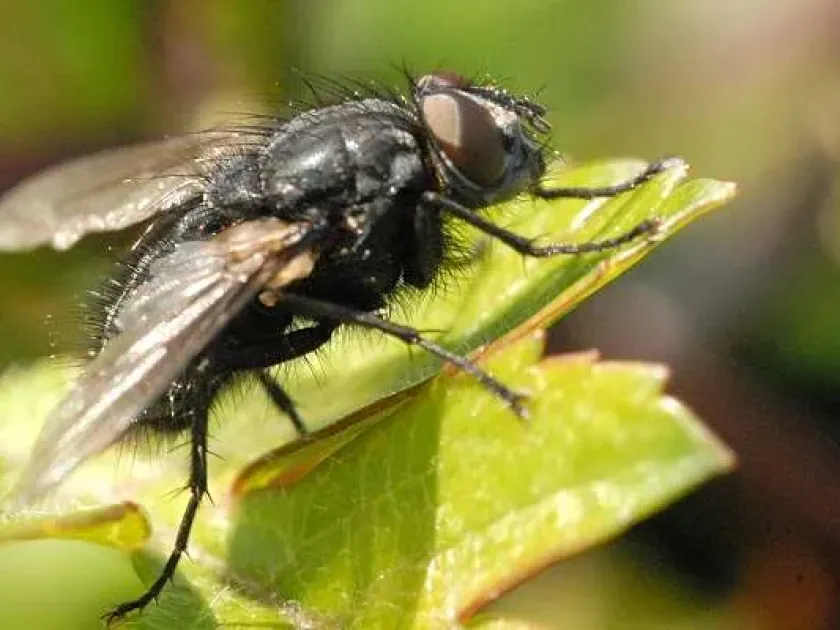
Adult flies typically measure between 6 and 10 millimeters in length. They often exhibit a metallic blue or green sheen, and their body is covered with dense, dark bristles which are sensitive to air currents and chemical signals.
The larvae are vermiform (worm-like) and lack true limbs, which is typical for many dipteran larvae. They reside in decomposing organic matter, which serves as both their primary food source and habitat.
Adults have large, prominent compound eyes and a sponging mouthpart adapted for feeding on fluids. Their lifecycle is closely linked to the availability of rotting plant tissues, which provides the necessary conditions for larval development.
Development proceeds through egg, three larval instars, pupa, and adult stages. The speed of this cycle is highly dependent on ambient humidity and temperature levels in the surrounding soil or debris.
What it damages
Onesia causes damage primarily when larvae inhabit waterlogged or decaying plant tissues. While not a primary parasite of healthy plants, they readily attack tissues that have been damaged by other factors.
Crops such as onions, cabbage, and various root vegetables are particularly susceptible if their tissues have begun to soften or rot. Larvae burrow into the plant, causing internal degradation and death.
In greenhouses, where humidity is often elevated, Onesia can become a nuisance if organic waste is not removed promptly. The larvae can spread quickly throughout containers or planting beds.
Beyond direct feeding, larvae act as vectors for various phytopathogenic bacteria and fungi. This secondary infection often causes more damage to the crop than the physical feeding activity of the larvae.
Economic losses arise from reduced crop quality and post-harvest rot. Infested areas become unusable, and if the infestation is heavy, the entire plant may collapse prematurely.
When it appears
The seasonal activity of Onesia commences in late spring as soil temperatures rise. Warm and humid conditions are the primary catalysts for the emergence of active populations.
Peak abundance typically occurs during mid-summer, coinciding with periods of high rainfall or inadequate field drainage. This creates the optimal decay conditions needed for larval growth.
As autumn approaches, activity wanes as the insects prepare for diapause. Pupae overwinter in the soil or within protected organic debris until conditions become favorable in the following spring.
Multiple generations may emerge within a single growing season. This overlapping of generations makes it essential for growers to maintain continuous vigilance against the pest.
Environmental factors, particularly soil moisture levels, significantly influence the population density of Onesia in any given agricultural area.
Signs of infestation
The primary sign of infestation is localized wilting of plants despite adequate soil moisture. Inspection of the root collar often reveals damaged tissue where larvae are present.
Tissues affected by larval feeding exhibit softening, discoloration, and a characteristic foul odor associated with rot. This is a clear indicator that the plant has been colonized.
The presence of large numbers of adult flies near stored vegetable waste or wet soil areas serves as an early warning for potential infestation of nearby crops.
Yellowing leaves, often misinterpreted as a nutrient deficiency, can indicate underlying damage to the root system caused by larval activity, which impairs nutrient uptake.
Internal examination of stems or root crops often reveals galleries or tunnels filled with larval excrement and decaying plant tissue, confirming the presence of the pest.
Control measures
Management of Onesia relies on integrated pest management (IPM) practices, focusing primarily on eliminating breeding sites through good agricultural practices.
- Implementing crop rotation to disrupt the lifecycle of the fly.
- Improving soil drainage to prevent the moisture accumulation that attracts the pest.
- Ensuring the timely removal and disposal of all decaying plant residues from the field.
- Using yellow sticky traps or pheromone-based lures to monitor and reduce adult populations.
- Applying biological control agents, such as entomopathogenic fungi, to target the larval stages.
Chemical control is generally reserved for situations where population levels exceed the economic threshold. Systemic insecticides can be used, though they must be applied according to local regulations.
Regular field scouting is essential to identify hotspots of infestation. Early detection allows for localized treatments, which significantly reduces the need for broad-spectrum insecticide applications.
Maintaining high plant health through balanced fertilization and proper irrigation helps minimize the risk of secondary infections that attract the flies to the crops in the first place.
Taxonomy
- Latin name
- Onesia
- Order
- Diptera (flies)
- Family
- Calliphoridae
- EPPO code
- ONESSP
Discussion
No discussions yet — be the first.