
Omophron limbatum
Omophron limbatum
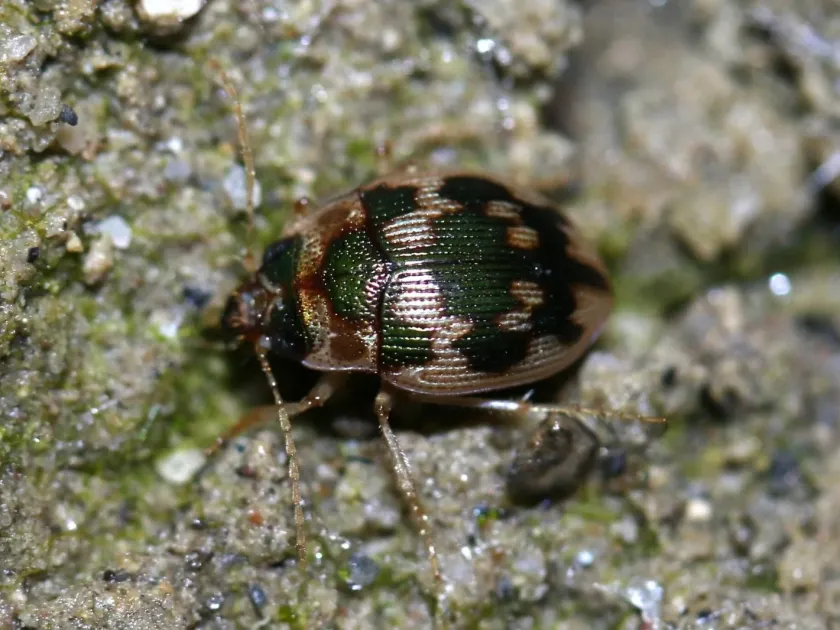
Description
How to identify
Omophron limbatum is a unique species within the Carabidae (ground beetle) family, order Coleoptera. Unlike most slender ground beetles, this species has a distinctively round, convex body shape, closely resembling a small turtle.
The adult beetle is typically yellow to reddish-brown in color, featuring a dark, transverse pattern on the elytra that creates a "banded" appearance, which is the origin of its common name.
Measuring between 6 to 8 millimeters, these beetles are highly adapted to riparian environments, preferring wet sandy or silty shores of ponds, rivers, and irrigation channels.
The larvae are elongated and possess functional legs, allowing them to move efficiently through damp soil layers in search of prey or favorable microclimates.
While primarily predatory, the species' opportunistic behavior allows it to thrive in various soil conditions, sometimes leading to accidental interactions with cultivated seedlings.
What it damages
The damage caused by Omophron limbatum occurs mainly when their habitat overlaps with newly sown crop fields. The beetles and larvae may feed on tender plant structures.
Specifically, they damage young germinating seeds and the root systems of small seedlings, often severing the primary root or the stem just below the soil surface.
This feeding activity leads to stand thinning, patchiness in the field, and overall crop vigor reduction, which is especially detrimental during the establishment phase.
Secondary damage arises as the mechanical wounds caused by the beetles provide entry points for soil-borne pathogens, leading to fungal or bacterial decay of the crop.
Field margins adjacent to water sources are the most vulnerable, often exhibiting complete loss of seedlings in concentrated zones if population levels are high.
When it appears
The activity of this beetle is highly seasonal and temperature-dependent, beginning as soon as the soil warms up during the early spring months.
Peak activity and potential crop interference occur during May and June, aligning with the critical germination and seedling emergence period for many seasonal crops.
Reproduction takes place throughout the summer, after which the population density begins to decline as individuals move toward overwintering sites.
Overwintering occurs in deeper, more stable soil strata, typically within a few meters of the shoreline where moisture content remains high and temperatures are regulated.
Rainy weather and flooding events during the spring can trigger mass migrations of these beetles from their natural shoreline habitats into adjacent agricultural fields.
Signs of infestation
Early identification of an infestation involves observing small, characteristic burrow holes in the soil surface along the edge of the field near water bodies.
Crop symptoms manifest as sudden wilting and yellowing of young plants, which quickly collapse because their root systems have been partially consumed.
Careful inspection of the soil around the base of affected plants often reveals the presence of larvae or adult beetles hiding just beneath the topsoil.
Mechanical damage on the stem or roots will appear as ragged, chewed margins, confirming the presence of insects with strong, mandibular mouthparts.
The damage often follows a pattern of localized clusters, which expands linearly along the field edge rather than being distributed uniformly across the entire crop area.
Control measures
Effective control requires an integrated approach focusing on cultural practices and targeted chemical protection to minimize the impact on crop establishment.
Deep plowing in the autumn is a highly recommended practice to disturb overwintering sites, significantly reducing the survival rate of the population for the following spring.
Applying systemic insecticide seed treatments is the most efficient method to protect the vulnerable root zone of young crops from soil-dwelling insect pests.
Maintaining proper field drainage and managing vegetation strips between the water source and the crop field can create an unfavorable environment for the beetles.
- Use of insecticidal seed coatings.
- Strategic autumn soil cultivation to disrupt life cycles.
- Establishment of buffer zones to keep crops away from riparian areas.
- Regular monitoring of beetle density using soil traps during the seedling stage.
Taxonomy
- Latin name
- Omophron limbatum
- Order
- Coleoptera (beetles)
- Family
- Carabidae
- EPPO code
- OPHRLI
Discussion
No discussions yet — be the first.