
Omophron
Omophron
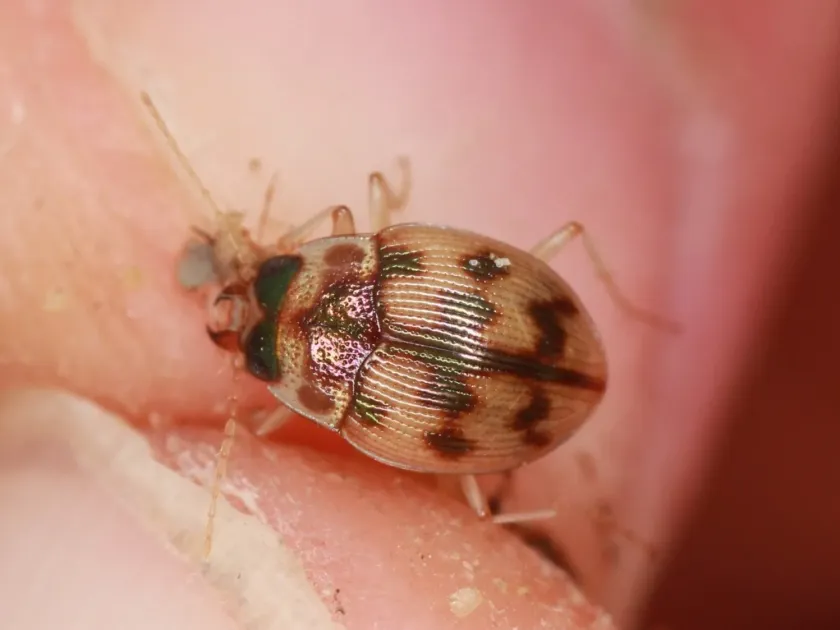
Description
How to identify
Omophron is a unique genus within the family Carabidae (ground beetles), characterized by a highly convex, almost spherical body shape, which makes them appear quite different from typical elongated ground beetles.
These beetles often display intricate, mottled patterns on their elytra, providing excellent camouflage against the muddy or sandy substrates where they typically reside.
The larvae are predatory with elongated, flattened bodies, perfectly adapted for moving through soil crevices or along the banks of water bodies to hunt for prey.
Taxonomically, they are placed in their own subfamily, Omophroninae, highlighting their distinct evolutionary divergence from other carabid beetles.
Identification is best achieved by observing their globular shape and preference for wet, riparian-like habitats near agricultural fields or irrigation channels.
What it damages
It is important to clarify that most Omophron species are primarily predatory, feeding on small invertebrates, and are not categorized as significant agricultural pests.
However, when population densities are exceptionally high in waterlogged fields, they may incidentally damage tender roots while burrowing, leading to mechanical stress on plants.
They are not true phytophagous pests, but their burrowing activity in overly moist soil can disrupt root contact with the substrate, causing mild stunted growth.
In rare instances, larvae may cause minor feeding damage to the base of stems if their primary prey sources are scarce during the early stages of crop development.
The secondary effect of their presence is an increased risk of root rot, as the micro-tunnels created by the beetles can facilitate the entry of soil-borne pathogens.
When it appears
Omophron beetles are most active during the spring and summer months, as their biological cycle is closely tied to soil temperature and moisture levels.
Peak activity is observed during the warmer summer period when they congregate near irrigation ditches, drainage systems, and naturally damp soil areas.
As temperatures drop in autumn, adults seek shelter for overwintering, burrowing deep into the soil or hiding beneath dense organic mulch to survive the winter.
The life cycle undergoes complete metamorphosis, with the duration of each stage varying depending on the specific environmental conditions of the region.
They are often nocturnal or crepuscular, meaning they are more likely to be found on the surface of the soil during the evening or after rainfall.
Signs of infestation
The primary sign of their presence is the appearance of small, round exit holes on the surface of damp, compacted soil following their emergence from lower layers.
Observed mechanical damage to the roots of young seedlings, coupled with the presence of small beetles under soil clumps, is a strong indicator of activity.
Muddy or silty tracks on the ground, especially near field boundaries close to water, often reveal their congregation points.
Field monitoring using pitfall traps is the most reliable method for detecting and assessing the population density of these beetles on your farm.
A general appearance of wilting in small, concentrated patches of a field after heavy irrigation can sometimes be attributed to high beetle activity in the root zone.
Control measures
Because they are not significant pests, chemical control is rarely necessary and generally discouraged to avoid disrupting the local ecosystem of beneficial insects.
The most effective management strategy is to optimize field drainage to eliminate the overly wet, muddy conditions that Omophron beetles prefer for survival.
Regular cultivation and loosening of the soil between crop rows can disrupt their habitat and reduce the likelihood of larvae development.
- Improving drainage systems to prevent water accumulation.
- Rotating crops to break the life cycle of soil-dwelling inhabitants.
- Removing weeds and debris from the edges of water channels to decrease shelter.
When necessary, focus on cultural practices first, as these provide long-term prevention without the negative impacts of broad-spectrum insecticide applications.
Taxonomy
- Latin name
- Omophron
- Order
- Coleoptera (beetles)
- Family
- Carabidae
- EPPO code
- OPHRSP
Discussion
No discussions yet — be the first.