
Olisthopus rotundatus
Olisthopus rotundatus
Description
How to identify
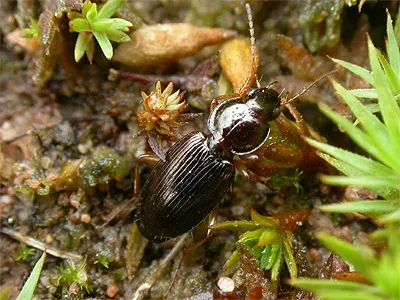
Olisthopus rotundatus is a species of ground beetle belonging to the family Carabidae within the order Coleoptera. These beetles are relatively small, typically ranging from 5 to 7 millimeters in length, with a dark, often brownish or blackish coloration.
The body is oval-shaped and slightly flattened, an adaptation that allows the beetle to navigate through narrow soil crevices and beneath crop residue. They possess well-developed eyes, which are essential for their active foraging behavior in both nocturnal and crepuscular conditions.
The elytra, or wing covers, often exhibit a faint metallic sheen, which can make them difficult to spot against dark, moist soil. As typical carabids, their larvae are campodeiform and reside primarily in the top layer of the soil.
This species is highly adaptable to various moisture levels, which allows it to persist in agricultural environments throughout the growing season. Identification usually requires close examination of their antennae and thoracic morphology.
While many ground beetles are considered beneficial predators, Olisthopus rotundatus can display mixed feeding habits, potentially shifting to plant material when their preferred prey is scarce.
What it damages
The agricultural impact of Olisthopus rotundatus is most significant during the germination and seedling establishment phases of crops, particularly cereals. In such periods, the beetles may turn to young, succulent plant tissues for food.
The primary damage involves the consumption of germinating seeds and the stems of newly emerged seedlings. This can lead to irregular crop emergence, thinning stands, and potential yield losses if the infestation density is high.
Feeding marks are often visible as small, jagged craters or holes on the hypocotyls or cotyledons. When plants are young and vulnerable, such feeding can stunt growth or result in total plant collapse.
The damage is exacerbated by unfavorable conditions, such as dry springs, which delay seedling growth and extend the window of vulnerability, making the crops more susceptible to feeding by this beetle.
Additionally, the mechanical damage caused by beetle feeding creates entry points for various soil-borne pathogens, leading to secondary infections that further weaken the young crop.
When it appears
The activity of Olisthopus rotundatus begins in early spring, as soon as soil temperatures rise above the threshold required for metabolic reactivation. Adults emerge from their overwintering sites to feed and locate mates.
Peak abundance is typically observed in late spring and early summer. During this time, the beetles are most active on the soil surface, especially during damp nights or in fields with substantial surface cover.
Larval development occurs during the summer months within the upper soil profile, where they feed on organic matter and small soil organisms. By late summer, a new generation of adults completes development.
Weather conditions significantly impact their lifecycle; excessive dryness in summer may drive them deeper into the soil, while moist conditions support higher larval survival rates.
As winter approaches, adults move to deeper soil layers or sheltered areas under vegetation to hibernate, remaining inactive until the following spring season.
Signs of infestation
Signs of infestation include patchy crop stands where seedlings are failing to emerge or appear damaged upon investigation. Finding small dark beetles in the vicinity of these affected plants is a strong indicator of their presence.
Visual inspection of the soil surface near damaged crops often reveals the beetles, especially under debris or clods of earth. They are generally elusive and tend to hide when disturbed.
In fields with minimal tillage or high levels of crop residue, populations of this beetle tend to be higher due to the abundance of suitable micro-habitats and nesting sites.
Using pitfall traps is the most reliable way to monitor their presence. These traps can capture active beetles, allowing for an assessment of population density before significant damage occurs.
Gardeners and farmers should specifically look for signs of feeding on the stems of young plants, which distinguishes this type of damage from other pest problems like wireworm tunneling.
Control measures
Effective management begins with proper field sanitation, including the destruction of weeds and crop debris, which reduces the number of shelter sites available for the beetles.
Seed treatments using systemic insecticides are the most effective method for protecting seeds and young seedlings from feeding injury during the critical early stages of development.
Optimal planting dates should be chosen to ensure rapid crop emergence and growth. Plants that establish quickly are less susceptible to injury by soil pests during their most vulnerable phase.
Soil cultivation, particularly early-season tillage, can disrupt the beetle’s habitat and expose larvae or overwintering adults to natural predators, helping to lower population levels naturally.
- Systemic seed treatment
- Deep autumn plowing to disrupt habitat
- Regular field monitoring with pitfall traps
- Efficient weed management
- Promoting strong seedling vigor through balanced nutrition
Taxonomy
- Latin name
- Olisthopus rotundatus
- Order
- Coleoptera (beetles)
- Family
- Carabidae
- EPPO code
- OLSHRO
Discussion
No discussions yet — be the first.