
Olisthopus
Olisthopus
Description
How to identify
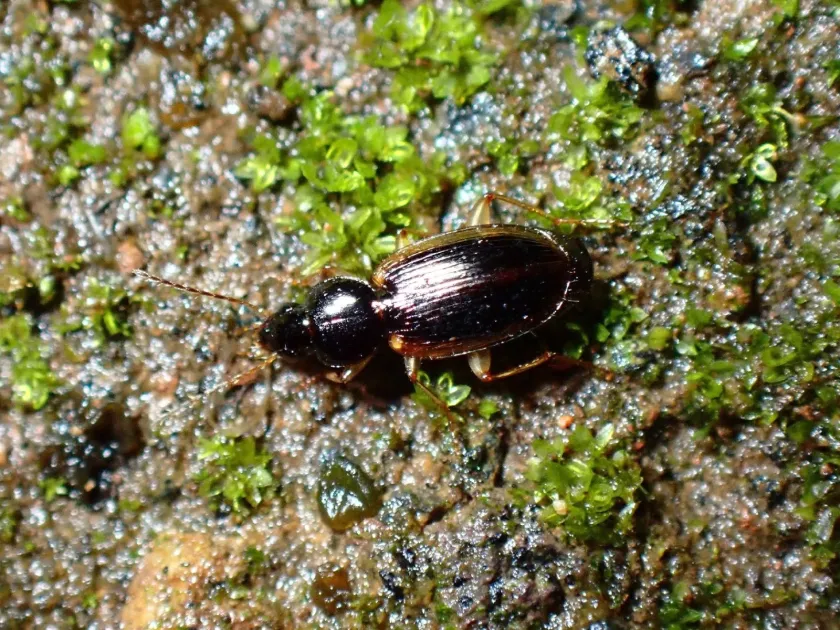
Olisthopus is a genus of ground beetles (Carabidae) belonging to the order Coleoptera. These insects are typically small, with body lengths ranging from 5 to 8 millimeters.
They are characterized by a flattened body shape and a dark, often shiny, appearance that may display a subtle metallic sheen. Their head features strong mandibles, and their legs are adapted for swift movement across the soil surface.
The lifecycle of Olisthopus consists of eggs, larvae, and adults. Adults lead a predominantly ground-dwelling existence, actively navigating the soil surface to search for food or shelter.
Both larvae and adults often function as predators, although their dietary habits can shift depending on environmental conditions, sometimes leading to crop damage.
Accurate identification of specific Olisthopus species in field conditions is challenging due to their morphological similarity to other small carabid beetles, often necessitating expert laboratory analysis.
What it damages
While many ground beetles are considered beneficial natural enemies, certain species of Olisthopus can act as opportunistic pests, damaging crops when preferred food sources are scarce.
Damage is most commonly observed in cereal grains, legumes, and certain vegetable crops during the seedling stage. The beetles may feed on tender young leaves and cotyledons.
This feeding activity can lead to thinning of the crop stand, stunted growth, and a reduction in the overall plant vigor, potentially impacting the final harvest yield.
In cases of high population density, the cumulative impact of these beetles can create significant gaps in fields, necessitating replanting or corrective agricultural measures.
Furthermore, plants weakened by beetle feeding are more susceptible to secondary infections and environmental stressors, further compounding the potential for crop loss.
When it appears
The activity patterns of Olisthopus are closely linked to soil moisture levels and temperature. Peak activity typically occurs during the spring and early summer months.
As autumn approaches, the beetles prepare for dormancy, moving deeper into the soil profile to find stable microclimates that protect them from winter temperature extremes.
Adult populations are most visible during the crop germination and early vegetative phases, where the soil surface provides an ideal environment for their foraging activities.
During periods of extreme summer heat or drought, the beetles decrease their surface activity, seeking refuge in more humid microhabitats like dense vegetation or field margins.
Understanding these seasonal migration patterns is critical for agronomists when planning effective monitoring programs to predict and prevent potential damage to crops.
Signs of infestation
The primary indicators of an Olisthopus infestation are irregular feeding marks along the edges of leaves, which can look like small bites or holes in the plant tissue.
Early morning visual inspections of the field often reveal adult beetles moving rapidly across the soil, especially near newly emerging sprouts.
Signs of damage may also include wilting or stunted growth of seedlings, as the beetles can damage the tender stems or root zones in the immediate vicinity.
The use of pitfall traps, commonly known as Barber traps, is the most effective method for confirming the presence and population density of Olisthopus in a specific field.
- Feeding holes on young leaves;
- Visible beetle activity on the soil surface;
- Reduced crop density due to seedling loss;
- Confirmation via soil pitfall traps.
Control measures
Effective crop rotation is the cornerstone of managing Olisthopus populations, as it disrupts the life cycle of the pest by altering food availability and habitat.
Deep tillage or conventional plowing before planting can significantly reduce beetle numbers by disturbing their hibernation sites and exposing them to environmental elements.
Treating seeds with appropriate insecticides provides robust protection for developing seedlings, preventing damage during the most vulnerable early growth stages.
Maintaining clean fields by managing weeds is essential, as these plants serve as alternative food sources and shelters for the pest population to thrive.
Chemical intervention should be used sparingly and only when monitoring indicates that the economic injury level has been surpassed, protecting local beneficial insect populations.
Taxonomy
- Latin name
- Olisthopus
- Order
- Coleoptera (beetles)
- Family
- Carabidae
- EPPO code
- OLSHSP
Discussion
No discussions yet — be the first.