
Odacantha
Odacantha
Description
How to identify
Odacantha belongs to the family Carabidae, commonly known as ground beetles, which are generally recognized for their predatory behavior in agricultural landscapes.
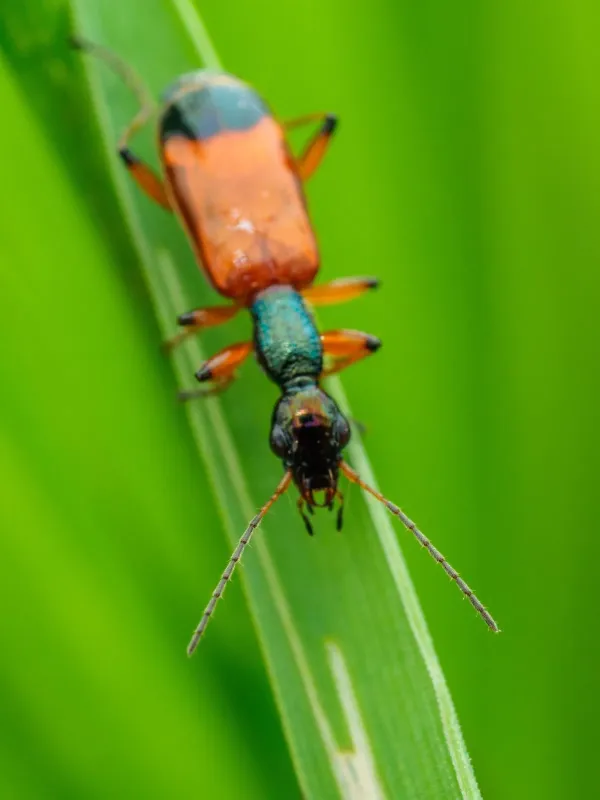
Adult beetles are characterized by a slender body shape with a noticeably narrow head compared to the pronotum, a feature essential for taxonomic identification.
Their coloration is typically metallic, ranging from dark blue to green or copper, which serves as a cryptic adaptation within their natural environment.
The larvae are highly mobile, possess strong mandibles, and are adapted for searching for prey within soil crevices or on plant surfaces during the growing season.
Identification often requires careful inspection under magnification due to the existence of morphologically similar species within the same taxonomic group.
What it damages
Cereal crops, particularly wheat and barley, are the primary hosts that suffer from Odacantha damage when populations reach high levels.
Beetles and larvae damage the plant tissue by feeding on leaves and stems, which disrupts the normal physiological processes of the affected plants.
This feeding activity causes significant stress to the plant, potentially leading to wilting, stunted growth, and reduced overall crop vigor.
In addition to direct damage, the wounds created by the beetles may serve as entry points for secondary pathogens and fungal infections.
Crop loss is most significant when infestations occur during early vegetative stages, threatening the establishment of a healthy crop stand.
When it appears
The seasonal activity of Odacantha is highly dependent on temperature and moisture levels, with peak activity observed during late spring and early summer.
Their life cycle typically consists of egg, larval, pupal, and adult stages, with synchronization often tied to favorable climatic conditions.
Adults emerge from hibernation as soil temperatures rise, beginning their active feeding and mating phase to start the new generation cycle.
As autumn approaches, the beetles prepare for overwintering, seeking refuge in protected areas such as soil cracks, crop residues, or field margins.
Understanding these biological cycles is crucial for predicting potential outbreaks and timing necessary management interventions throughout the year.
Signs of infestation
Signs of infestation include characteristic irregular feeding patterns on leaves, often manifesting as ragged edges or elongated holes along the leaf blade.
Plant surfaces may show signs of yellowing or chlorosis, which is a common stress response to the physical damage caused by the beetle’s mandibles.
During the night, active beetles can be found using nocturnal monitoring techniques, as they are primarily active and feed when humidity levels are higher.
The presence of frass on the upper surfaces of leaves serves as an additional diagnostic indicator of high population density in the field.
Damage tends to appear in patches within the field, often starting from the borders or areas with dense vegetation that provides shelter.
Control measures
Integrated pest management should prioritize cultural practices, such as crop rotation and tillage, to disrupt the life cycle of the beetle.
Controlling weeds around field margins is essential to eliminate alternative food sources and shelter that support Odacantha populations.
Chemical control with insecticides should be reserved for cases where population levels exceed the economic threshold to preserve beneficial insects.
Maintaining healthy crop stands through balanced nutrition can help plants better tolerate the stress induced by light pest pressure.
- Regular monitoring with light traps.
- Deep plowing to destroy overwintering sites.
- Preserving natural predators to keep pest populations in check.
Taxonomy
- Latin name
- Odacantha
- Order
- Coleoptera (beetles)
- Family
- Carabidae
- EPPO code
- ODACSP
Discussion
No discussions yet — be the first.