
Raccoon dog
Nyctereutes procyonoides
Description
How to identify
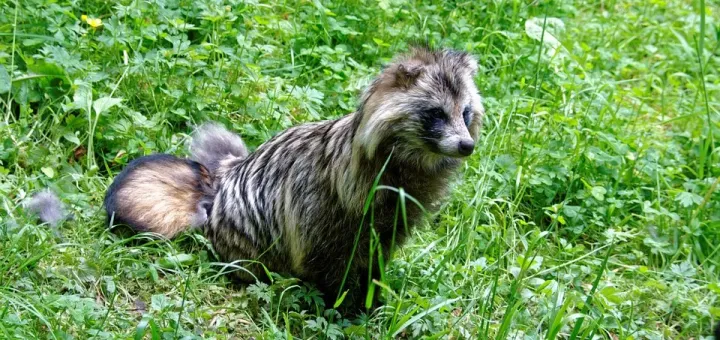
The raccoon dog, scientifically known as Nyctereutes procyonoides, is a member of the Canidae family, native to East Asia but introduced to many European regions.
It is a medium-sized mammal characterized by its raccoon-like facial mask, short limbs, and thick, dense fur that provides excellent insulation in cold climates.
Adult specimens typically weigh between 4 and 10 kilograms and measure about 60 to 80 centimeters in body length, excluding their relatively short, bushy tail.
This species is highly adaptable and can inhabit a variety of environments, including forests, wetlands, and, notably, agricultural landscapes near human settlements.
Unlike many other members of the dog family, raccoon dogs are known for their ability to enter a state of torpor during the coldest winter months.
What it damages
As omnivorous opportunists, raccoon dogs cause significant damage by feeding on a wide range of agricultural products and small livestock within farm borders.
They are notorious for raiding melon patches, where they gnaw through the hard rind of watermelons and pumpkins to consume the nutritious pulp and seeds inside.
Corn crops are also frequently targeted; animals often trample the stalks and chew on ears during the milk stage, leading to considerable yield losses for farmers.
Raccoon dogs pose a serious threat to poultry farming, as they are capable of breaking into poorly secured enclosures to predate on chickens, ducks, and eggs.
Furthermore, these animals act as vectors for several zoonotic diseases and parasites, including rabies and sarcoptic mange, which can threaten both human health and farm animal welfare.
When it appears
The primary period of activity begins in early spring, as animals emerge from their winter dens and actively forage to replenish their depleted fat reserves.
During the summer, raccoon dogs become more frequent visitors to vegetable gardens and orchards as various crops reach their maturity and become easy food sources.
Autumn is the peak season for foraging, as the animals prepare for winter by consuming high-energy foods, often resulting in increased pressure on late-harvest crops.
In winter, activity levels drop significantly; however, during mild spells, they may exit their dens to search for food, especially in areas with accessible human refuse.
The breeding season in late winter and early spring drives the animals to be more territorial and active, increasing the probability of encounters near farm structures.
Signs of infestation
The most distinct sign of their presence is the discovery of partially eaten fruits, such as pumpkins or melons, showing clear bite marks and hollowed-out interiors.
Footprints resembling those of small dogs, but with specific differences in pad alignment and claw impressions, can often be found in the soft soil of garden paths.
Raccoon dogs frequently establish communal latrines; discovering large accumulations of feces near field borders or under hedges is a strong indicator of their territory.
Physical evidence of movement, such as flattened vegetation, worn-down trails through dense tall grass, and shallow digging beneath fences, confirms their routes into the farm.
The sudden disappearance of poultry and the presence of scattered feathers near pens often signal a raccoon dog intrusion, especially if traditional predators have been excluded.
Control measures
Implementing robust fencing is the most effective preventative measure; fences should be buried at least 30 centimeters underground to prevent the animals from tunneling.
Motion-activated deterrents, such as floodlights or ultrasonic sound devices, are highly effective at discouraging these shy nocturnal animals from entering protected areas.
Good sanitation practices are crucial; all potential food sources, including compost piles and livestock feed, should be stored in secure, predator-proof containers.
Live-capture traps may be used to remove individual nuisance animals, provided that local wildlife regulations and humane handling guidelines are strictly followed.
Maintaining clear surroundings by removing dense brush near the farm perimeter reduces the cover that these animals use to approach gardens and pens undetected.
Taxonomy
- Latin name
- Nyctereutes procyonoides
- Family
- Canidae
- EPPO code
- NYKRPR
Discussion
No discussions yet — be the first.