
Raccoon dog
Nyctereutes
Description
How to identify
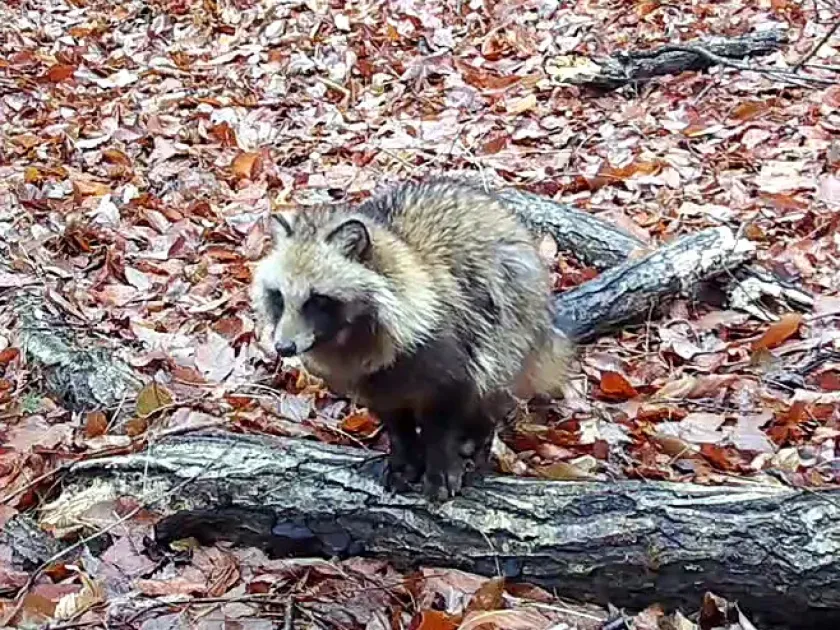
The raccoon dog (Nyctereutes procyonoides) is a member of the canid family that resembles a raccoon in its appearance. It has a distinctive dark mask across its face, a thick coat, and a stocky body that helps it thrive in various habitats.
The animal is characterized by its short legs and relatively heavy body, which allows it to maneuver through thick vegetation and dense undergrowth with surprising agility. Its fur color ranges from grey to brownish, providing excellent camouflage.
Adult individuals typically weigh between 4 and 10 kilograms, with their weight fluctuating significantly depending on the season and the availability of food. They accumulate fat in late summer and autumn to survive the colder months.
They are primarily nocturnal or crepuscular, meaning they are most active during the night and at twilight. During the day, they remain hidden in burrows or dense bushes, which makes them difficult to observe directly on agricultural land.
Being opportunistic omnivores, they often venture near agricultural areas, where they can turn from neutral inhabitants of the ecosystem into problematic pests that damage cultivated plants and raid food storage areas.
What it damages
The main agricultural impact caused by raccoon dogs involves damage to fruit and vegetable crops. They are known to raid melon fields, eating watermelons, pumpkins, and gourds by chewing through the rind and consuming the pulp.
In addition to eating produce, these animals cause significant mechanical damage to crops by trampling through rows while searching for food. This can lead to substantial yield losses in large-scale farming operations.
Berries, including strawberries and raspberries, are also vulnerable. Raccoon dogs frequent berry patches, where they eat or ruin the ripened fruit, significantly reducing the marketability and total volume of the harvest.
They can also damage irrigation infrastructure. Raccoon dogs have been known to chew on irrigation hoses or disturb drip lines while moving through fields, leading to water leaks and inefficient irrigation management.
Furthermore, raccoon dogs are potential carriers of diseases and parasites, such as rabies or mange. Their presence on a farm poses a health risk to livestock, farm workers, and even the safety of stored agricultural produce.
When it appears
The activity of raccoon dogs peaks during the spring and autumn months. In spring, as they emerge from their winter dormancy, they are hungry and actively patrol their territory for any available food sources near human settlements.
During the summer months, as crops like corn, watermelons, and other vegetables mature, raccoon dogs frequently visit agricultural fields. This is when the damage to the crops is usually at its highest point.
In autumn, as they prepare for winter, raccoon dogs increase their caloric intake, leading to more frequent nocturnal raids on orchards, fields, and outdoor feed storage areas to build up essential fat reserves.
The breeding season takes place in early spring. During this time, they become more territorial and seek out stable, protected areas for their dens, which often brings them into close proximity to farm buildings or dense field edges.
Although they may reduce activity during extreme winter cold, they remain mobile in milder climates. They can continue to cause damage to stored fodder or vegetable storage facilities throughout the winter if access points are not secured.
Signs of infestation
The most reliable sign of a raccoon dog's presence is their tracks. Their paw prints resemble those of a fox but are rounder and have distinct, blunt toe impressions. These tracks are commonly found along field margins or near muddy areas.
Damaged fruit and vegetables are clear indicators of their activity. Watermelons or pumpkins with large, messy holes bitten into them are characteristic of raccoon dog feeding, as they lack the precision of smaller rodents.
Raccoon dogs often create communal "latrines" or toilet areas along their frequently used paths. Finding these distinct deposits can help farmers track their movement patterns and identify entry points into the fields.
Evidence of digging or burrowing under fences is a strong sign of their intrusion. They are adept at finding weak spots in perimeter fencing and can easily create gaps through persistent digging.
At night, their presence may be betrayed by vocalizations such as soft whines or growls. Additionally, the behavior of domestic animals, particularly dogs, often changes significantly when a raccoon dog enters the territory.
Control measures
Installing sturdy perimeter fencing is the most effective preventative measure. To be successful, the fence should be buried at least 30 centimeters deep to prevent the animals from digging underneath, which is one of their preferred entry methods.
Ultrasonic deterrent devices can be employed to create an uncomfortable environment for the animal. To be effective, these devices should be rotated or moved periodically to prevent the animals from habituating to the sound.
Motion-activated floodlights are highly effective against nocturnal raiders. The sudden, bright light disrupts their cautious feeding behavior, forcing them to flee the area and reducing the likelihood of repeat visits.
General site hygiene is crucial for long-term control. Removing piles of brush, tall grass, and debris around the fields denies them the daytime shelter they require, making the environment much less attractive for settlement.
In cases of severe infestation, farmers should coordinate with local wildlife control agencies. They can provide guidance on legal and humane trapping methods or other specialized population management strategies tailored to the region.
Taxonomy
- Latin name
- Nyctereutes
- Family
- Canidae
- EPPO code
- NYKRSP
Discussion
No discussions yet — be the first.