
Asian leafroller moth
Nycteola asiatica
Description
How to identify
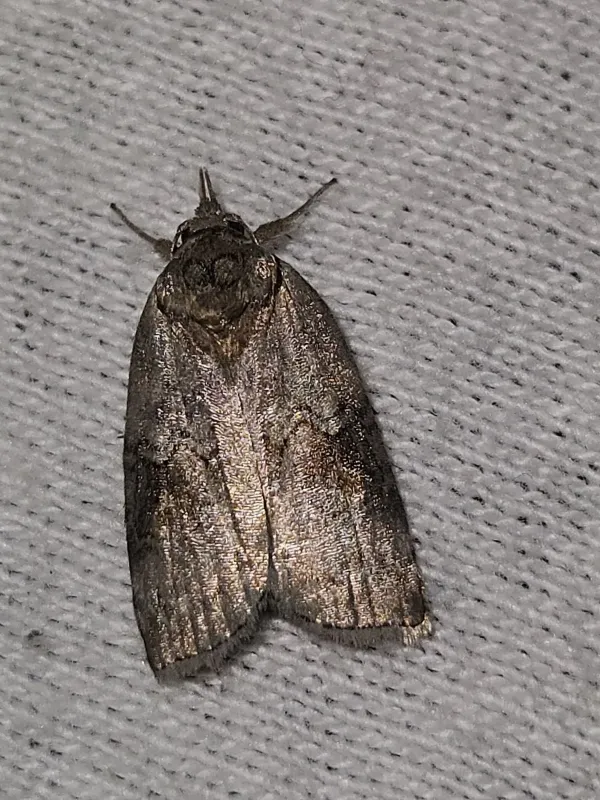
The Asian leafroller moth (Nycteola asiatica) belongs to the family Nolidae and the order Lepidoptera. It is a small moth characterized by intricate wing patterns that mimic tree bark.
Adult moths are typically nocturnal, resting on bark during the day where their camouflage makes them nearly invisible to predators and human observers alike.
The larvae, or caterpillars, are slender and often display a greenish color, allowing them to blend into the foliage of their host trees perfectly while feeding.
The insect undergoes complete metamorphosis: egg, larva, pupa, and adult, which is a standard development process that allows it to survive in various environments.
Adults overwinter in protected areas, such as deep cracks in the bark or leaf litter, emerging in early spring to initiate the first generation of the season.
What it damages
The primary host plants for this species include trees from the Salicaceae family, specifically focusing on various species of poplars and willows.
The larvae feed on the leaf tissue, often causing significant damage to the canopy by skeletonizing leaves or consuming large portions of the leaf blade entirely.
Severe infestations lead to premature defoliation of the trees, which significantly impacts the health and growth rate of young saplings and nursery stock.
By consuming leaf tissue, the pests interfere with the tree's photosynthesis process, ultimately weakening the plant and making it susceptible to pathogens.
Urban greenery and forestry plantations suffer both aesthetic and economic losses when high population densities of these moths lead to stripped branches.
When it appears
Adult moths emerge in early spring, coinciding with the initial budding of poplar trees, setting the stage for the first generation of larvae.
Larval activity spans the entire growing season, with multiple generations often occurring depending on regional temperatures and humidity levels.
The peak feeding periods for the caterpillars usually occur in late spring and early summer, when the foliage is most tender and nutritious for the larvae.
Monitoring should be most intense during the warmer months, as the rapid reproductive cycle allows populations to explode in a very short timeframe.
As autumn approaches and temperatures drop, adults enter their diapause phase, preparing to hibernate through the winter months until the cycle repeats.
Signs of infestation
The most prominent sign of infestation is the presence of rolled or folded leaves, which are secured with silk threads spun by the larvae for protection.
Leaf skeletonization is a major indicator; if you notice leaves where only the vein structure remains, it is a strong sign of larval feeding activity.
Tiny black frass (excrement) pellets found on leaves or at the base of the tree are clear markers that caterpillars are active in the canopy above.
Visible silk webbing stretched across leaves or between branches is a hallmark of the Asian leafroller moth's habitat construction and protection strategy.
- Rolled leaves tied together with silk.
- Skeletonized leaf patches and holes in the foliage.
- Presence of green larvae on the underside of leaves.
Control measures
Biological control using formulations of Bacillus thuringiensis (Bt) is highly effective as it targets the larvae while preserving beneficial insect populations.
Systemic insecticides are occasionally required for severe infestations in nursery settings, applied when the larvae are in their earliest stages of development.
Maintaining tree health through proper irrigation and pruning helps trees better withstand and recover from light to moderate leafroller damage.
Encouraging biodiversity in and around plantations helps attract natural predators like birds and parasitic wasps that feed on the larvae and adults.
Using pheromone traps provides an excellent early warning system, allowing for targeted monitoring and intervention before a full-blown infestation occurs.
Taxonomy
- Latin name
- Nycteola asiatica
- Order
- Lepidoptera (butterflies)
- Family
- Nolidae
- EPPO code
- NYCTAS
Discussion
No discussions yet — be the first.