
Nycteola
Nycteola
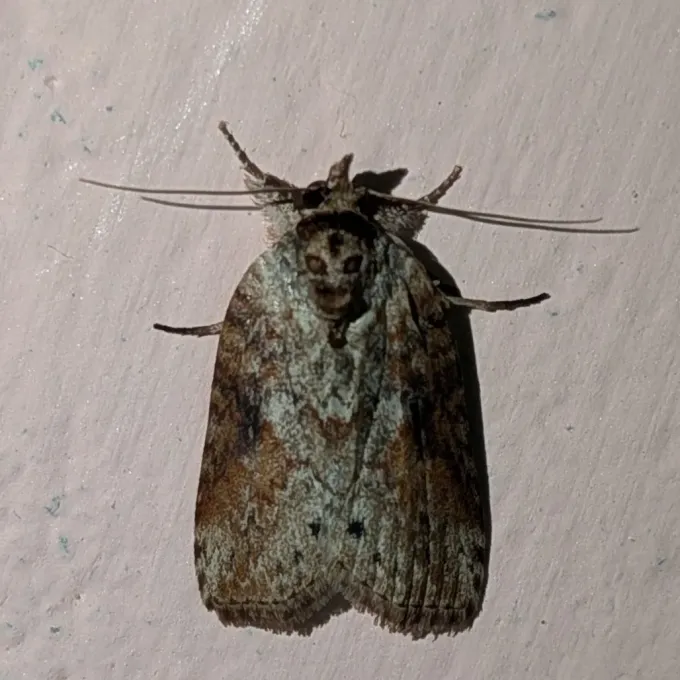
Description
How to identify
Nycteola is a genus of moths belonging to the family Erebidae, subfamily Chloephorinae. Adult moths feature cryptic coloration that mimics tree bark, making them nearly invisible when resting during the day.
The larvae (caterpillars) of Nycteola have a typical noctuid appearance, with colors ranging from pale green to yellowish-brown, which provides camouflage among the foliage. Their heads are usually well-developed and often darker in pigmentation.
The insect undergoes a complete life cycle, including egg, larva, pupa, and adult stages. They typically overwinter as adult moths in bark crevices, leaf litter, or other sheltered locations.
A notable characteristic of this genus is the high variability in the forewing pattern of the adults, which can sometimes make precise species-level identification difficult without laboratory analysis.
Development is highly dependent on ambient temperature, meaning the timing of moth emergence and larval activity can shift depending on the climatic conditions of the season.
What it damages
Primary hosts for Nycteola include various woody plants, particularly those in the family Rosaceae. Significant damage is frequently observed on apple, pear, willow, and poplar trees.
The larvae are active phytophages, feeding primarily on leaf blades, causing skeletonization or irregular margin feeding. In cases of high infestation, they can significantly reduce the photosynthetic area of the tree canopy.
Beyond leaf damage, larvae may occasionally attack young shoots and buds, which negatively impacts tree growth and fruit bud formation for the following season.
The pest's impact increases during years favorable for population growth, where high density can lead to partial defoliation, thereby weakening the plant's overall vitality.
Trees weakened by repeated foliage loss become more susceptible to secondary infections and attacks from other pests, requiring an integrated monitoring approach.
When it appears
Adult Nycteola activity typically begins in early spring, as soon as stable warm temperatures allow them to emerge from their overwintering sites.
Larval feeding occurs throughout the growing season, from bud break until the end of summer. Depending on the geographical region, Nycteola may complete one or two generations per year.
The flight of the second generation usually occurs in the second half of summer, as they lay eggs for larvae that will eventually prepare for overwintering.
Monitoring is most effective during morning or evening hours when larvae are actively feeding, or at night using light traps to track adult population numbers.
Population assessments should also include visual inspections of the tree canopy and counting damaged leaves on selected control branches throughout the summer.
Signs of infestation
The main indicator of infestation is characteristic leaf damage: large, irregular holes that often leave the main leaf veins intact.
Presence is often revealed by silk webbing, which larvae use to tie leaf edges together or create protective shelters to hide from predators.
Excrement found on leaf surfaces below feeding sites is a direct sign of active larval feeding in that part of the canopy.
Curled or damaged leaves at the tips of shoots often point to local colonization by the pest.
Finding resting adults in bark crevices during the off-season indicates that the population has successfully overwintered and may establish a new infestation center.
Control measures
The primary control method involves early spring application of systemic or contact-stomach insecticides aimed at eliminating emerging adults and early-instar larvae.
Biological control includes the use of products based on Bacillus thuringiensis, which are effective against young larvae while remaining safe for the surrounding ecosystem.
Cultural practices such as scraping loose bark from trunks and removing leaf litter can reduce overwintering sites for the moths and pupae.
Encouraging beneficial insects, such as predatory bugs and parasitic wasps, can significantly suppress population growth through natural predation.
- Use of pheromone traps for monitoring and mating disruption.
- Regular canopy inspection for early detection of hotspots.
- Sanitary pruning of infested terminal shoots.
Taxonomy
- Latin name
- Nycteola
- Order
- Lepidoptera (butterflies)
- Family
- Nolidae
- EPPO code
- NYCTSP
Discussion
No discussions yet — be the first.