
Noctule bat
Nyctalus
Description
How to identify
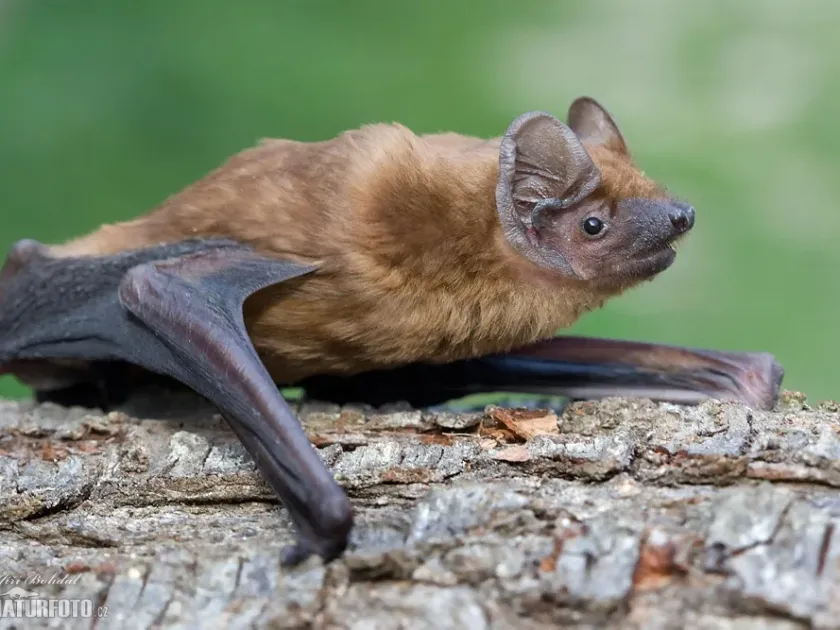
The genus Nyctalus, commonly known as Noctule bats, belongs to the order Chiroptera and the family Vespertilionidae. These mammals are highly specialized for aerial hunting.
They are characterized by long, narrow wings that allow for rapid and efficient flight, which is essential for capturing insect prey in mid-air.
It is vital to distinguish them from agricultural pests; they are predatory insectivores and do not feed on plant tissues, seeds, or agricultural produce.
During the day, they remain hidden in tree hollows, cracks, or man-made structures, coming out only during dusk or night to forage.
Taxonomically and biologically, they are strictly animals, not insects, and they play no role as phytophagous pests in any cropping system.
What it damages
The Noctule bat is not a plant pest. They cause zero damage to agricultural crops, including cereals, vegetables, fruits, or orchard trees.
Instead, they are beneficial members of the ecosystem. They consume large quantities of insects, many of which are known agricultural and forestry pests.
By feeding on night-flying beetles, moths, and other insect species, they naturally contribute to the suppression of pest populations in nearby fields and gardens.
Their impact on the environment is entirely positive from an agronomic perspective, as they reduce the need for excessive chemical insect control.
Any perceived "damage" is usually limited to minor sanitation issues in buildings, which has no connection to crop production or plant health.
When it appears
The seasonal presence of Noctule bats is dictated by the availability of insect prey. They are most active during the spring, summer, and early autumn months.
In the summer, they exhibit high levels of foraging activity, which coincides with the period when many agricultural pests are at their peak reproductive stage.
During autumn, they increase their hunting intensity to build up fat reserves, essential for surviving the winter period in a state of hibernation.
Winter is characterized by a period of hibernation in protected, thermally stable locations, during which they do not interfere with agricultural operations.
Their life cycle is well-integrated with the temperate climate, allowing them to provide biological pest control services throughout the main growing season.
Signs of infestation
Signs of their presence in an area are limited to visual observations of flight during dusk or the detection of ultrasound signals via specialized equipment.
Within their resting sites, one might find droppings (guano). These are dry, crumble easily, and consist entirely of insect fragments, confirming their insectivorous diet.
The absence of plant damage—such as defoliation, boring holes, or root destruction—is the clearest indicator that the species is not causing any harm.
Observing Noctule bats around a farm is a sign of a functioning ecosystem where natural predation helps maintain insect balance.
There are no diagnostic signs of "infestation" that a farmer would associate with crop loss, as the animal does not interact with the vegetation.
Control measures
There is no need for control measures against Noctule bats. In many regions, they are protected species by law due to their importance in the food chain.
If roosting in farm buildings is problematic, the recommended approach is to seal off access points during the period when the bats are not present.
Sanitation of roosting sites should be performed using proper protective gear to prevent inhalation of dust from guano, as a standard safety procedure.
Reducing the use of broad-spectrum pesticides is the best "management" practice, as it preserves these natural insect controllers and protects the local biodiversity.
Integrating the conservation of such species into farm management promotes a more balanced and environmentally sustainable approach to agriculture.
Taxonomy
- Latin name
- Nyctalus
- Family
- Vespertilionidae
- EPPO code
- NCTLSP
Discussion
No discussions yet — be the first.