
Common ground beetle
Notiophilus biguttatus
Description
How to identify
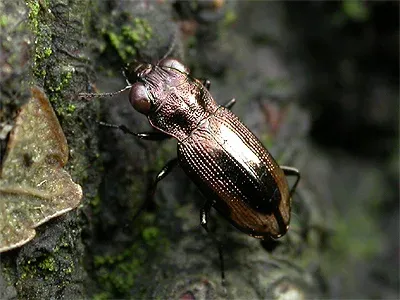
Notiophilus biguttatus, commonly known as a type of ground beetle, belongs to the family Carabidae. It is recognized by its disproportionately large eyes relative to its small body size, which are adapted for hunting in low-light conditions.
Adult beetles typically measure about 5 to 6 mm in length. They possess a characteristic bronze or metallic sheen, which provides camouflage against the soil background.
A diagnostic feature of this species is the presence of one or two distinctive pale spots at the apex of each elytron (wing cover). This makes identification relatively straightforward for those observing them in the field.
The larvae are highly mobile and possess a well-developed mouthpart structure, typical of predatory beetles, which allows them to capture prey efficiently in the soil surface layer.
Unlike many other carabid beetles that are nocturnal, Notiophilus biguttatus is primarily diurnal, meaning it is most active and visible during the daylight hours.
What it damages
Notiophilus biguttatus is not a plant pest. It does not feed on crops, foliage, roots, or seeds; therefore, it causes no economic damage to agricultural or horticultural plants.
Instead, these beetles act as beneficial predators. Their diet consists primarily of soil-dwelling invertebrates, including springtails (collembolans) and other small mites that can sometimes reach pest levels in greenhouses or moist fields.
By consuming these smaller organisms, the beetle serves as a natural biological control agent, helping to maintain ecological balance within the soil microbiome.
The presence of this species should be welcomed by farmers and gardeners, as it indicates a healthy soil ecosystem capable of supporting predatory life.
There is absolutely no need for intervention or pest management strategies directed against this insect; it is an ally, not a threat to harvest yields.
When it appears
The activity of Notiophilus biguttatus occurs throughout the growing season, starting from early spring once temperatures rise and continuing until late autumn.
The reproductive cycle and peak hunting activity take place during the spring and summer months. During this time, they are frequently found traversing the soil surface in search of prey.
Winter dormancy typically occurs at the adult stage. The beetles seek shelter in protected areas, such as under leaf litter, debris, or within the upper centimeters of the soil profile.
Population density is heavily influenced by soil moisture levels. Being moisture-dependent, they prefer environments that are not excessively dry, allowing them to hunt effectively.
Fluctuations in climate, specifically prolonged droughts, may cause these beetles to migrate to more shaded or damp areas to survive, returning to open fields when conditions stabilize.
Control measures
No control measures are needed for Notiophilus biguttatus. As a beneficial insect, it should be protected and encouraged to inhabit fields and gardens to provide natural pest suppression.
To support this beetle population, integrated pest management (IPM) practices are essential, specifically the reduction of broad-spectrum insecticide use that could harm these beneficial predators.
Maintaining organic mulch and avoiding heavy, deep tillage of the soil helps preserve the essential habitat and overwintering sites for both larvae and adults.
Creating permanent hedgerows or wild margins around agricultural fields provides a refuge for these beetles, allowing them to recolonize crop areas effectively after seasonal changes.
By fostering a diverse environment, growers can rely on the natural predation services provided by Notiophilus biguttatus to keep small soil invertebrates in check, reducing the need for chemical inputs.
Taxonomy
- Latin name
- Notiophilus biguttatus
- Order
- Coleoptera (beetles)
- Family
- Carabidae
- EPPO code
- NOTIBI
Discussion
No discussions yet — be the first.