
Notiophilus
Notiophilus
Description
How to identify
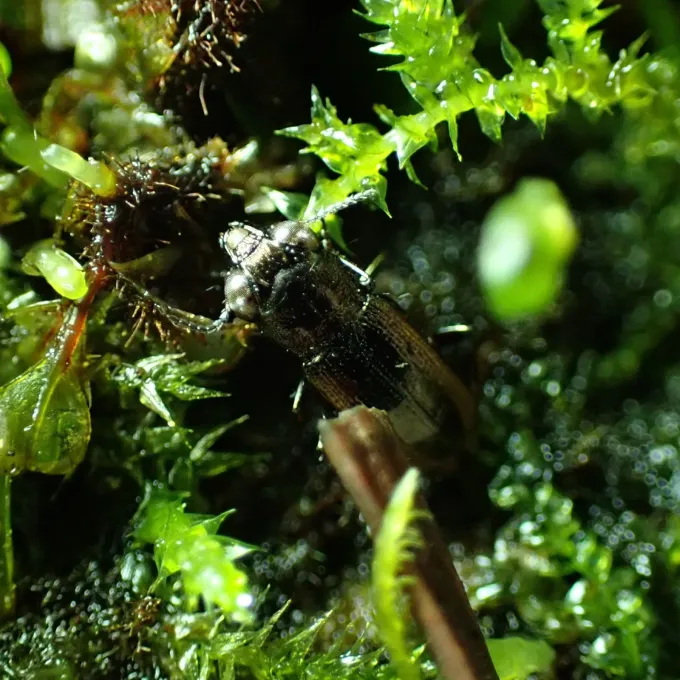
The genus Notiophilus belongs to the Carabidae family, commonly known as ground beetles, within the order Coleoptera. These beetles are relatively small, typically measuring between 4 and 7 mm in length.
A distinctive morphological feature of this genus is the unusually broad head combined with very large compound eyes, which makes them easily distinguishable from other small ground beetles.
Their elytra possess longitudinal grooves, and their coloration often features a metallic sheen, ranging from bronze and copper to dark black, depending on the specific species.
The larvae are campodeiform, meaning they are quite mobile, elongated, and well-adapted to hunting in the upper soil layers and surface debris.
Unlike many other carabids that are strictly nocturnal, Notiophilus beetles are largely diurnal, meaning they are active hunters during the day, moving in rapid, jerky motions.
What it damages
From an agronomic perspective, Notiophilus beetles are not pests but rather highly beneficial predatory insects. They act as natural biological control agents in agricultural ecosystems.
They feed on various small soil-dwelling invertebrates, including Collembola (springtails) and other minor arthropods that can occasionally damage young seedlings or organic matter in the soil.
Their presence on a farm is a positive ecological sign, indicating that the field supports a healthy food web and natural regulation of potential pest populations.
Damage to crops is not caused by these beetles. Confusing them with crop-eating insects can lead to the unnecessary and harmful application of broad-spectrum pesticides.
Farmers are encouraged to recognize these beneficial predators and avoid treating them as a target for pest management programs.
When it appears
The life cycle of Notiophilus is highly dependent on seasonal temperature and soil moisture levels, which govern their activity patterns throughout the year.
Adult beetles typically emerge and become most active in the spring as soon as soil temperatures reach a threshold that supports their metabolism and hunting behavior.
Reproduction occurs throughout the late spring and early summer months, during which larvae are most active in hunting prey within the topsoil.
As temperatures drop and conditions become harsher in late autumn, the beetles seek shelter in deeper soil layers, under leaf litter, or within plant residues to hibernate.
Environmental factors such as prolonged drought can temporarily suppress their activity, as they prefer environments with consistent surface moisture and ground cover.
Control measures
As Notiophilus are considered beneficial predators, there is no need for chemical control, and any attempts to eliminate them are considered poor agronomic practice.
The best management strategy involves adopting Integrated Pest Management (IPM) practices that prioritize the conservation of natural predator populations.
Farmers should avoid the prophylactic or indiscriminate use of non-selective insecticides, which can devastate beneficial beetle populations and disrupt natural biological control.
Conservation tillage practices, such as minimal soil disturbance, provide necessary refuge for these beetles during the winter months and throughout their active seasons.
Maintaining a diverse farm landscape, including field margins and hedgerows, supports the continuous presence of these helpful ground beetles in cultivated fields.
Taxonomy
- Latin name
- Notiophilus
- Order
- Coleoptera (beetles)
- Family
- Carabidae
- EPPO code
- NOTISP
Discussion
No discussions yet — be the first.