
Sorghum notch-wing moth
Nola sorghiella
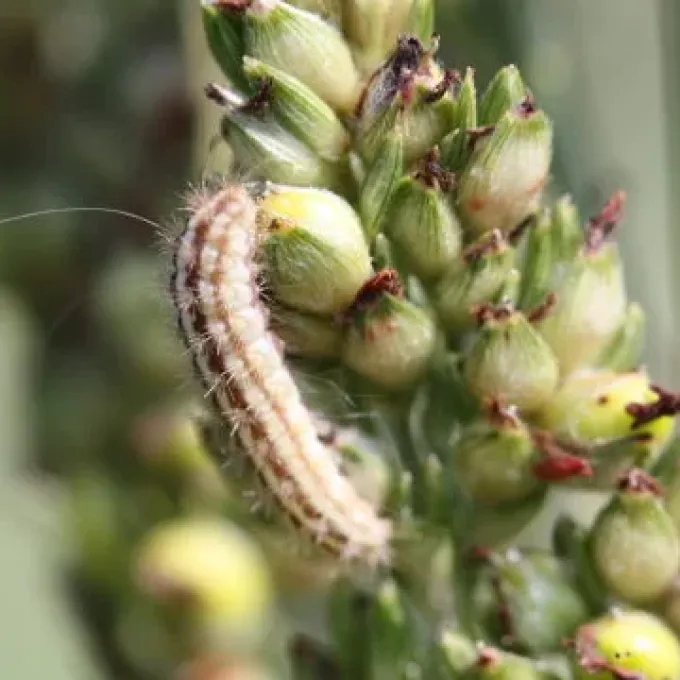
Description
How to identify
The sorghum notch-wing moth (Nola sorghiella) belongs to the family Nolidae within the order Lepidoptera. These moths are relatively small and primarily nocturnal, which makes them difficult to observe in the field without the use of light traps or pheromone monitoring during the night.
Adult moths typically exhibit a drab, inconspicuous coloration that allows them to blend in with their environment. While the adults are the mobile stage, the larval stage (caterpillars) is the primary driver of economic loss, as they feed voraciously on the reproductive parts of host plants.
The biological cycle of this pest is strictly regulated by environmental temperatures. Depending on the climate, the duration from egg to adult can vary significantly, often resulting in multiple overlapping generations throughout a single cropping season in warmer regions.
Reproduction involves the female depositing eggs directly onto the developing inflorescences of the host plants. Upon hatching, the larvae exhibit high mobility, quickly locating suitable feeding sites on the sorghum heads to establish their presence.
Effective management requires a deep understanding of these developmental stages. Identifying the timing of adult flights is crucial for predicting when egg-laying will occur and when subsequent larval emergence will threaten the crop integrity.
What it damages
The primary hosts for Nola sorghiella are cereal crops, with sorghum being the most significant agricultural target. The larvae specialize in feeding on the developing grains within the panicle, causing direct quantitative and qualitative damage to the harvest.
In addition to sorghum, the pest can inhabit various wild grasses that serve as reservoirs during the off-season. Managing the areas surrounding crop fields is essential to reduce the localized population pressure before the sorghum reaches the susceptible developmental stage.
The economic impact of the pest is driven by the destruction of grain tissues during the grain-filling stage. By consuming these tissues, the larvae prevent the proper development of the kernels, leading to significant yield losses and lower test weights at harvest time.
Furthermore, the physical damage inflicted by the larvae creates entry points for various opportunistic fungal pathogens. These secondary infections can further degrade the quality of the harvested grain and lead to mycotoxin contamination in some cases.
Severe infestations can lead to substantial reduction in panicle size and grain count. Because the larvae are hidden within the structure of the panicle, the damage often remains unnoticed until it is well advanced, highlighting the need for vigilance.
Signs of infestation
The initial signs of infestation are often identified by the presence of larval frass (excrement) scattered on the surface of the panicle. These small deposits are often the first visible indicator that larvae are actively feeding within the sorghum head.
The presence of fine webbing is another hallmark of this pest. As the larvae feed, they construct silken webs that serve as protection from predators and wind, which can often be spotted by a keen observer looking closely at the structure of the panicle.
Feeding larvae leave behind empty husk shells of the grains. If a panicle is inspected, one might find kernels that appear hollowed out, as the internal contents have been consumed, leaving only the outer protective layer intact.
As the infestation progresses, individual sections of the panicle may show premature drying or discoloration. This change in appearance is a result of the vascular system of the grain being interrupted by larval feeding, causing the grain to stop filling.
The presence of larvae themselves, which vary in size depending on their developmental age, is the most definitive sign. A careful examination of the panicle density usually reveals their presence, confirming the need for protective measures.
Control measures
An integrated pest management (IPM) approach is essential for controlling Nola sorghiella. This begins with cultural practices, such as the effective management of host weeds and the adjustment of planting dates to avoid the peak flight periods of the moth.
Chemical control is often necessary during severe outbreaks. The application of contact or systemic insecticides should be timed to target early-instar larvae before they move deep into the panicle, where they are protected by their own webbing and the plant structure.
Biological control methods, such as the release of Trichogramma wasps, can be highly effective in parasitizing the eggs of the moth. This approach reduces the overall chemical burden on the agroecosystem while providing sustainable control.
Monitoring using light or pheromone traps is vital for precision agriculture. By tracking the population dynamics of the moths, producers can make informed decisions about when to apply treatments, ensuring efficacy and reducing unnecessary costs.
Post-harvest practices, including thorough field sanitation and deep plowing, are critical for destroying overwintering pupae. By removing the crop residues that harbor the pest, farmers can significantly lower the potential population pressure for the next growing season.
Taxonomy
- Latin name
- Nola sorghiella
- Order
- Lepidoptera (butterflies)
- Family
- Nolidae
- EPPO code
- CELASO
Discussion
No discussions yet — be the first.