
Nola confusalis
Nola confusalis
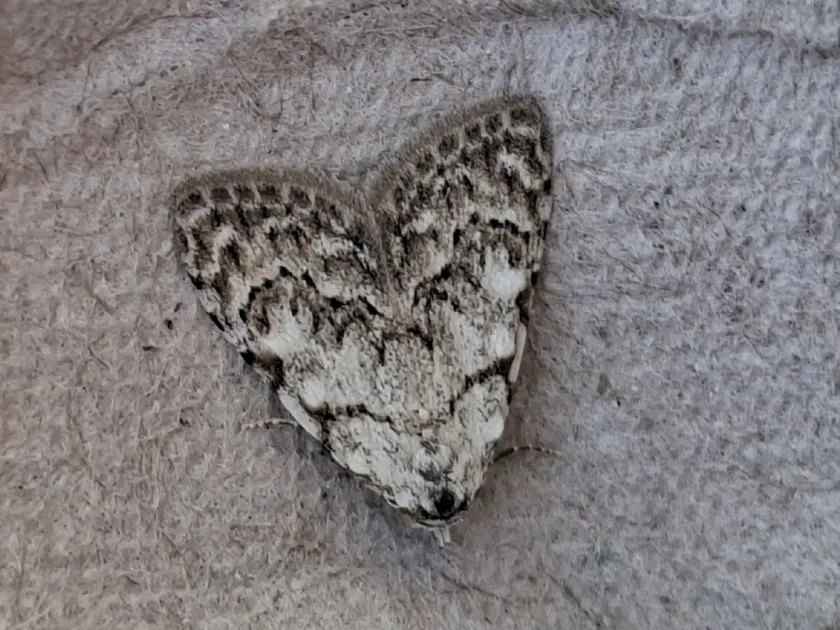
Description
How to identify
Nola confusalis is a small moth species belonging to the Nolidae family. These moths are primarily nocturnal and are well-adapted to camouflage, making them difficult to spot during the day.
The adult moth typically has a wingspan of 15 to 20 millimeters. Their forewings feature a distinctive, blurry, and mottled pattern of dark lines and spots, which is characteristic of this specific species.
The larvae, or caterpillars, are often covered in tufts of hair, giving them a unique appearance. These hairs may serve as a defense mechanism against small predators in their natural environment.
The life cycle follows a complete metamorphosis: egg, larva, pupa, and adult. The pupal stage is spent within a durable, often well-hidden cocoon attached to the bark or branches of the host tree.
As a member of the order Lepidoptera, this species requires specific monitoring strategies. Understanding its taxonomic position helps agronomists choose the right biological or chemical controls.
What it damages
Nola confusalis primarily attacks deciduous trees, with a strong preference for members of the Fagaceae family, especially oak trees. They are common in both woodland environments and managed parklands.
The caterpillars feed on the leaves, starting with the leaf surface and potentially consuming the entire leaf tissue, leaving only the tougher veins behind, which is known as skeletonization.
Mass outbreaks can lead to significant defoliation of the host plant. While rarely fatal to mature, healthy trees, repeated annual damage can severely weaken the plant's overall health and growth.
Young saplings in nurseries are particularly vulnerable, as even moderate feeding can drastically reduce their photosynthetic capacity and stunt their development.
Effective management is essential to prevent the spread of the population to neighboring healthy trees, especially in areas with high ornamental value.
When it appears
The adult moth usually appears in late spring and early summer. This timing aligns with the peak development of new leaves on their preferred host plants.
Caterpillar activity is most intense throughout the summer months. They undergo several molts, rapidly increasing their food intake as they progress toward the pupal stage.
The species typically overwinters as a pupa, protected within its cocoon in crevices of the tree bark. This strategy ensures survival through the cold winter months.
Climate conditions play a significant role in the timing of the cycle; warmer springs can lead to earlier emergence and potentially a second generation within a single season.
Monitoring should begin as soon as bud break occurs, as this is when the first generation of larvae starts to feed, providing an early window for intervention.
Signs of infestation
The earliest signs of an infestation are small, irregular holes on the young leaves, often referred to as "window-feeding," which is characteristic of young larvae.
Accumulation of frass (caterpillar droppings) on the leaves or the ground beneath the canopy is a definitive indicator of an active feeding colony.
During thorough inspections, one can find the camouflaged cocoons attached to twigs or branches, often resembling small bits of debris or bark.
Rolled or tied leaves, held together by silk threads, serve as shelters for the caterpillars during the day or during molting periods.
Noticeable thinning of the canopy and visible damage to the leaf edges are clear late-stage signs that the infestation has reached a significant level.
Control measures
Biological control, particularly the use of Bacillus thuringiensis (Bt), is highly effective against the caterpillars while remaining safe for most beneficial insects.
Mechanical removal, such as pruning affected branches or manually gathering larvae where reachable, is a practical solution for smaller infestations in gardens.
In cases of severe outbreaks, targeted applications of systemic or contact insecticides may be necessary to protect high-value trees from excessive defoliation.
General orchard hygiene, including the removal of leaf litter and debris, can help reduce the number of overwintering pupae near the base of the trees.
- Regular monitoring of canopy health during the growing season.
- Use of pheromone traps for adult moth population management.
- Encouragement of natural predators like insectivorous birds and parasitic wasps.
Taxonomy
- Latin name
- Nola confusalis
- Order
- Lepidoptera (butterflies)
- Family
- Nolidae
- EPPO code
- CELACO
Discussion
No discussions yet — be the first.