
Nola analis
Nola analis
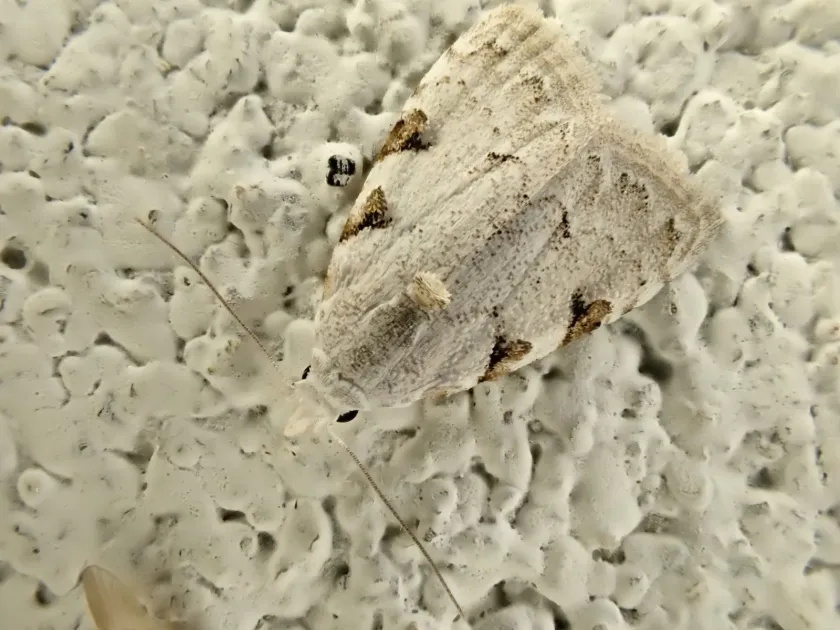
Description
How to identify
Nola analis is a moth belonging to the family Nolidae, which is part of the Noctuoidea superfamily within the order Lepidoptera. It is a small-sized moth that typically exhibits nocturnal activity.
The adult moth is characterized by its cryptic coloration, which generally includes various shades of grey and brown. This camouflage allows the moth to remain effectively hidden while resting on tree bark during the daylight hours.
The larvae, or caterpillars, of this species are notable for having sparse, stiff hairs arising from tubercles on their bodies. As they progress through their larval stages, they increase significantly in size.
The biological cycle follows a complete metamorphosis pattern: egg, larva, pupa, and adult. Each stage of development is strictly governed by ambient temperatures and host plant availability.
Overwintering typically occurs in the pupal stage. The pupae are protected by sturdy cocoons, which are often found tucked within crevices of bark or among debris at the base of the plant.
What it damages
This pest primarily affects woody plants and various tree species, often causing significant stress to the host plants during periods of high population density.
The caterpillars are the most destructive stage, as they consume leaf tissue, often targeting the softer parts of the foliage while leaving the tougher veins behind.
In fruit orchards, heavy infestation can lead to defoliation, which hampers the plant's ability to photosynthesize, thereby reducing the quality and quantity of the harvest.
Beyond cultivated crops, Nola analis can thrive on wild plant reservoirs, making it difficult to fully eradicate from an area without a broader landscape management approach.
Secondary damage occurs when leaf injuries create entry points for various bacterial and fungal pathogens, potentially leading to further tissue decay and plant weakening.
Signs of infestation
Early signs of an infestation include the appearance of skeletonized or ragged leaf margins. Careful inspection often reveals the presence of caterpillars feeding on the underside of the leaves.
Frass (larval droppings) found on leaves or accumulated on branches beneath the feeding sites is a clear indicator that the caterpillars are active in the upper canopy.
During the pupation period, small, bark-colored cocoons may be spotted on the tree trunks, signaling the transition of the population to the next generation.
Premature leaf drop or localized chlorosis on specific branches can signify heavy larval feeding, which disrupts the vascular transport in the affected area.
The presence of adults can sometimes be detected using light traps at night, although visual observation of larvae remains the most practical method for scouting.
Control measures
Management of Nola analis requires an integrated pest management (IPM) strategy to effectively minimize damage while preserving the orchard's ecological balance.
Mechanical control, such as scraping loose bark from trees during the dormant season, is highly effective for reducing the overwintering pupal population.
Biological control agents, particularly those based on Bacillus thuringiensis, provide an excellent tool for targeting young larvae while minimizing harm to beneficial insects.
If population thresholds are exceeded, targeted application of contact or systemic insecticides should be timed with the peak hatching period of the larvae.
- Regular monitoring and scouting of foliage during the spring and summer.
- Installation of pheromone traps to track the population density of adult moths.
- Encouraging natural predators such as birds and parasitic wasps in the orchard environment.
Taxonomy
- Latin name
- Nola analis
- Order
- Lepidoptera (butterflies)
- Family
- Nolidae
- EPPO code
- CELAAN
Discussion
No discussions yet — be the first.