
Nola
Nola
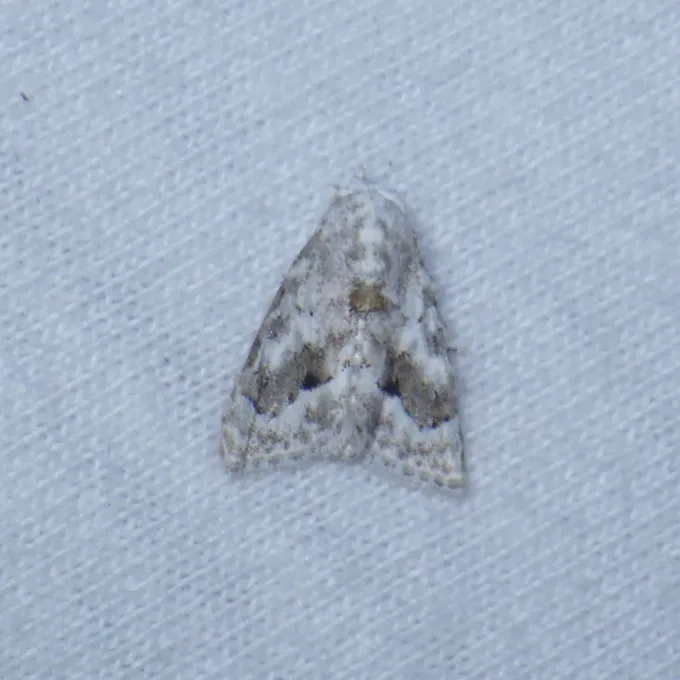
Description
How to identify
The genus Nola belongs to the family Nolidae, which is part of the order Lepidoptera. These moths are generally small and often possess cryptic coloration that allows them to blend in with tree bark or leaf surfaces effectively.
The adults are characterized by a specific wing structure with raised tufts of scales, creating a textured appearance. The caterpillars are often hairy and may have protective colors that help them evade predators.
The life cycle involves complete metamorphosis, consisting of egg, larva (caterpillar), pupa, and adult. Depending on the specific species, overwintering typically occurs in the pupal stage within a cocoon or as a larva in hidden shelters.
Precise identification of species usually requires examination of genitalia due to the high morphological similarity between different members of the genus. In field conditions, identification is based on host plant affinity and damage patterns.
While natural enemies like parasitic wasps and birds regulate their populations, favorable climatic conditions can lead to sudden outbreaks of this pest in certain agricultural regions.
What it damages
Caterpillars of the genus Nola are primarily polyphagous or oligophagous, feeding on the leaves of various woody plants, shrubs, and sometimes herbaceous crops. They can cause significant stress to host plants.
The most severe damage occurs during the active growth phase of the larvae, as they skeletonize the foliage. In high-density populations, they may strip leaves entirely, leaving only the primary veins behind.
This damage significantly reduces the plant's photosynthetic capacity, leading to stunted growth, reduced vigor, and increased susceptibility to secondary infections or environmental stressors.
Young nursery plants are at particular risk, as partial or total defoliation can compromise the plant's health and render it unsuitable for market or even fatal to the specimen.
Damage is often localized initially, but as the larvae mature and become more mobile, the infestation can spread rapidly across a planting area if left unmanaged.
When it appears
Adult moths typically emerge in late spring or early summer, with the exact timing dictated by the accumulation of heat units and regional temperature patterns.
Oviposition is usually spread over a period of time, leading to the presence of multiple larval instars on the same plant simultaneously. The peak of feeding activity usually occurs in mid-summer.
Most species produce one generation per year, though in warmer climates, a partial or full second generation may occur, which complicates the pest management cycle.
Larval activity is highest during the cooler parts of the day, such as early morning or late evening, which are optimal times for monitoring and applying control measures.
By autumn, most individuals pupate and enter diapause, seeking refuge under tree bark, in leaf litter, or in the upper layers of the soil to survive the winter months.
Signs of infestation
The first signs of an infestation are irregular holes or "windowpane" damage on the leaves. Small, granular frass (droppings) near the feeding sites is a reliable indicator of their presence.
Careful inspection of the underside of leaves may reveal egg masses, which are often covered with scales from the female moth’s abdomen to protect them from desiccation and predators.
Caterpillars often utilize silk threads to anchor themselves or to facilitate movement across the leaf surface, resulting in subtle webbing around the foliage.
As the larvae grow, they may fold leaves together or tie them with silk to create protective shelters, making them harder to detect without a thorough inspection of the canopy.
Significant webbing combined with skeletonized leaves is a clear warning that an infestation has reached a level requiring immediate intervention.
Control measures
Regular monitoring using light traps or pheromone traps is an effective strategy to detect the onset of adult moth flight and determine the optimal timing for treatment.
Biological insecticides based on Bacillus thuringiensis are highly effective against young larvae while posing minimal risk to beneficial insects and the surrounding ecosystem.
In commercial settings, chemical insecticides may be necessary if the damage threshold is exceeded, focusing on systemic or contact pesticides applied when larvae are most active.
Cultural practices are essential, including the removal of infested leaf litter and cultivation of the soil around the base of trees to disrupt the overwintering pupae.
- Apply biological controls during early larval stages.
- Manual removal and destruction of infested leaf clusters.
- Encourage natural predator populations such as birds and beneficial wasps.
Taxonomy
- Latin name
- Nola
- Order
- Lepidoptera (butterflies)
- Family
- Nolidae
- EPPO code
- NOLASP
Discussion
No discussions yet — be the first.