
Two-spotted sap beetle
Nitidula bipunctata
Description
How to identify
The Two-spotted sap beetle (Nitidula bipunctata) is a member of the Nitidulidae family within the order Coleoptera. Adult beetles are small, typically ranging from 2 to 4 millimeters in length.
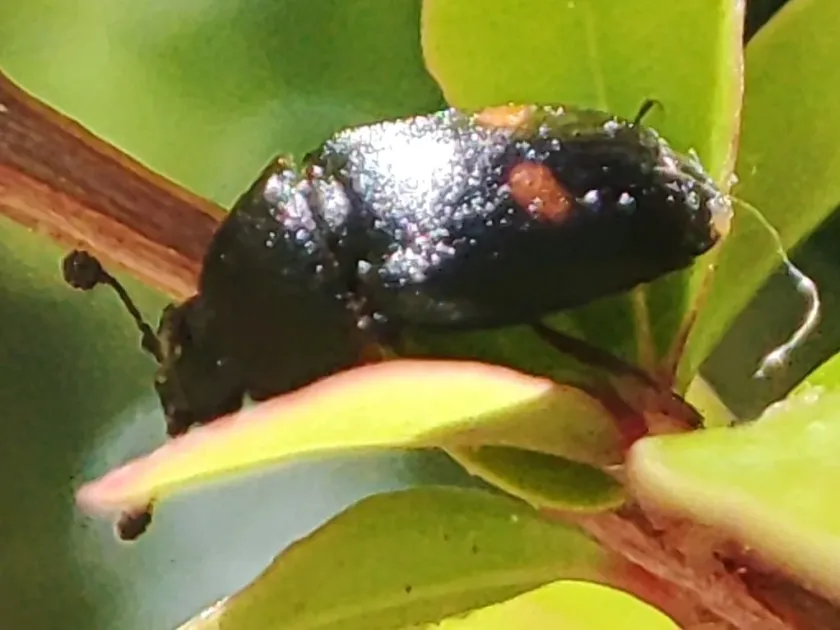
The body is oval and slightly convex, with a dark brown or black coloration. The distinguishing feature is two bright yellowish-red spots on the elytra, which allow for quick identification.
Larvae are whitish-yellow with well-developed legs. They are highly mobile, allowing them to search for food sources across different types of stored organic materials.
The life cycle undergoes complete metamorphosis, including egg, larva, pupa, and adult stages. Adult beetles possess wings and are capable of active flight to locate new feeding sites.
These insects thrive in environments with high humidity and abundant organic debris, providing the ideal conditions for their rapid proliferation and survival.
What it damages
The Two-spotted sap beetle is primarily known as a stored-product pest. It causes significant damage to various agricultural commodities during their long-term storage.
Infestations are commonly found in grain silos, flour mills, and animal feed stores. They feed on both plant-based materials and animal-derived products if stored improperly.
Damage is characterized by the contamination of commodities with excrement and cast-off larval skins, rendering the products unfit for sale or consumption.
While these beetles can be found on flowering plants in the field feeding on nectar and pollen, their primary economic impact occurs within closed storage facilities.
Rapid population growth within storage areas leads to substantial economic losses for farmers, as the quality and safety of the grain are severely compromised.
When it appears
The activity levels of the Two-spotted sap beetle are directly linked to temperature and humidity conditions within storage structures.
In heated warehouses, this pest can remain active and breed continuously throughout the year, producing multiple generations in a single calendar year.
When temperatures drop, adult beetles enter a state of dormancy or diapause, finding shelter in cracks and crevices to survive the unfavorable conditions.
Peak activity generally occurs during the spring and summer months, when rising temperatures accelerate metabolic rates and larval development.
Spring warming often triggers the migration of beetles from hibernation sites to active storage areas, necessitating strict sanitation monitoring at the start of the season.
Signs of infestation
The primary sign of an infestation is the visual presence of adult beetles on the surface of grain masses or near bags of stored products, particularly where spills exist.
The presence of larvae inside food products is often accompanied by an unpleasant, musty, or decaying odor, indicating degradation of the material.
Damaged material often appears dusty and contains small holes created by the beetles as they feed on the organic matter.
In cases of severe infestation, the surface of the commodity may become matted with webbing and larval excrement, reflecting poor sanitation of the facility.
- Visual sighting of adult beetles in storage areas.
- Distinctive musty smell indicating product degradation.
- Loss of grain flowability due to accumulation of debris.
- Discovery of larval skins in product samples.
Control measures
The primary method of control is maintaining strict sanitation standards in storage areas. Regular cleaning of dust and grain spills minimizes surviving conditions for the beetles.
Proper moisture management of the stored grain is crucial, as the beetle prefers commodities with higher moisture content to support larval development.
For heavy infestations, fumigation of the storage facility is necessary to eliminate the pest at all life stages using professional-grade gaseous pesticides.
Using airtight packaging for long-term storage acts as a physical barrier, effectively isolating the products from beetle access and preventing infestation.
Preventative insecticide treatments of empty warehouses prior to the storage season create a protective barrier that suppresses the initial development of new beetle populations.
Taxonomy
- Latin name
- Nitidula bipunctata
- Order
- Coleoptera (beetles)
- Family
- Nitidulidae
- EPPO code
- NITIBI
Discussion
No discussions yet — be the first.