
Cherry web-spinning sawfly
Neurotoma inconspicua
Description
How to identify
The cherry web-spinning sawfly (Neurotoma inconspicua) belongs to the order Hymenoptera and the family Pamphiliidae. The adult sawfly is a small insect, approximately 10–12 mm long, characterized by a shiny black body and clear wings with dark markings.
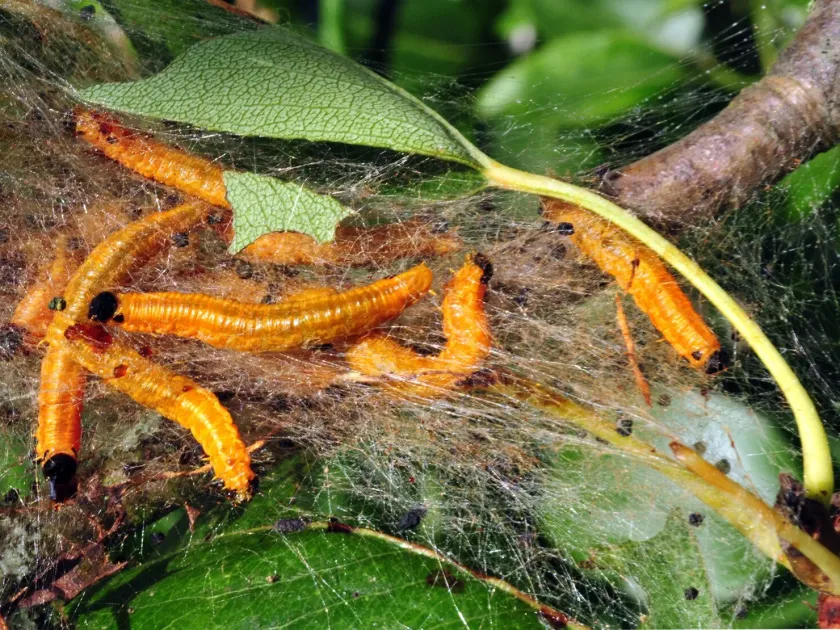
The larvae are the destructive stage of this pest, reaching up to 20 mm in length. They are typically yellowish-green with a dark head and possess well-developed thoracic legs, while lacking prolegs on the abdomen, which is a key identification feature.
The life cycle begins in spring, coinciding with the flowering period of cherry trees. Females lay eggs in clusters on the underside of leaves, using a sticky secretion to ensure the eggs remain attached until they hatch.
Overwintering occurs in the soil at a depth of 5–10 cm in earthen cells. The sawfly completes one generation per year, making the timing of monitoring crucial for successful management of the population.
While adults are rarely seen due to their elusive nature, the characteristic damage patterns they facilitate make the presence of the species evident in orchards during the late spring and early summer.
What it damages
This sawfly primarily targets stone fruit trees, with a strong preference for cherries and sour cherries. The damage is caused by larvae that feed gregariously within protective silk webs.
The larvae consume the leaf tissue, often skeletonizing the foliage and leaving only the veins intact. This intensive feeding behavior causes premature defoliation, which severely stresses the host plant.
Trees subjected to heavy infestation suffer from reduced photosynthetic capacity, which directly impacts the tree's vigor and the overall quality of fruit production for the current and following season.
Young trees are particularly susceptible to severe damage, as excessive leaf loss can impede their growth and compromise their ability to harden off before the winter season.
In mature orchards, severe outbreaks can lead to significant yield loss, necessitating proactive management to prevent the spread of the colony across the canopy.
Signs of infestation
The most prominent sign of infestation is the formation of silk nests or webs. Larvae bind several leaves together with silk to create a protected environment where they feed and hide.
Deformed, curled, and yellowing leaves are clear indicators of a sawfly colony. These nests are often located on the tips of branches, making them relatively easy to spot during regular inspections.
The accumulation of frass (larval waste) inside the silk nest confirms that the colony is active and currently feeding within the canopy.
Skeletonized leaves that have been reduced to mere networks of veins are a hallmark of sawfly activity, occurring once the colony has consumed the softer leaf tissues.
Closer examination of these nests will reveal the larvae themselves, which often react to disturbance by wriggling or retreating further into the depths of the silk webbing.
Control measures
Mechanical control is highly effective in small-scale orchards. Growers should manually prune and destroy the silk nests as soon as they are spotted to eliminate the larvae before they mature.
Cultural practices, such as cultivating the soil beneath the trees in autumn, can disrupt the overwintering chambers, exposing larvae to cold temperatures and natural predators.
Chemical control should be timed to match the hatching period of the larvae. Applying insecticides before the larvae establish their heavy protective webs improves the efficacy of the treatment.
Biological control options, including the use of entomopathogenic fungi, offer a sustainable way to reduce populations without causing harm to beneficial insects in the orchard.
- Monitor the orchard regularly throughout May and June.
- Prune and burn infested branches immediately.
- Apply insecticides only when necessary and at the correct developmental stage.
Taxonomy
- Latin name
- Neurotoma inconspicua
- Order
- Hymenoptera
- Family
- Pamphiliidae
- EPPO code
- NEURIN
Discussion
No discussions yet — be the first.