
Cherry web-spinning sawfly
Neurotoma fasciata
Description
How to identify
The cherry web-spinning sawfly (Latin: Neurotoma fasciata) belongs to the order Hymenoptera and the family Pamphiliidae. An adult insect is a relatively small pest, typically reaching a body length of 10-12 mm.
The adult’s coloration is primarily black with characteristic yellow markings on the head, thorax, and abdomen. Its wings are transparent with distinct dark venation, which serves as a key morphological feature for species identification.
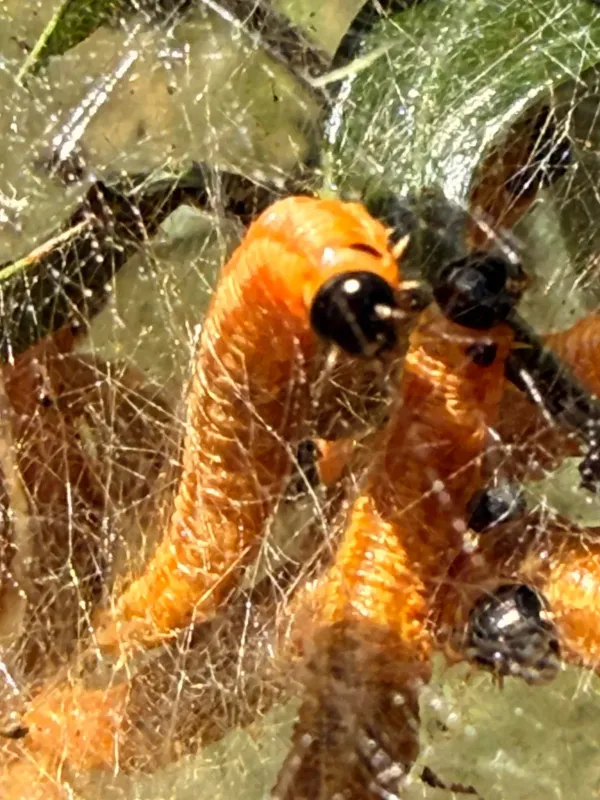
The larvae of this sawfly differ from moth caterpillars by the absence of abdominal prolegs. They possess a cylindrical body that is greyish-green or yellowish-green in color, a dark head, and well-developed thoracic legs.
Pupae develop within the soil, where they create earthen cells to survive the winter. The life cycle of the insect is closely synchronized with the phenological stages of host fruit trees.
The biology of this species involves only one generation per year. It is a specialized monophagous pest, meaning its activity is strictly limited to certain Rosaceae fruit crops.
What it damages
The primary hosts of this pest are trees of the Rosaceae family. It causes the most significant damage to cherry, sweet cherry, as well as plum and apricot trees grown in orchards.
The pest feeds on the leaf blades, starting from the edges and gradually moving toward the central vein. Under conditions of high population density, larvae can completely skeletonize the leaves on a branch.
Affected trees experience severe stress, which negatively impacts the formation of fruit buds for the following year. This directly leads to a significant decrease in orchard productivity.
Weakened trees become more susceptible to secondary infections, such as moniliosis or cherry leaf spot. The loss of foliage also prevents proper wood maturation before the winter dormancy.
In commercial orchards, severe infestations can lead to substantial losses of marketable fruit due to the physical destruction of the plant’s photosynthetic canopy.
When it appears
Adult emergence occurs in the spring, typically during or shortly after the cherry blossoming period. Adults actively feed on pollen and nectar to prepare for oviposition.
Females lay eggs in clusters on the underside of leaves, usually along the veins. This period is crucial for monitoring, as timely detection of egg batches allows for effective early intervention.
Larvae hatch from eggs in late spring or early summer and begin active feeding. Their development period lasts from 3 to 5 weeks, depending on the regional temperature conditions.
In mid-summer, mature larvae migrate into the soil to a depth of 10-15 cm. There, they pupate and remain in a state of diapause until the following spring.
The highest levels of damage are observed in dry, warm years, which accelerate the insect's developmental rate and cause the population to reach its peak.
Signs of infestation
The first clear sign of pest presence is the appearance of characteristic web nests at the tips of the branches. Larvae weave leaves together with silk, creating protective shelters.
Within these nests, the larvae live in colonies, feeding and sheltering collectively. Upon opening the web, one can easily detect the frass or excrement left by the insects.
Leaves damaged by the sawfly look like coarse skeletons. Often, only thick veins remain, making the damage highly visible during a visual inspection of the canopy.
Massive premature leaf drop indicates a severe infestation level. Affected trees often look "burnt" due to large areas of defoliated shoots.
The presence of large amounts of webbing in the crown, which persists even after the larvae have moved into the soil, serves as an important indicator for planning future control measures.
Control measures
Mechanical control involves regular orchard inspection and manual removal of web nests containing the larvae. This is highly effective in small gardens with low infestation levels.
Autumn tilling of the soil under the tree canopy helps destroy the earthen cells where larvae overwinter. This significantly reduces the number of adults that will emerge the following spring.
During periods of mass outbreaks, the use of systemic or contact-stomach insecticides is recommended. It is vital to spray during the larval hatching period before they can form dense web nests.
- Application of biological pesticides based on entomopathogenic fungi or bacteria.
- Use of registered synthetic insecticides in accordance with label instructions.
- Strict adherence to pre-harvest intervals when using chemical treatments.
- Encouragement of natural enemies, such as birds and predatory insects, within the garden.
An integrated approach, combining cultural practices and chemical protection, allows for effective population control and helps maintain the overall health of fruit orchards.
Taxonomy
- Latin name
- Neurotoma fasciata
- Order
- Hymenoptera
- Family
- Pamphiliidae
- EPPO code
- NEURFA
Discussion
No discussions yet — be the first.