
Plum web-spinning sawfly
Neurotoma
Description
How to identify
The plum web-spinning sawfly (lat. Neurotoma) belongs to the Pamphiliidae family within the order Hymenoptera. Adults are small insects, approximately 10–12 mm long, characterized by a dark body and transparent wings.
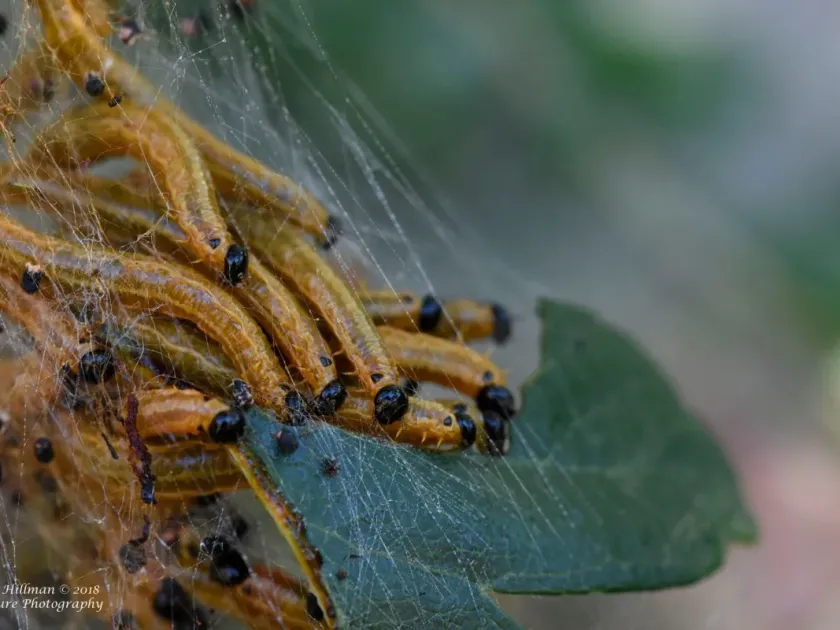
The larvae, known as false caterpillars, are cylindrical in shape and typically yellowish-green in color. Growing up to 20 mm, they lack abdominal legs, which distinguishes them from lepidopteran larvae.
The life cycle consists of the egg, larval, pupal, and adult stages. This pest is univoltine, meaning it produces only one generation per year, making its population density predictable.
The species overwinters as larvae deep in the soil, protected by earthen chambers at a depth of up to 15 cm. This dormant stage is essential for surviving winter conditions.
Adults emerge in spring to mate and lay eggs. The females deposit eggs in clusters on the underside of host plant leaves, often secreting a protective substance to secure them to the surface.
What it damages
Primary hosts for this pest include stone fruit trees, with a strong preference for plums and greengages. It can also infest peaches, apricots, and cherries in favorable conditions.
Larvae exhibit social behavior, spinning thick webs that bundle leaves together. These web nests provide a secure environment where they feed voraciously on plant tissues.
Feeding damage starts with skeletonization, where larvae consume the soft tissue of leaves, leaving behind only the veins. This severely impacts the tree's photosynthetic capability.
When infestation levels are high, the trees can suffer from significant defoliation. This weakens the plant, reducing its vigor and negatively affecting fruit development for the next season.
Repeated annual damage leads to stunted growth and increased susceptibility to other biotic and abiotic stresses, reducing the overall productivity of the orchard.
When it appears
The emergence of adults typically coincides with the blossoming period of stone fruit trees. Monitoring should commence as soon as trees begin to bloom.
Egg hatching usually occurs in mid-to-late spring. Larvae emerge and immediately begin constructing their characteristic web nests, which become visible by early June.
The larval feeding phase is relatively short, lasting about 3 to 5 weeks. Once fully grown, they cease feeding and drop to the ground to enter the soil for hibernation.
The timing of these events is highly dependent on spring temperatures. A warm, dry spring often accelerates the cycle, while cooler temperatures can delay it.
Observing the orchard during late May and June is critical, as this is when the visible web nests are formed and larvae are most accessible for control measures.
Signs of infestation
The most distinctive symptom is the presence of rolled leaves tied together with silk threads. These nests are often located at the terminal ends of branches.
Discoloration, browning, and the drying of leaves are clear indicators of infestation. Heavily infested branches may appear scorched due to the complete loss of leaf blades.
The accumulation of black larval excrement within the webbing is a diagnostic sign of active feeding. These pellets are clearly visible upon close inspection of the nests.
Leaf skeletonization remains the most prominent visual effect on the foliage. As larvae mature, they consume more leaf area, leading to rapid degradation of the canopy.
Visibility of the webs is highest in the morning, especially after dew, as the silk strands become more pronounced and easier to detect for early intervention.
Control measures
Mechanical control is effective for small-scale gardens. This involves manually removing and destroying the web nests before the larvae can complete their development.
Cultivation of the soil beneath the tree canopy in late autumn or early spring is a crucial cultural practice. It disrupts the overwintering chambers, exposing larvae to predators and environmental extremes.
Chemical control is required during mass outbreaks. Systemic insecticides are most effective if applied during the period of larval hatching, before the nests become too dense.
- Application of contact insecticides during the early larval stage.
- Use of biological pesticides, such as those containing bacteria.
- Pruning and burning of heavily infested branches to reduce local population.
Regular monitoring of the orchard is key to successful management. By acting early during the egg-hatching phase, growers can prevent the formation of large web nests and minimize chemical usage.
Taxonomy
- Latin name
- Neurotoma
- Order
- Hymenoptera
- Family
- Pamphiliidae
- EPPO code
- NEURSP
Discussion
No discussions yet — be the first.