
American mink
Neovison
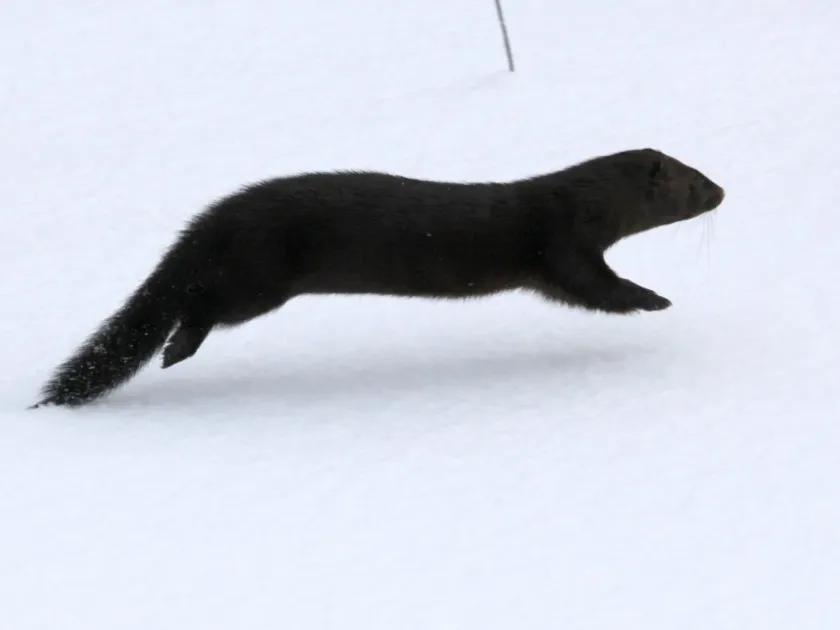
Description
How to identify
The American mink (Neovison vison) is a semi-aquatic carnivore belonging to the Mustelidae family. Originally native to North America, it has spread globally, often becoming an invasive species that poses significant challenges to rural and agricultural environments.
These animals are characterized by their sleek, elongated bodies, usually ranging from 30 to 50 cm in length. Their coat is thick, dark brown or black, and possesses high water-repellent properties. A small white patch is often visible on the chin or chest, distinguishing them from other species.
Adaptations such as partially webbed feet make them excellent swimmers, while their flexibility allows them to navigate narrow crevices and tunnels. They are highly intelligent, solitary predators that maintain strict territories along water bodies.
Mink are primarily nocturnal or crepuscular, meaning they are most active during dawn, dusk, or night hours. Their keen senses of sight and smell help them effectively locate food sources, often leading them directly to poorly secured agricultural structures.
Reproductive success is high, with females producing a litter once a year in spring. This rapid population growth can quickly lead to an increased presence of mink near human settlements if food resources, such as livestock, are readily available and inadequately protected.
What it damages
The American mink is a significant threat to small-scale poultry farming. Their innate hunting instinct often leads them to engage in "surplus killing," where they kill far more birds than they can consume in a single night, leading to massive financial losses.
Beyond poultry, mink are known to raid fish farms. They are capable of decimating stocks of high-value fish in outdoor ponds or raceways, causing substantial damage to the economic output and the breeding stock of the aquaculture operations.
As carriers of various diseases, mink can negatively impact the overall health of farm animals. They may transmit infections like Aleutian mink disease or other zoonotic pathogens to domestic pets and livestock through saliva or waste products.
Constant predation attempts create a state of chronic stress among farm animals. For poultry producers, this results in reduced egg production, slower weight gain in broilers, and a weakened immune system, which makes the flock more susceptible to common secondary infections.
The presence of mink can also disrupt local wildlife ecosystems, as they often compete with and displace native species, further complicating the biodiversity balance around agricultural properties and potentially leading to unexpected ecological feedback.
Signs of infestation
The most telltale sign of mink activity is the presence of poultry carcasses with characteristic bite marks on the neck or head. Unlike some other predators, mink often leave the bodies behind, having killed multiple birds without consuming most of the tissue.
Track identification is a primary method of detecting their presence. Their footprints are small, showing five toes with visible claw marks, and are most frequently spotted along the muddy banks of water sources near the farm or around foundation gaps.
Evidence of tunnels or holes beneath the walls of sheds and chicken coops is a definitive sign of an established mink habitat. These animals are expert diggers and will exploit any weak point in a building's structure to gain entry to the interior.
A strong, musky, and unpleasant odor is often associated with mink dens. This scent serves as a territorial marker and may become particularly noticeable during the breeding season or when the animal has established a consistent route to a food source.
Disappearance of small fish from tanks or ponds without any signs of struggle or surface debris is another common indicator. Mink are extremely stealthy underwater hunters and can remove stock from a system with very little physical disturbance.
Control measures
The primary defense against mink is physical exclusion. Poultry coops should be constructed using high-quality hardware cloth or mesh rather than simple chicken wire, which is easily torn. Bury the wire at least 50 cm into the ground to prevent tunneling.
All entry points must be secured with robust, predator-proof locks. Mink are physically clever and can manipulate simple latches; therefore, spring-loaded bolts or heavy-duty padlocks are necessary to ensure the security of doors and ventilation ports.
Live-trapping is the most effective and humane method for managing mink populations. Traps should be placed along natural travel routes, such as stream banks, and baited with fresh fish or meat to lure the predator away from the livestock areas.
Maintaining a clean farmstead by removing overgrown vegetation, brush piles, and debris minimizes the cover mink use to approach buildings undetected. Eliminating hiding spots forces the predator to remain exposed, which often deters them from visiting the site.
For large-scale operations or persistent issues, professional wildlife management services should be consulted. They offer expert knowledge in population control, specialized trapping techniques, and landscape modifications that provide long-term protection against mink predation.
Taxonomy
- Latin name
- Neovison
- Family
- Mustelidae
- EPPO code
- NEVSSP
Discussion
No discussions yet — be the first.