
Pine butterfly
Neophasia menapia
Description
How to identify
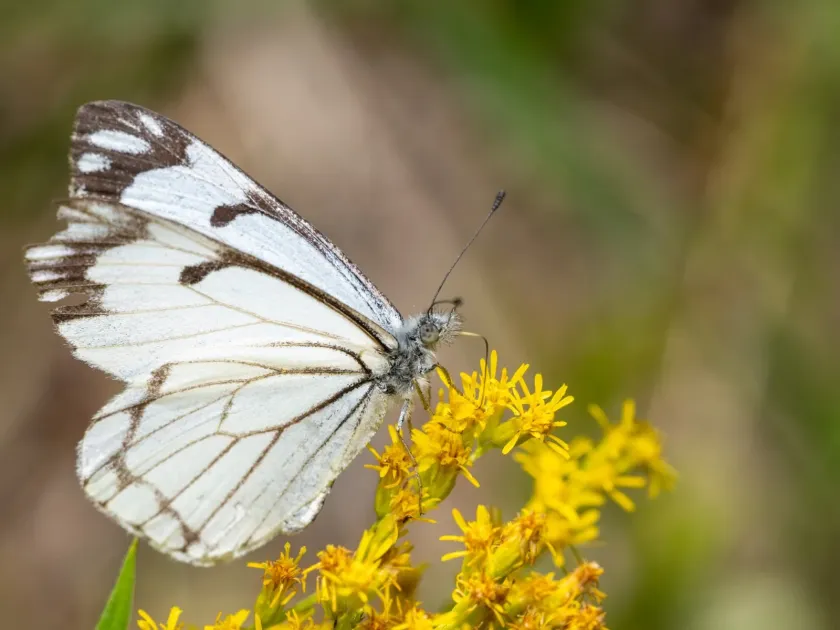
The pine butterfly (Neophasia menapia) is a species of butterfly in the family Pieridae. Adult butterflies are characterized by white wings with distinct black veins. Females are easily identified by a prominent black bar along the leading edge of the forewing.
The larvae, or caterpillars, progress through several developmental stages. Young caterpillars are typically pale green with longitudinal stripes, which provides excellent camouflage among the pine needles where they reside.
As the larvae mature, they feed and grow significantly. The pupa is greenish, helping it blend in with the needles. It attaches itself to the needles with a silk girdle, remaining in an upright position to avoid detection by predators.
The life cycle consists of a complete metamorphosis: egg, larva, pupa, and adult. In most regions, this species completes one generation per year, making the timing of monitoring activities crucial for effective population management.
Distinguishing the pine butterfly from other similar species is important for accurate pest assessment. Entomologists look for specific wing patterns and behavior during the flight season to ensure correct identification.
What it damages
The pine butterfly primarily feeds on various conifer species, including ponderosa pine, western white pine, spruce, and fir. These trees serve as both food sources and nesting habitats for the insect.
The primary damage is caused by the caterpillars consuming the needles. They often feed on current-year needles first, then move on to older needles, which significantly reduces the tree's photosynthetic capacity.
Heavy infestations can lead to complete defoliation of the canopy. This stress leaves the trees highly susceptible to secondary attacks from bark beetles and wood-boring insects, which can eventually kill the tree.
Economic damage involves lost timber production and increased fire hazards due to the accumulation of dead needles and weakened, brittle branches in the forest understory.
Large-scale outbreaks can cause extensive mortality in forest stands, requiring significant restoration efforts and resource management to recover the affected areas.
When it appears
Adult butterflies typically emerge and fly from mid-summer through late August. This period is the most critical time for monitoring and predicting the severity of the next season's infestation.
The species overwinters in the egg stage. Eggs are laid in clusters on the needles, where they remain dormant throughout the winter, waiting for the spring temperatures to trigger hatching.
The larval stage coincides with the spring bud break and the growth of new foliage. Caterpillars feed actively during late spring and early summer, which is when most of the needle consumption occurs.
Pupation occurs in mid-summer on the branches. Keeping track of the developmental stages is vital for determining the appropriate window for applying control measures.
Climate factors such as spring temperature and moisture levels heavily influence the survival rate of the larvae. Monitoring these conditions helps in forecasting potential population spikes.
Signs of infestation
One of the earliest signs of an infestation is the presence of frass (caterpillar droppings) on the ground beneath the trees. This granular waste indicates active feeding in the canopy.
Visual inspection of the branches reveals chewed or partially skeletonized needles. Larvae often feed in groups, leading to localized patches of damaged needles that are clearly visible upon close observation.
Seeing adult butterflies fluttering above the tree tops during the summer months is a strong indicator of an active population that will soon produce a new generation of eggs.
Gradual yellowing and premature needle drop are classic symptoms of significant infestation. The canopy may begin to appear thin and sickly compared to neighboring, uninfected trees.
In severe cases, the branches may turn a dull brown, and the forest canopy will lose its dense green appearance, indicating that the trees have suffered substantial foliage loss.
Control measures
The primary biological control method involves the use of Bacillus thuringiensis, a bacterium that targets caterpillars while sparing beneficial insects and wildlife in the forest ecosystem.
Aerial application of insecticides is often utilized during mass outbreaks to cover large forest tracts. Systemic and contact insecticides are chosen based on the life stage of the pest.
Silvicultural practices, including the removal of heavily infested or weakened trees, help to reduce the overall population density and prevent the spread to healthier stands.
Encouraging natural predators such as parasitic wasps and birds is part of an integrated pest management strategy to keep populations below economic injury levels.
- Use of pheromone traps for early detection of butterfly activity.
- Regular forest health surveys to monitor needle consumption rates.
- Maintaining stand vigor through proper forest management techniques.
Taxonomy
- Latin name
- Neophasia menapia
- Order
- Lepidoptera (butterflies)
- Family
- Pieridae
- EPPO code
- NEOIME
Discussion
No discussions yet — be the first.