
Pine butterfly
Neophasia
Description
How to identify
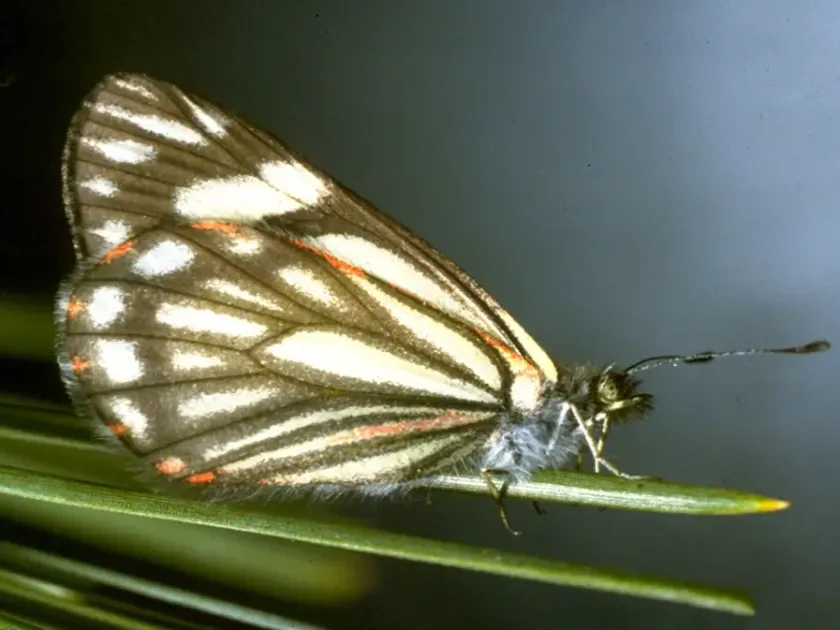
The Pine butterfly (Neophasia) is a genus of butterflies in the family Pieridae, commonly known for their resemblance to the cabbage white butterfly but adapted to coniferous hosts.
The adult butterflies feature white wings with distinct dark or black veins, providing effective camouflage against the backdrop of pine needles and bark.
The larvae, or caterpillars, are typically greenish with longitudinal stripes, which helps them blend in with the needles during their feeding stages.
Pupation occurs on the branches or trunks of the host trees, where the chrysalis remains well-hidden due to its protective coloration mimicking the texture of bark.
Identification often relies on observing the flight patterns of adults in mid-to-late summer and checking foliage for the presence of larval clusters.
What it damages
Pine butterfly larvae feed exclusively on the foliage of various pine species, which can lead to significant needle loss and crown thinning in heavily infested trees.
Heavy defoliation interferes with the tree's photosynthetic ability, severely weakening its defense mechanisms against secondary pests and environmental stressors.
Young pine saplings in nurseries are particularly vulnerable, as repeated defoliation events often result in stunted growth or total mortality of the plants.
Mature trees may lose their aesthetic and structural integrity, becoming susceptible to wood-boring insects after being repeatedly stressed by the butterfly larvae.
Ecological impacts include shifts in forest composition if the butterfly population causes widespread mortality in specific pine species within a given area.
When it appears
The life cycle of the Pine butterfly typically spans one generation per year, with adult activity peaks occurring during the warm summer months.
Eggs are laid in clusters on the needles, where they overwinter to survive the cold season, hatching only when the spring temperatures rise and new growth begins.
The caterpillar feeding stage begins in spring and continues into early summer, coinciding with the tree's period of maximum needle development.
Pupation typically takes place mid-summer, lasting for several weeks before the adults emerge to complete the reproductive cycle for the next season.
The timing of these life stages is crucial for management, as insecticide applications are most effective when caterpillars are in their early larval stages.
Signs of infestation
The most immediate sign of infestation is the presence of eaten needles, often showing ragged edges where the larvae have been feeding.
Clusters of caterpillars may be visible on the branches, sometimes protected by light silken webbing that they spin during their early developmental stages.
The accumulation of frass, or larval excrement, beneath the tree canopy is a strong indicator of an active and potentially large population of caterpillars.
Discoloration or premature dropping of needles throughout the summer can signify heavy larval damage in the upper sections of the tree canopy.
Observing a high number of adult butterflies flying around pine trees in late summer indicates a high likelihood of a significant egg-laying event for the following year.
Control measures
Biological control using microbial insecticides, such as products containing Bacillus thuringiensis (Bt), is the preferred method for managing larval populations.
Chemical intervention should be considered only when infestation thresholds are exceeded, utilizing products that are safe for use in forest and nursery environments.
Physical management, including the removal and destruction of infested branches, can be effective in small-scale plantings or home garden settings.
Enhancing tree health through proper irrigation and soil management improves the tree's resilience, helping it withstand the damage caused by the butterfly.
Monitoring programs using pheromone traps can assist in tracking adult butterfly populations, allowing for targeted and timely intervention before eggs hatch.
Taxonomy
- Latin name
- Neophasia
- Order
- Lepidoptera (butterflies)
- Family
- Pieridae
- EPPO code
- NEOISP
Discussion
No discussions yet — be the first.