
Neomegalotomus parvus
Neomegalotomus parvus
Description
How to identify
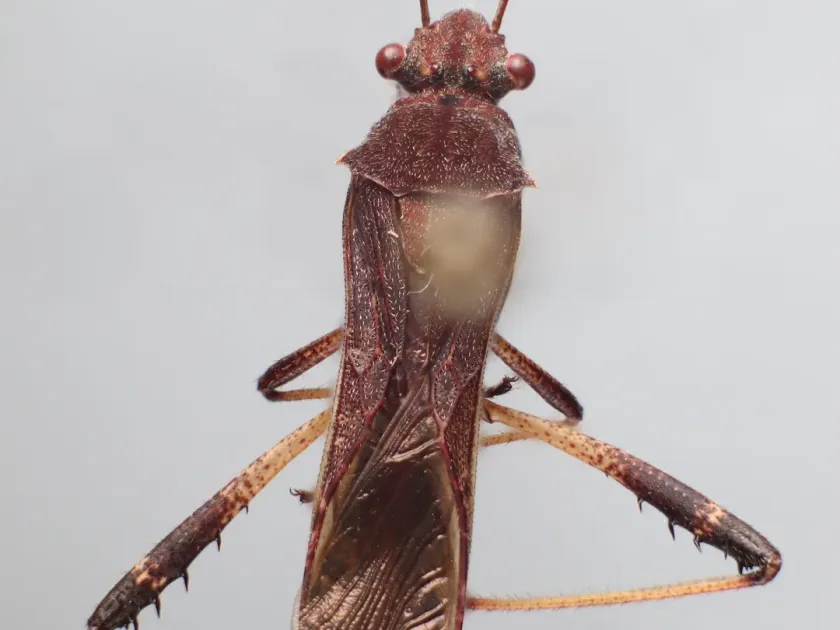
Neomegalotomus parvus is a species of broad-headed bug in the family Alydidae, belonging to the order Hemiptera. The adult has an elongated, slender body, typical for most members of this family, usually colored in brownish-grey or tan shades.
The head is relatively broad with prominent compound eyes. The pronotum widens towards the posterior edge, and the hind legs are characterized by thickened femora, which is a key diagnostic feature for identifying this specific species.
Nymphs of this pest undergo five developmental stages, gradually increasing in size and acquiring adult-like features. In early stages, they often exhibit ant-like mimicry, making them difficult to detect in the field.
The biology of this species is closely linked to the development of leguminous plants. The complete life cycle includes egg deposition on leaf surfaces or stems, nymphal development, and molting into the adult stage.
The activity of this insect is directly dependent on temperature and humidity levels. In areas where it is present, the pest can produce several generations during a single growing season, which contributes to rapid population growth.
What it damages
The primary food source for Neomegalotomus parvus are legume crops, with soybean (Glycine max) being one of the most frequently and severely affected species.
The pest possesses a piercing-sucking mouthpart used to penetrate the pod shells and feed on the developing seeds inside. This feeding behavior leads to the depletion of essential nutrients, resulting in underdeveloped or aborted seeds.
In addition to nutrient extraction, the saliva injected by the insect during feeding can trigger necrotic processes and physical deformation of the seeds, significantly lowering the commercial value of the crop.
Severe infestations result in substantial yield losses, reduced thousand-grain weight, and poor seed quality, making the harvested material unsuitable for future planting or processing.
In the field, damage often appears in patches; however, under favorable conditions for mass reproduction, Neomegalotomus parvus can spread across the entire field in a relatively short period.
Signs of infestation
Visual monitoring for Neomegalotomus parvus should be conducted during the flowering and active pod-filling stages, as these periods are the most attractive for the pest.
A key indicator of infestation is the presence of small puncture marks on the surface of the pods, which may develop into dark spots or localized decay zones over time.
Upon inspecting the seeds inside affected pods, one can often find signs of stunted growth, shriveling, or discoloration caused by the disruption of the seed's metabolic processes.
Adult bugs are most active during the daylight hours; they can be spotted by examining the plant stems and the base area, where they frequently seek shelter from intense sun.
The use of an entomological sweep net allows for a rapid assessment of pest population density per unit area, providing the necessary data to decide on potential chemical intervention.
Control measures
The management strategy for Neomegalotomus parvus must be integrated, relying on continuous monitoring of population levels within the crop fields.
Agronomic practices, such as effective crop rotation and the elimination of wild legume weeds around field edges, help reduce the pest's reservoir hosts during the off-season.
Once the economic injury threshold is reached, insecticide applications using products with contact and stomach action, approved for use on legumes, are recommended.
It is essential to rotate different classes of insecticides to prevent the development of resistance in Neomegalotomus parvus populations against commonly used chemical agents.
Biological control strategies, including the conservation of natural enemies such as egg parasitoids and predatory insects, can effectively complement chemical measures within a sustainable farming framework.
Taxonomy
- Latin name
- Neomegalotomus parvus
- Order
- Hemiptera (bugs, aphids, leafhoppers)
- Family
- Alydidae
- EPPO code
- NMGLPA
Discussion
No discussions yet — be the first.