
Neomegalotomus
Neomegalotomus
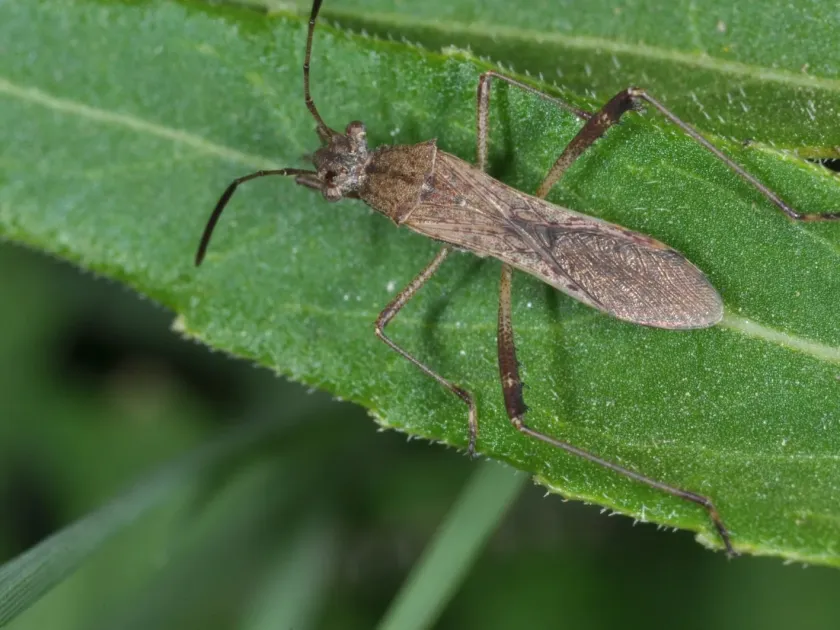
Description
How to identify
Neomegalotomus is a genus of bugs belonging to the family Alydidae, known for being a significant pest in agricultural settings, particularly in tropical regions.
The adult insects have a characteristic elongated body shape, which allows them to effectively blend in with the stems and foliage of leguminous plants.
Their coloration typically ranges from light brown to yellowish-tan, providing excellent camouflage while they feed on developing pods.
Nymphs of the species show a distinct resemblance to ants, a form of mimicry that protects them from various predators during their development.
Taxonomically, they are true bugs (Hemiptera) specialized in extracting nutrients from the reproductive organs of host plants.
What it damages
The primary host crops for Neomegalotomus include various legumes, with soybeans (Glycine max) being the most economically impacted.
The insects feed by piercing the pods and seeds with their stylets, extracting the sap and cellular contents during the critical pod-filling stage.
Damage results in shriveled, deformed, and discolored seeds, which significantly reduces both the yield weight and the overall grain quality.
Furthermore, seeds damaged by these bugs often have poor germination rates, making them unsuitable for use in future planting seasons.
Secondary infections, such as fungi or bacteria, may enter the pods through the puncture holes created by the insects, worsening the yield loss.
When it appears
The activity of Neomegalotomus peaks during the flowering and pod development stages of leguminous crops, when plant tissues are most succulent.
Their life cycle is heavily influenced by ambient temperature, with warmer conditions accelerating the reproductive cycle and shortening generation time.
Early in the season, the bugs establish populations on wild host plants or weeds, subsequently migrating to commercial fields as crops mature.
The transition to cultivated fields typically occurs as plants begin to set pods, making this the most high-risk period for infestation.
Population density often builds up gradually, peaking right before harvest if environmental conditions remain favorable for the pest.
Signs of infestation
Visible signs of infestation include small, dark puncture marks on the surface of the pods, which may be accompanied by slight wilting of the pod tissues.
Scouting during the morning or late afternoon often reveals adult bugs resting on or near the developing pods of the host plants.
Premature abscission or dropping of pods can indicate heavy feeding pressure from large colonies of the insects.
Internal examination of the pods often shows necrotic spots on the seeds where the stylets of the bug have penetrated the tissue.
The presence of frass (insect excrement) on the pod surfaces is a definitive indicator of the pest's recent activity in the area.
Control measures
Chemical control involving approved insecticides is the primary method used when field populations exceed the established economic threshold levels.
Effective weed management around field perimeters is crucial, as it eliminates alternative host plants that support early-season bug populations.
Cultivating resistant crop varieties can help reduce the impact of Neomegalotomus feeding, even when pest numbers are moderate.
- Regular field scouting using sweep nets.
- Crop rotation to disrupt the pest's life cycle.
- Biological control using natural predators or entomopathogenic fungi.
Application of pesticides should be timed carefully to minimize impact on beneficial pollinators while maximizing the control of the target pest.
Taxonomy
- Latin name
- Neomegalotomus
- Order
- Hemiptera (bugs, aphids, leafhoppers)
- Family
- Alydidae
- EPPO code
- NMGLSP
Discussion
No discussions yet — be the first.