
Apple capsid bug
Neolygus neglectus
Description
How to identify
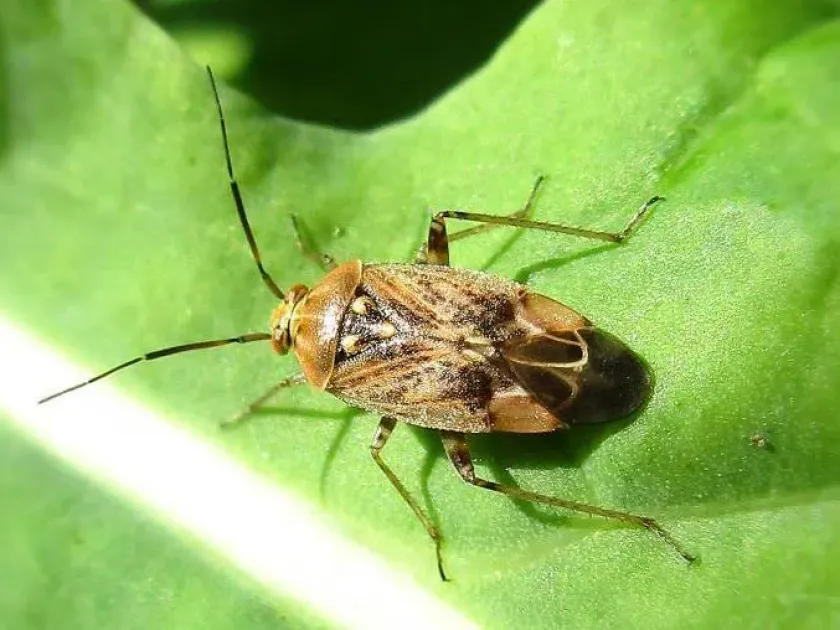
The apple capsid bug (Neolygus neglectus) belongs to the Miridae family, commonly known as plant bugs. Adults are typically 6-7 mm long with a pale green to yellowish-brown oval body.
They possess long antennae and a piercing-sucking mouthpart, which is characteristic of the Miridae family, allowing them to feed on plant juices.
Nymphs resemble smaller versions of the adults but lack developed wings and are usually bright green, providing excellent camouflage against young foliage.
Eggs are laid in the bark of young shoots or woody tissues, where they overwinter. They are white and elongated, making them difficult to detect without careful inspection.
The life cycle is closely synchronized with the phenology of the apple tree, ensuring that nymphs have access to food as soon as the buds begin to burst.
What it damages
The primary hosts are apple trees, though damage can also occur on pears and other Rosaceae species found in commercial or home orchards.
Both adults and nymphs cause damage by feeding on buds, leaves, and developing fruitlets. Their saliva contains enzymes that cause tissue damage and developmental issues.
Feeding on young fruit leads to severe deformation as the apple grows, resulting in pitted or scarred skin that renders the fruit unmarketable.
Heavy infestations can lead to significant crop loss and the weakening of the tree's overall vigor due to the loss of nutrients and energy.
Leaf damage manifests as small, irregular holes with necrotic edges, which reduces the total leaf surface area available for photosynthesis.
When it appears
Egg hatch usually coincides with the bud burst phase of apple trees. This is a critical period for monitoring the population and applying initial control measures.
The nymphal stage is active throughout the flowering period, during which they can cause extensive damage to the developing ovaries of the fruit.
Adults emerge in early to mid-summer and remain active through the season, feeding on foliage and fruit until they lay overwintering eggs in late summer or autumn.
The development of a single generation per year is standard, although warm spring conditions can accelerate hatching, requiring prompt intervention.
Monitoring should be most intense during the pre-blossom and petal-fall stages to ensure effective management of the population.
Signs of infestation
Small, translucent spots on leaves that eventually turn into holes with dark, necrotic margins are the most visible sign of an early infestation.
Distorted and stunted shoot growth is a common indicator of high pest pressure, often accompanied by the curling of young, tender leaves.
Fruit infestation is recognized by the presence of small, dark punctures, which later develop into prominent bumps or woody scars as the fruit enlarges.
Physical presence of the bugs is the definitive sign; they can often be found on the undersides of leaves, especially during the cooler parts of the day.
Premature fruit drop in early summer may also be linked to damage sustained from capsid bug feeding during the early fruit set period.
Control measures
Chemical control is most effective when applied at the green cluster or pink bud stage, targeting nymphs before they reach maturity and cause extensive damage.
Integrated Pest Management (IPM) practices, such as encouraging natural predators like ladybirds and lacewings, can help maintain populations below the economic threshold.
Pruning out infested shoots during the winter or spring helps reduce the reservoir of overwintering eggs within the orchard.
Maintaining a clean orchard floor by reducing weed cover helps minimize alternative habitats for the bug and facilitates easier monitoring.
- Pre-bloom insecticide applications
- Sanitary pruning of damaged shoots
- Biological control through natural predator conservation
- Monitoring with sticky traps or beat-sampling
Taxonomy
- Latin name
- Neolygus neglectus
- Order
- Hemiptera (bugs, aphids, leafhoppers)
- Family
- Miridae
- EPPO code
- NELYNE
Discussion
No discussions yet — be the first.