
Ash plant bug
Neoborus pacificus
Description
How to identify
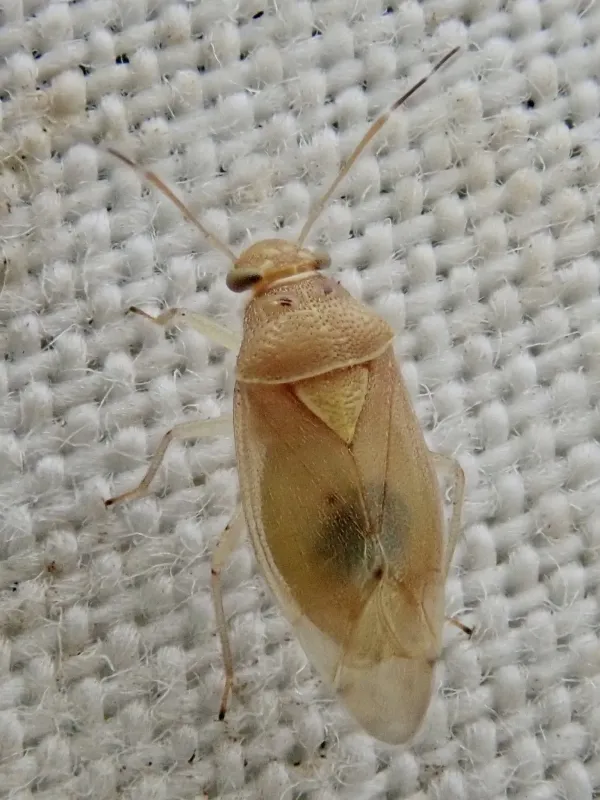
The Ash plant bug (Neoborus pacificus) belongs to the Miridae family within the order Hemiptera. These small insects typically measure 4 to 6 millimeters in length and possess a distinct oval-shaped body.
The adults are usually light yellow or brownish, often featuring dark markings on the pronotum and scutellum. These colors provide effective camouflage against the bark and leaves of the ash trees they inhabit.
Like other plant bugs, they possess piercing-sucking mouthparts. This specialized apparatus allows them to extract nutrient-rich cell sap directly from the leaf tissues of their host plants.
The nymphs go through several developmental stages (instars) before reaching maturity. They are generally smaller than adults and lack functional wings, but share the same feeding behavior.
Eggs are typically inserted into the succulent tissues of young twigs or leaf petioles, effectively shielding them from harsh weather conditions and predators throughout the winter season.
What it damages
Ash trees (genus Fraxinus) are the primary hosts for this pest. The insect shows a strong preference for younger trees and those already suffering from environmental stress or poor soil conditions.
By feeding, the bugs cause localized cell death and disrupt the photosynthetic capability of the leaves. This results in the characteristic yellowing and mottling patterns across the leaf surface.
Severe infestations lead to premature leaf drop, which significantly weakens the tree's vigor. In urban landscapes, this damage can lead to a substantial loss of the tree's ornamental value.
Repeated damage over several years reduces the tree's ability to store energy, making it much more susceptible to secondary attacks by wood-boring beetles and pathogenic fungal diseases.
Both nymphs and adults feed on the undersides of leaves, which often keeps them protected from direct exposure to environmental hazards and makes management slightly more challenging.
When it appears
The life cycle of the Ash plant bug is tightly synchronized with the budding of ash trees in the spring. Nymphs emerge just as the new leaves begin to unfurl, ensuring an immediate food source.
Adult bugs reach peak activity during the warmer summer months. They are highly mobile during this time, moving throughout the canopy or flying to nearby trees to continue their reproductive cycle.
Depending on the climatic zone, the insect may complete multiple generations per year. This potential for rapid population growth necessitates ongoing monitoring throughout the entire growing season.
As autumn approaches, females lay overwintering eggs in the bark or tender shoots of the host tree. These eggs remain dormant until the following spring, when the cycle begins anew.
Drought stress during the summer months often exacerbates the damage caused by these bugs, as trees are less able to recover from the loss of leaf sap during dry periods.
Signs of infestation
The first signs of an infestation include the appearance of tiny, pale yellow spots on the upper leaf surface. Over time, these spots merge, causing the leaf to look mottled or chlorotic.
Affected leaves may curl, crinkle, or show signs of necrosis along the edges. The foliage often appears thin and sparse compared to healthy, non-infested ash trees in the vicinity.
Examining the underside of the leaves usually reveals the presence of black frass (excrement) and cast-off skins from molting nymphs, which remain stuck to the surface.
A general loss of canopy density, often described as a "thinning" effect, is a clear indicator of a high population of Ash plant bugs within the tree's crown.
During warm, sunny days, disturbing the branches often results in the sudden flight of adult bugs, confirming their presence and the need for immediate assessment.
Control measures
Maintaining tree health through proper irrigation and fertilization is the primary preventative measure. Healthy, vigorous trees are naturally more resistant to feeding damage.
Systemic insecticides are effective when applied at the right time, as they are translocated into the leaf tissue, poisoning the bugs that ingest the plant's sap.
Timing is critical: applications should coincide with the nymphal stages, as younger insects are more susceptible to treatment and control before they can cause widespread leaf damage.
In cases where chemical intervention is not desired, biological control involving the introduction or protection of natural predators like lady beetles and lacewings can help stabilize populations.
Sanitation practices, such as removing and destroying infested twigs during the dormant season, can significantly reduce the number of overwintering eggs and lower pest pressure for the next spring.
Taxonomy
- Latin name
- Neoborus pacificus
- Order
- Hemiptera (bugs, aphids, leafhoppers)
- Family
- Miridae
- EPPO code
- NEOBPA
Discussion
No discussions yet — be the first.