
Neoasterodiaspis
Neoasterodiaspis
Description
How to identify
Neoasterodiaspis is a genus of scale insects within the Asterolecaniidae family, belonging to the order Hemiptera. These insects are microscopic and highly specialized, often adapting perfectly to the texture of the host plant's bark.
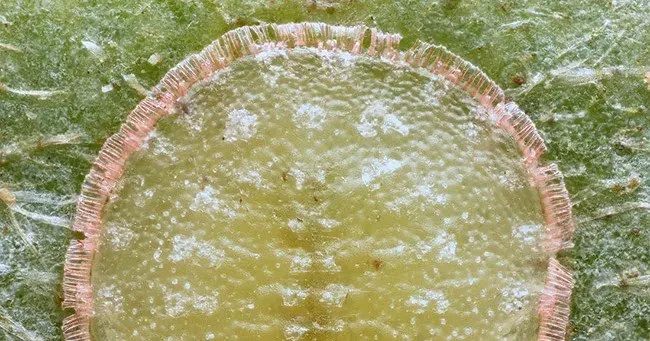
Females are sessile and protected by a hard, waxy test (scale) that is typically circular or oval. This covering serves as a highly effective camouflage against predators and environmental threats.
The insect body itself is usually yellow or pale brown. Due to their small size and stationary nature, they are often overlooked until a significant population density is reached.
Males in this genus are rare or even unknown for some species, indicating that parthenogenetic reproduction or simple female-driven colony growth is common.
Accurate identification of the species usually requires professional examination of the pygidium structure under a laboratory microscope to differentiate it from other scale insect families.
What it damages
Neoasterodiaspis primarily infests woody plants and shrubs, with a preference for specific tree species such as oaks. They feed by inserting their stylets into the bark and phloem.
The constant withdrawal of plant sap leads to significant nutrient depletion. As the infestation progresses, the host tree loses vigor, affecting both growth rates and leaf development.
The feeding sites often suffer from tissue necrosis or localized deformation of the bark. Over time, these areas become points of entry for opportunistic pathogens and fungi.
Severe infestations can lead to dieback of small twigs and branches, significantly reducing the aesthetic value of ornamental trees and causing long-term stress to the plant.
In forest nurseries and orchards, this pest can cause economic losses by stunting the development of young plants and increasing their susceptibility to secondary stressors.
When it appears
The life cycle of Neoasterodiaspis is synchronized with the phenology of the host plant. Activity begins as temperatures rise in the spring, marking the transition from overwintering.
The most crucial period for management is the emergence of first-instar nymphs, known as crawlers. This stage usually occurs in late spring, allowing them to disperse to new bark surfaces.
Throughout the summer, the insects remain fixed in place, maturing into adults and developing their characteristic protective waxy shells, making them harder to treat with contact pesticides.
As autumn approaches, the development slows down in preparation for the winter. The insect survives the cold months in a dormant state, hidden within the crevices of the bark.
Seasonal weather fluctuations rarely kill off the population, as the species is highly adapted to the winter conditions of its native habitat, utilizing the bark as a protective buffer.
Signs of infestation
The first sign of an infestation is the appearance of small, scale-like bumps on the bark of twigs. These bumps are often the same color as the surrounding tissue, requiring a keen eye to spot.
The presence of honeydew on the leaves and branches is a strong indicator of scale activity. This sticky substance frequently supports the growth of black sooty mold.
Deformed or pitted bark is another symptom. When a colony is removed, the underlying tissue may show signs of discoloration or chronic localized stress.
Yellowing of leaves and thinning of the canopy during the peak growing season are classic signs that a tree is struggling with a high population of sap-sucking insects.
Closer inspection with a magnifying lens will reveal the presence of small, waxy tests that feel firm to the touch and hide the sedentary adult female underneath.
Control measures
Systemic insecticides are generally the most effective control measure, as they are absorbed by the plant and ingested by the insects during their feeding process.
Timing is critical: applications should be directed at the crawler stage, as nymphs lack the protective shield and are highly vulnerable to chemical treatments.
Pruning is an essential cultural practice. Removing and destroying infested twigs physically reduces the population density and limits the spread to healthy parts of the tree.
Dormant oil sprays applied in late winter or early spring can smother the overwintering stages, preventing the initial infestation from gaining momentum during the growing season.
- Regular inspection of bark and branches for signs of scaling.
- Use of systemic pesticides like imidacloprid for severe cases.
- Sanitary pruning of infested plant material.
- Monitoring for honeydew and sooty mold as an early warning.
- Maintaining plant vigor through proper fertilization and watering.
Taxonomy
- Latin name
- Neoasterodiaspis
- Order
- Hemiptera (bugs, aphids, leafhoppers)
- Family
- Asterolecaniidae
- EPPO code
- NEASSP
Discussion
No discussions yet — be the first.