
Neides
Neides
Description
How to identify
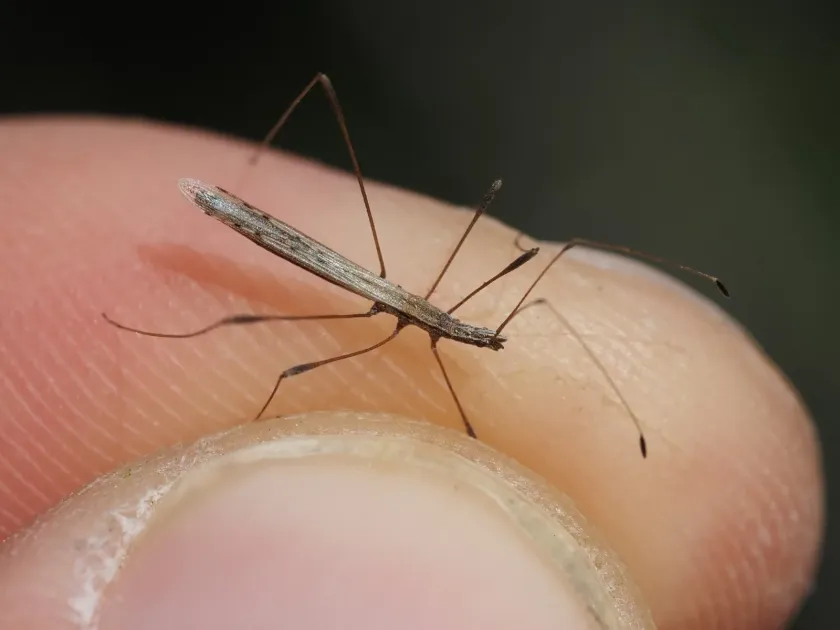
Neides is a genus of insects belonging to the family Berytidae, commonly known as stilt bugs. These insects are easily recognized by their extremely slender, elongated bodies and long, thin legs.
The adult Neides bug typically measures between 8 and 10 mm in length. Their coloration is predominantly brownish or yellowish, providing excellent camouflage against stems and grasses.
The antennae are notably long and consist of four segments, with the terminal segment being slightly thickened, which serves as a key identifying characteristic.
While they possess wings, these bugs are relatively weak fliers and primarily use their long legs for walking slowly along plants.
These insects are closely related to other true bugs in the order Hemiptera and are distributed across various grassland and agricultural habitats.
What it damages
Neides bugs are phytophagous insects that feed on the juices of various plants, with a preference for Caryophyllaceae and some legume species.
Both adults and nymphs cause damage by piercing plant tissues with their proboscis and injecting saliva, which can contain enzymes that disrupt metabolic processes.
Feeding typically occurs on young shoots, buds, and developing seeds, leading to localized necrosis and discoloration of the affected plant parts.
Heavy infestations can stunt plant growth, cause leaf deformation, and significantly reduce the quality and yield of seeds in susceptible crops.
Although they are not always considered primary pests, their presence can be detrimental in cases where high populations coincide with sensitive developmental stages of the crop.
When it appears
Neides bugs overwinter as adults, seeking refuge in leaf litter, debris, or dry vegetation along the edges of fields and meadows.
Emergence from overwintering sites occurs in the spring when temperatures rise, allowing for the start of the reproductive season.
The life cycle generally consists of a single generation per year, though development rates are highly dependent on the local climate and seasonal temperature patterns.
Activity peaks during the summer months, which is when eggs are laid and nymphs develop into adults on host plants.
As temperatures drop in the autumn, the adults begin to migrate toward sheltered habitats to enter dormancy for the winter months.
Signs of infestation
Early signs of infestation include small chlorotic or yellowish spots on the leaves, resulting from the bugs' feeding activity.
Field scouting might reveal the presence of adult bugs resting on the upper stems or flowering heads of plants during the early morning or late afternoon.
Deformation of flower buds or premature shedding of reproductive parts can serve as a diagnostic indicator of pest presence.
Because these insects blend in so well with their environment, they are often difficult to spot during standard field inspections.
Sweep netting is the most effective way to detect the population density and confirm the presence of Neides in a crop field.
Control measures
Effective control starts with good cultural practices, such as removing weeds from field margins that serve as alternative hosts for the bugs.
Deep plowing after harvest is an essential strategy to bury crop residues and reduce the availability of suitable overwintering sites for adults.
Chemical control with insecticides is generally reserved for situations where population levels exceed economic damage thresholds.
When selecting insecticides, it is crucial to use products that minimize harm to beneficial insects and pollinators present in the field.
Integrated pest management (IPM) practices, including monitoring and maintaining healthy soil conditions, help reduce the need for intensive chemical interventions.
Taxonomy
- Latin name
- Neides
- Order
- Hemiptera (bugs, aphids, leafhoppers)
- Family
- Berytidae
- EPPO code
- NEIDSP
Discussion
No discussions yet — be the first.