
Jalysus
Jalysus
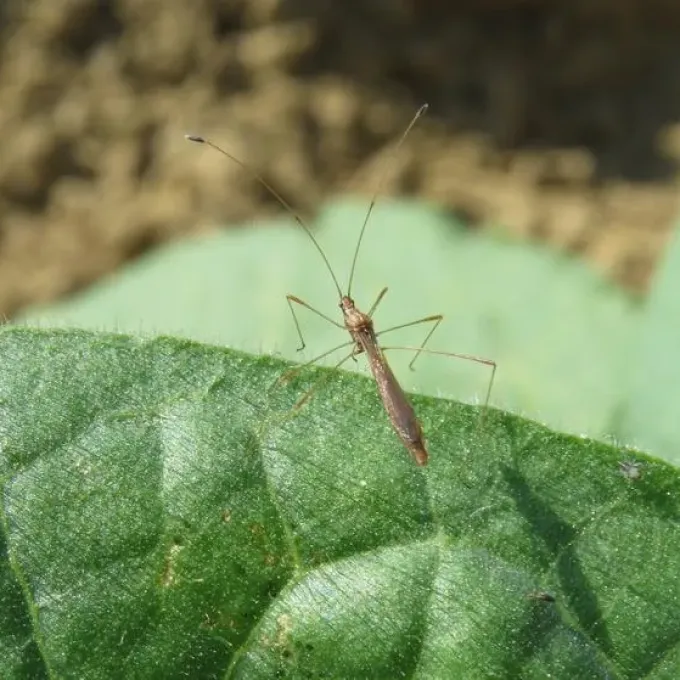
Description
How to identify
Jalysus is a genus of stilt bugs belonging to the family Berytidae, known for their extremely slender bodies and long, thin legs.
These insects are characterized by swollen tips on their femora, which helps them maintain balance while navigating dense plant hairs.
Adults typically measure between 5 and 9 mm in length and exhibit colors ranging from light yellow to reddish-brown.
The life cycle consists of three distinct stages: egg, nymph (with five instars), and adult, with nymphs resembling wingless versions of adults.
Due to their cryptic coloration and thin body shape, they are often overlooked during routine field scouting by farmers and gardeners.
What it damages
Jalysus primarily targets members of the Solanaceae family, specifically tomatoes, tobacco, potatoes, and peppers.
They utilize a piercing-sucking mouthpart to extract plant fluids, causing localized stress and tissue degradation.
The damage is most severe on young shoots, flower buds, and developing fruits, which may result in stunted growth.
In high populations, the feeding damage can lead to leaf yellowing, chlorosis, and the premature shedding of blossoms.
While some species may act as predators, they are generally classified as pests in vegetable production systems due to sap-feeding.
Signs of infestation
Early symptoms of an infestation include the appearance of tiny chlorotic spots on the leaves where the insects have fed.
Affected plants may exhibit signs of wilting during peak sunlight hours due to the depletion of plant fluids.
Malformed flower buds and a reduction in fruit set are key indicators of significant pest pressure on the crop.
Tiny black spots, representing the insect's frass, can often be found on the undersides of leaves near the feeding sites.
Careful inspection of the stem and foliage with a hand lens is necessary to spot the thin, twig-like bodies of the bugs.
Control measures
Cultural control involves the removal of alternative host weeds from the field borders to minimize seasonal migration.
Monitoring using yellow sticky traps is a recommended practice to detect the arrival of adults early in the growing season.
Biological control options, such as the augmentation of natural parasitic wasps, can help regulate population densities.
If chemical interventions are necessary, targeted applications of insecticides should focus on early instars to break the cycle.
Post-harvest sanitation, including the destruction of crop debris, is vital to eliminate overwintering sites for the next year.
Taxonomy
- Latin name
- Jalysus
- Order
- Hemiptera (bugs, aphids, leafhoppers)
- Family
- Berytidae
- EPPO code
- JALYSP
Discussion
No discussions yet — be the first.