
Berytinus
Berytinus
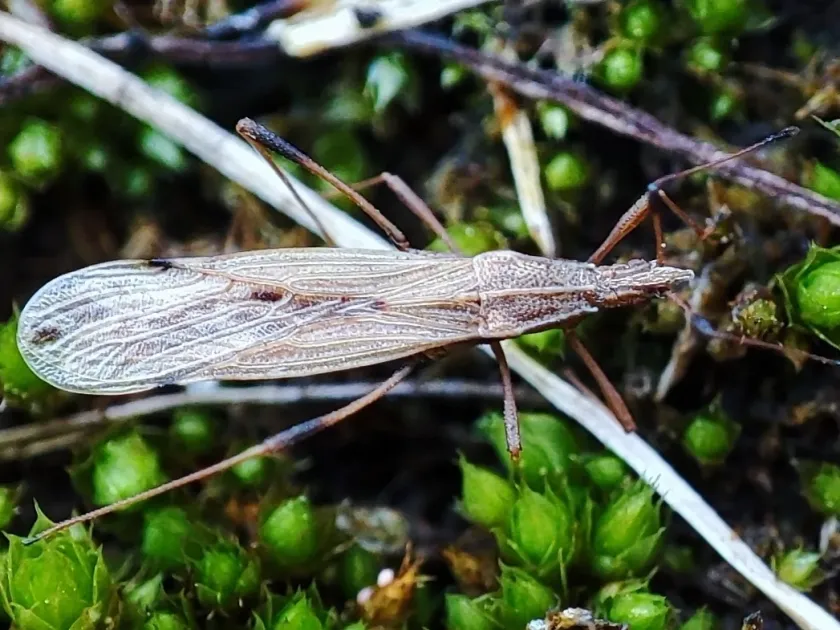
Description
How to identify
Berytinus is a genus of insects belonging to the stilt bug family (Berytidae) within the order Hemiptera. These insects possess an exceptionally elongated and slender body, which often leads to them being mistaken for small stick insects, making them difficult to spot on plant stems.
Their coloration typically ranges from yellowish-brown to dark brown, providing effective camouflage against dry plant parts. The head features long antennae, and the legs are remarkably long and delicate, which is characteristic of the family.
Adults usually reach a length of 7 to 10 mm. Many species have reduced wing development, which limits their long-distance mobility but allows them to be highly adapted to stable micro-habitats within the plant canopy.
Nymphs resemble the adults morphologically but are smaller in size and lack fully developed wings. They undergo several molting stages, gradually acquiring adult features as they reach maturity.
The taxonomy of the Berytinus genus is complex, as many species share highly similar physical traits, necessitating the use of specialized entomological keys and microscopic analysis for accurate identification.
What it damages
The damage caused by these insects is primarily due to their feeding habits. They pierce the epidermis of young shoots, leaves, and floral stalks, injecting saliva containing enzymes that cause localized tissue breakdown.
They frequently target crops from the legume and cereal families. In intensive agricultural settings, their presence can be found on various herbaceous plants that are integrated into local crop rotation schemes.
During outbreaks, these pests can exhaust the nutritional reserves of the plant by draining sap, leading to significant stress on the host. This feeding activity is particularly detrimental during the critical stages of vegetative growth.
Feeding damage is most severe during the bud formation or flowering phases. The loss of fluids results in stunted growth, leaf deformation, and premature wilting, which can severely impact the final yield.
Beyond direct physical damage, the puncture sites often serve as entry points for secondary pathogens, including various fungal and bacterial infections, which can lead to rapid disease spread within the crop stand.
When it appears
The life cycle of Berytinus is deeply influenced by regional climate conditions. These insects typically overwinter as adults, finding shelter in plant debris, leaf litter, or the upper layers of the soil to survive harsh temperatures.
In spring, once consistent positive temperatures are reached, the bugs emerge from their overwintering sites and begin searching for suitable host plants. Their peak activity period usually occurs from late spring through early summer.
Reproduction takes place during the warmer months of the year. Females deposit eggs primarily on the undersides of leaves or along stems, ensuring that nymphs have immediate access to food upon hatching.
The development cycle from egg to adult can take several weeks depending on ambient temperature and moisture levels. Depending on the climate, there can be one or more generations per season.
As daylight hours decrease and temperatures begin to drop in the autumn, the bugs migrate back to sheltered areas to enter diapause, effectively concluding their active life cycle for the year.
Signs of infestation
Detecting Berytinus is often challenging due to their cryptic coloration and sedentary behavior. Monitoring programs typically require the use of sweep nets or close inspection of the plant base to confirm their presence.
The first signs of infestation are chlorotic spots appearing on the foliage at the site of the bugs' punctures. Over time, these spots may turn yellow or necrotic, negatively affecting the plant's photosynthetic capacity.
Severe infestations manifest as visible growth retardation. Stems may become distorted, and flower buds may drop prematurely, preventing the formation of healthy seeds or fruits.
Leaf curling or rolling is another indirect indicator of pest activity, as they often retreat into these protected micro-environments to feed without being exposed to predators.
The presence of fine black fecal droppings on the underside of leaves is a strong indicator of colony formation, signaling that urgent scouting or intervention may be required.
Control measures
Effective control relies heavily on integrated pest management (IPM) practices. Field sanitation, particularly the removal of weeds and crop residues, is crucial to eliminate overwintering sites.
Deep autumn plowing is an effective mechanical method to destroy overwintering adults, significantly reducing the initial pest population at the start of the next planting season.
- Utilizing crop rotation to disrupt the pest's host availability.
- Maintaining field hygiene by clearing harvest debris.
- Deploying biological insecticides when population density crosses the economic threshold.
- Applying systemic chemical pesticides only when necessary as a last resort.
Chemical intervention should be strictly limited to cases where the economic threshold is exceeded. Using selective-action pesticides helps protect beneficial insects and natural predators that contribute to population control.
Consistent field monitoring using sticky traps or regular manual surveys allows farmers to detect pest colonization early, preventing widespread damage and maintaining crop health throughout the season.
Taxonomy
- Latin name
- Berytinus
- Order
- Hemiptera (bugs, aphids, leafhoppers)
- Family
- Berytidae
- EPPO code
- BERYSP
Discussion
No discussions yet — be the first.