
Nebria picicornis
Nebria picicornis
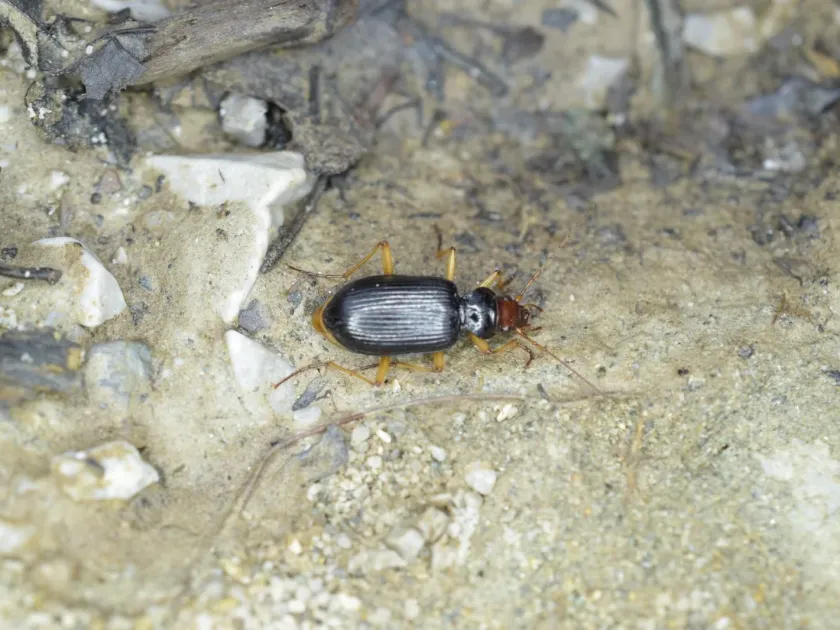
Description
How to identify
Nebria picicornis belongs to the Carabidae family, commonly known as ground beetles, within the order Coleoptera. While many carabids are considered beneficial predators, some species can occasionally exhibit harmful behavior towards crops.
Adult beetles are characterized by an elongated body and distinct wing-cover (elytra) texture. Their dark, often metallic or dull-brown coloration provides excellent camouflage against soil particles and organic debris on the field surface.
The larvae are highly mobile and possess strong, biting mouthparts. They lead a secretive lifestyle, residing primarily in the top layers of the soil where they avoid exposure to direct sunlight and desiccation while searching for food.
The insect's life cycle is closely linked to soil moisture levels and the availability of plant debris. They thrive in fields that maintain high organic matter content, which provides a stable microclimate for their development.
Identification of this species requires expert examination of morphological features, particularly the shape of the pronotum and the male genitalia. Laboratory analysis remains the most accurate way to distinguish it from closely related species.
What it damages
Damage caused by Nebria picicornis is most significant during the germination and seedling stages of field crops. During these periods, adults and larvae may feed on germinating seeds or tender young shoots.
Cereal crops, such as winter wheat and rye, are particularly susceptible. Larval feeding on the roots and underground parts of the stem can weaken the plant, leading to poor crop stands or the complete death of individual seedlings.
Vegetable crops are also at risk, especially in the early stages of transplanting. Beetles can girdle the stem at the root collar, disrupting the transport of nutrients and causing the plant to wilt rapidly and eventually die.
The overall impact on agriculture is reflected in reduced crop density and yield losses. If the population density is high, the damage can necessitate costly replanting efforts or significant intervention with protective measures.
The severity of damage is often correlated with environmental conditions. In periods of drought, these insects may become more destructive as they actively seek moisture-rich tissues in developing plants to survive.
When it appears
Activity typically begins in early spring, once soil temperatures rise sufficiently to trigger the movement of overwintering insects. This timing frequently coincides with the most sensitive growth stages of winter crops.
During the summer, surface activity often declines as beetles migrate into deeper, cooler, and more humid soil layers to escape high surface temperatures and low moisture conditions.
A secondary peak in activity is often observed in the autumn as beetles prepare for winter. During this phase, they may congregate in fields sown with winter crops, posing a risk to the newly emerging sprouts.
Adults primarily overwinter by burrowing deep into the soil or hiding under dense vegetation and crop residue. A successful winter survival rate for the population depends on the severity of freezing temperatures.
The life cycle usually spans one year, though variations occur depending on regional climate factors. Adequate rainfall during the growing season significantly influences the development speed of larval stages.
Signs of infestation
The first signs of infestation are often patchy crop emergence or areas where seedlings appear stunted. These symptoms can be easily confused with other soil-borne diseases or nutritional deficiencies.
Physical inspection of the soil around the base of damaged plants often reveals gnaw marks on the stem. In severe cases, larvae can be found directly at the root zone of the affected plant.
Monitoring using pitfall traps is a highly effective way to detect the presence of Nebria picicornis. Checking these traps regularly provides essential data on population density and activity levels in the field.
Increased beetle activity on the soil surface is often noted after rain showers, when the moisture lures them out of their subterranean burrows to feed. This is an optimal time for visual monitoring.
Missing or damaged seeds in a row are another indicator of pest presence. When excavated, these seeds show clear evidence of boring or consumption, confirming that pests are active in the seed zone.
Control measures
Deep autumn plowing is a foundational cultural control method. By turning the soil, farmers can destroy overwintering sites and expose larvae to predators and unfavorable environmental conditions.
Crop rotation serves as a powerful tool to disrupt the pest's life cycle. Avoiding continuous cultivation of susceptible host plants in the same field helps prevent population build-up over several years.
Seed treatment with systemic insecticides is the most effective proactive measure. Applying these treatments ensures that the crop is protected from the moment of germination, which is the most critical period for survival.
When the economic threshold is exceeded, application of foliar insecticides may be necessary. Treatments should be timed during the evening when the beetles are most active on the surface to ensure maximum contact.
Managing weeds along field margins is essential, as these areas often serve as reservoirs for beetle populations. Keeping the field periphery clean reduces the migration pressure into the main crop area.
Taxonomy
- Latin name
- Nebria picicornis
- Order
- Coleoptera (beetles)
- Family
- Carabidae
- EPPO code
- NEBRPI
Discussion
No discussions yet — be the first.