
Nebria
Nebria
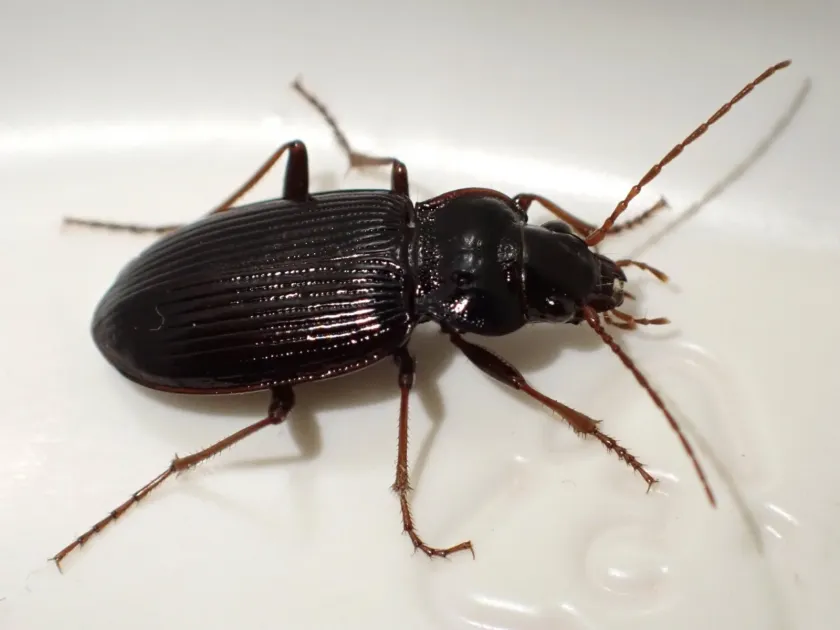
Description
How to identify
Beetles of the genus Nebria belong to the family Carabidae (ground beetles) and the order Coleoptera. These are typically active predators with an elongated, slightly flattened body, commonly coloured in dark or brown tones.
A distinctive feature of this genus is the presence of well-developed mandibles adapted for capturing prey. Their legs are equipped with claws, allowing them to move quickly across the soil surface and through plant debris.
Adult beetles usually measure between 7 and 15 millimetres in length. The head is well-defined, with large compound eyes that provide excellent vision for searching for victims in their environment.
Larvae of the Nebria genus also have an active type of movement and resemble small worm-like creatures with three pairs of thoracic legs. They lead a secretive lifestyle, inhabiting mainly the top layers of the soil.
It is important to note that while Nebria are primarily predatory ground beetles, under specific conditions or food scarcity, certain species may manifest signs of damaging young plant shoots.
What it damages
The primary diet of these insects consists of small soil invertebrates, including eggs and larvae of other harmful pests. However, during mass outbreaks in agroecosystems, they can feed on vegetative parts of crops.
Seedlings of cereal crops and vegetables are most vulnerable during the emergence phase. Adult beetles can damage tender cotyledon leaves and stems of young plants, leading to stand reduction.
In warm and humid seasons, the activity of the beetles increases, which may lead to damage to the root collar of seedlings. This is particularly critical for young plantings of cabbage, lettuce, and certain root crops.
Damage can also manifest as the consumption of sown seeds during the germination process. This leads to sparse stands and a reduction in the total number of seedlings on the field.
Despite their beneficial role in controlling other pests, Nebria requires monitoring under specific agroecological conditions to prevent direct harm to cultural crops.
When it appears
The activity of the Nebria genus is closely linked to soil temperature and humidity levels. The first appearance of adults is observed in early spring, immediately after the soil thaws.
The peak of reproductive activity occurs during the summer months, when eggs are laid in the soil. Larvae begin feeding actively during this time, coinciding with the intensive growth phase of many crops.
These beetles prefer cool and moist areas; therefore, their population density increases significantly after prolonged rains or in fields with irrigation systems.
Adults overwinter in the soil, under plant residues, or in ground cracks, where they are protected from extreme low temperatures. With the onset of spring warmth, they emerge onto the surface.
The development cycle of Nebria includes several larval stages that occur directly within the soil profile, which makes them difficult to detect before visible damage to the crops occurs.
Signs of infestation
The first sign of the pest's presence is the appearance of eaten areas on the edges of young seedling leaves. The damage often has a characteristic jagged shape left by the beetle's powerful mandibles.
When surveying fields, the insects themselves are often found hiding under soil clods or plant debris near the base of the stem, especially during evening hours.
The presence of larvae in the soil can be indicated by localized wilting of seedlings, caused by damage to the underground part of the stem or the root system. Excavating the plant may reveal the larva nearby.
Mass collection of beetles in pitfall traps allows agronomists to assess the level of threat and decide on the necessity of protective measures to ensure crop survival.
Careful inspection of fields during the period of first seedling emergence helps to timely identify infestation foci and prevent the spread of the pest across the entire field.
Control measures
Effective protection against Nebria involves agricultural practices aimed at creating unfavourable conditions for the pest. Deep autumn tillage disrupts the overwintering sites of both adults and larvae.
Crop rotation is a highly effective method to reduce the accumulation of the pest population in a specific field. Avoiding monocultures on the same plot reduces the risk of seedling damage.
Applying balanced fertilisation promotes rapid growth and strengthens the immunity of crops, allowing them to withstand minor damage more successfully during the early stages.
- Optimising sowing dates to avoid the most vulnerable seedling phase during the peak of insect activity.
- Mechanical control of weeds, which serve as shelters for the beetles during the day.
- Use of biological products based on entomopathogenic fungi in conditions of high humidity.
Chemical control is considered a last resort when the damage threshold is exceeded. It is recommended to use soil-applied insecticides or treat seeds prior to sowing for better protection.
Taxonomy
- Latin name
- Nebria
- Order
- Coleoptera (beetles)
- Family
- Carabidae
- EPPO code
- NEBRSP
Discussion
No discussions yet — be the first.